









The primary goal of any pharmaceutical therapy is to improve patient health, but the effectiveness of even the most potent drug is entirely dependent on the patient’s willingness to take it. For oral medications, the first and often most significant hurdle is the sensory experience of the drug itself. Many active pharmaceutical ingredients (APIs) are inherently bitter, metallic, or otherwise offensive to the human palate. Taste masking technologies improving oral therapies are therefore an essential pillar of drug development, transforming potentially unpalatable chemical compounds into medications that are acceptable to patients. When a medication is difficult to swallow or leaves a lingering unpleasant taste, patient adherence plummets, leading to treatment failure, the progression of disease, and an overall increase in healthcare costs.
Modern taste masking technologies improving oral therapies have evolved from simple flavor additions to sophisticated molecular and physical engineering strategies. These techniques are designed to prevent the bitter molecules from ever interacting with the gustatory receptors on the tongue. By employing advanced coatings, complexation methods, and the use of specialized excipients, pharmaceutical scientists can “hide” the offensive taste of a drug while ensuring that its therapeutic efficacy remains intact. This process requires a deep understanding of both human physiology and material science, as the masking must be effective in the mouth but must not hinder the drug’s dissolution and absorption once it reaches the stomach or intestines.
The Physiology of Taste and the Mechanics of Masking
Understanding taste masking technologies improving oral therapies begins with the physiology of the human tongue. Our taste buds are equipped with specific receptors that detect bitterness as a natural defense mechanism against toxins. Many APIs, due to their chemical structure, trigger these receptors with high intensity. The challenge for formulators is to either block these receptors or to ensure the API never reaches them. Physical barriers are one of the most common approaches; by coating drug particles with pH-dependent polymers, scientists can create a barrier that remains solid in the neutral pH of the saliva (preventing taste) but dissolves rapidly in the acidic environment of the stomach to release the medication.
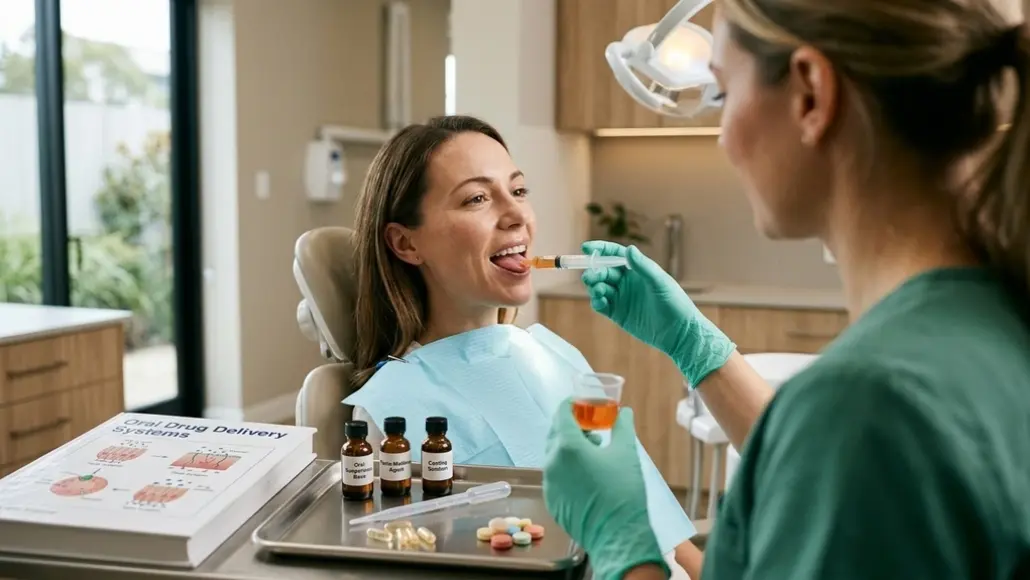
Chemical interventions also play a vital role in taste masking technologies improving oral therapies. Ion-exchange resins can be used to form drug-resin complexes, where the drug is bound to a substrate that is stable in the mouth. These complexes only release the API when they encounter the ions in the gastric juices. Similarly, “molecular encapsulation” using cyclodextrins involves “trapping” the bitter drug molecule inside a cage-like structure, effectively preventing it from touching the taste receptors. These methods allow for high drug loading and are particularly effective for medications that must be delivered in liquid form, such as pediatric syrups or geriatric drops, where traditional coatings might be less effective.
Advanced Coating and Extrusion Techniques
The manufacturing of taste masking technologies improving oral therapies has been revolutionized by techniques such as hot-melt extrusion (HME) and spray drying. HME involves mixing the API with a polymer and heating the mixture to a molten state, then extruding it into a solid dispersion. The resulting “extrudate” encapsulates the drug within a matrix that masks its taste and can also improve its solubility. This process is continuous, highly controllable, and does not require the use of organic solvents, making it both efficient and environmentally friendly. Spray drying, on the other hand, allows for the creation of uniform micro-particles where the API is coated with a taste-masking layer in a single, rapid step, providing a smooth mouthfeel and immediate palatability.
These advanced manufacturing methods allow for a high degree of “tunability” in taste masking technologies improving oral therapies. Formulators can adjust the thickness and composition of the coating to ensure that the taste is masked for the precise amount of time the medication remains in the mouth. This is particularly important for orally disintegrating tablets (ODTs), which are designed to melt on the tongue without water. The sensory experience of an ODT is critical; it must not only taste good but must also have a pleasant texture, free from grittiness. By using micro-encapsulated particles, manufacturers can ensure that the patient experiences a smooth, flavored sensation rather than the harsh reality of the underlying drug.
Improving Care for Pediatric and Geriatric Populations
The application of taste masking technologies improving oral therapies is most profound in the fields of pediatrics and geriatrics. Children have a higher density of taste buds and are biologically programmed to be more sensitive to bitter flavors, which is why medication refusal is such a common challenge for parents. When a child associates medicine with a traumatic sensory experience, it can lead to lifelong “pill phobia.” By creating medications that taste like fruit or candy, we are not just making the parent’s job easier; we are ensuring that the child receives the life-saving treatment they need. This is particularly vital for chronic conditions like cystic fibrosis or pediatric HIV, where daily adherence is a matter of survival.
In the geriatric population, the focus of taste masking technologies improving oral therapies is often on managing dysphagia and polypharmacy. Many elderly patients cannot swallow large, hard tablets and must rely on liquids or crushed medications. If the drug is bitter, this can lead to a decrease in appetite and nutritional intake, as the “aftertaste” of the medicine ruins the enjoyment of food. Taste-masked ODTs and flavored liquid formulations allow these patients to maintain their dignity and their health without the struggle of unpalatable treatments. Furthermore, for patients with cognitive impairments like Alzheimer’s, a pleasant-tasting medication reduces the risk of agitation or refusal during administration, making the caregiving process much more humane.
Measuring Palatability: The Electronic Tongue and Beyond
One of the most innovative aspects of modern taste masking technologies improving oral therapies is the shift toward objective measurement. Historically, taste was assessed through human panels, which are subjective, expensive, and limited by safety concerns when testing new chemical entities. Today, researchers utilize “electronic tongues” sophisticated sensor arrays that can detect and quantify the chemical signals associated with bitterness. These devices provide a “bitterness score” that allows formulators to scientifically compare different masking strategies and optimize the formulation before it ever reaches a human subject. This data-driven approach speeds up the development process and ensures a higher level of consistency in the final product.
Looking ahead, we may see the integration of taste masking technologies improving oral therapies with “personalized flavoring.” Genetic testing can now identify individual variations in taste perception, such as “supertasters” who are exceptionally sensitive to bitterness. In the future, medications could be customized not just in their dose, but in their flavor profile to match the patient’s specific sensory needs. This holistic approach to drug design recognizes that the “patient experience” is a vital component of therapeutic success. By removing the sensory barriers to health, we are ensuring that the science of healing is as humane and accessible as possible.