







Quality first: advanced manufacturing process for EZ-fill® cartridges
The development of GLP-1 drugs has revolutionized the treatment of diabetes and obesity – and is a catalyst for breaking new grounds in ready-to-use cartridge manufacturing. Primary packaging provider Stevanato Group has teamed up with equipment supplier Syntegon to develop an advanced manufacturing process for Stevanato Group’s EZ-fill® cartridges. The result: containers of the highest possible quality, which support pharmaceutical manufacturers in complying with Annex 1 requirements.
Type 2 diabetes and obesity are not only widespread and increasing continuously; they are also partly interrelated. According to the International Diabetes Federation, 589 million people worldwide are currently living with diabetes, more than 90 percent of whom have type 2. In parallel, the World Obesity Federation estimates that around four billion people – half of the world’s current population – could be severely overweight by 2035.
Fortunately, pharmaceuticals like Glucagon-like peptide-1 (GLP-1) agonists now offer patients more effective control options. The market for GLP-1 drugs is expanding considerably and is expected to exceed 130 billion U.S. dollars by 2031. These pharmaceuticals are usually administered via auto-injectors or pens with ready-to-use containers, i.e. syringes or cartridges. Consequently, the demand for these RTU containers is also expected to rise considerably.
RTU containers on the rise
In fact, the market has already been growing rapidly for years. This is not surprising, as pharmaceutical manufacturing companies benefit from simpler processing procedures, reduced total cost of ownership, and greater flexibility. While pre-filled syringes paved the way as early as the 1980s, RTU vials and cartridges are also becoming increasingly popular. Although they are currently still quite cost-intensive, RTU containers save drug producers a great deal of time, space, and ultimately money. They only need to decontaminate the containers’ outer packaging before proceeding with the fill-finish process. Numerous upstream steps, such as cleaning, depyrogenation, and sterilization of components, are outsourced to the primary packaging suppliers, who make sure that all processes are qualified and validated according to current global requirements.
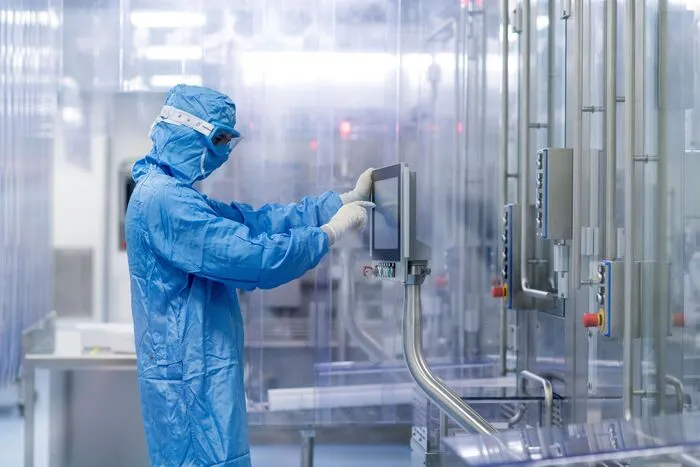
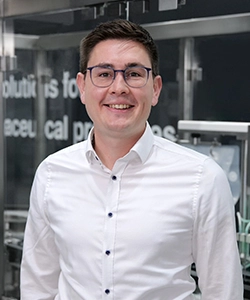
One of these suppliers is Stevanato Group. Founded in 1949, Stevanato Group is a leading global provider of drug containment, drug delivery, and diagnostic solutions to the pharmaceutical, biotechnology, and life sciences industries. Stevanato Group is the market leader in manufacturing bulk and RTU cartridges for pen injectors, the market leader for pre-sterilized vials, and the world’s second largest producer of prefillable syringes. With the EZ-fill® platform, Stevanato Group offers its customers a fully integrated pre-sterilized solution for aseptic manufacturing, including vials, cartridges, and syringes. “We strive to support our customers in achieving the highest possible product quality,” says Daniel Martinez, Senior Director Product Management DCS at Stevanato Group. “Hence, we are constantly looking to improve our own manufacturing to match the standards of their fill-finish processes. One current lever is the optimization of decontamination levels during production.”
Cartridge crimping in an isolator environment
Stevanato Group and Syntegon have been working together for many years. “In a highly regulated industry with very strict quality requirements, cooperation is essential to offer our joint customers the ideal solutions,” Martinez underlines. Syntegon has long-term experience in both fill-finish and barrier technologies, which is crucial for the current project: Stevanato Group is advancing its next-generation manufacturing lines for its EZ-fill® cartridges. To date, the primary packaging supplier is crimping its RTU cartridges within a restricted access barrier system (RABS) environment – a common industry practice. In the future, however, Stevanato Group will perform this process under an isolator, elevating it to the same sterility assurance level (SAL) used by pharmaceutical manufacturers in their fill-finish process.
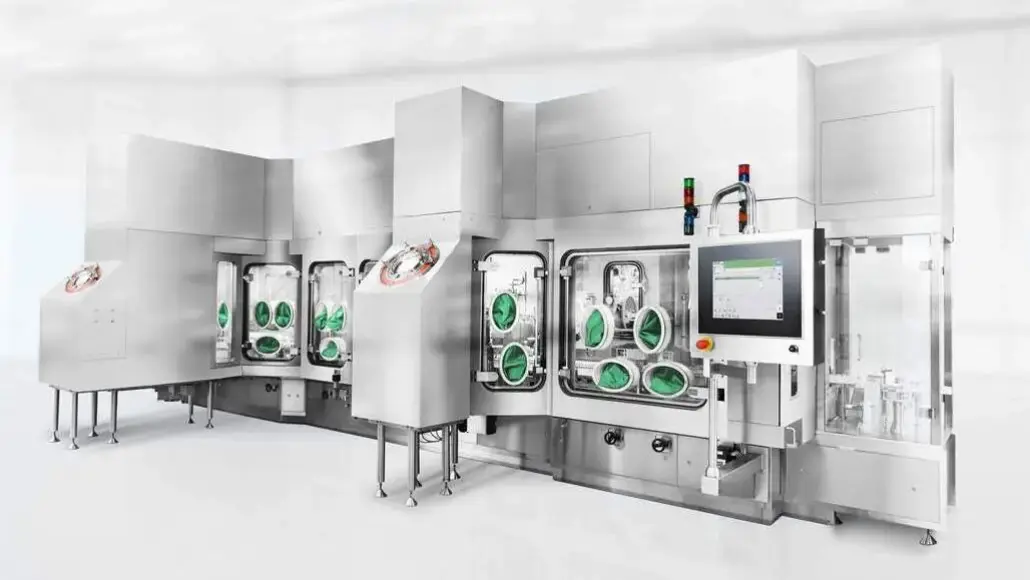
At the core of this innovative manufacturing process is Syntegon’s isolator technology based on the proven MLD platform. It features an integrated air handling system comprising fans, cooling units, catalytic converters, and HEPA filters. They are typically located in the plenum of the filling line, directly on the isolator housing. Unlike external air treatment, the integrated version draws air directly from the clean room and returns it without the need for additional conditioning. Ventilation technology ensures a positive overpressure of 25 pascals to protect the aseptic production core during the crimping process. This is followed by bio-decontamination cycles with the industry’s shortest cycle times, during which special catalyzers decompose the hydrogen peroxide (H2O2) into clean water and oxygen. The result: RTU cartridges with a level of sterility and quality above current industry standards.
Meeting Annex 1 requirements
It is this set of characteristics that makes the EZ-fill® cartridges particularly apt for meeting the revised EU GMP Annex 1 requirements. Among other aspects, the guideline puts more emphasis on the pharmaceutical manufacturer’s contamination control strategy to ensure that the final medication is safe for patients. Although Annex 1 classifies both RABS and isolator technology as suitable barrier systems for attaining this contamination control, isolators have a lower aseptic risk by providing the highest physical barrier between operators and the process zone in grade A conditions.
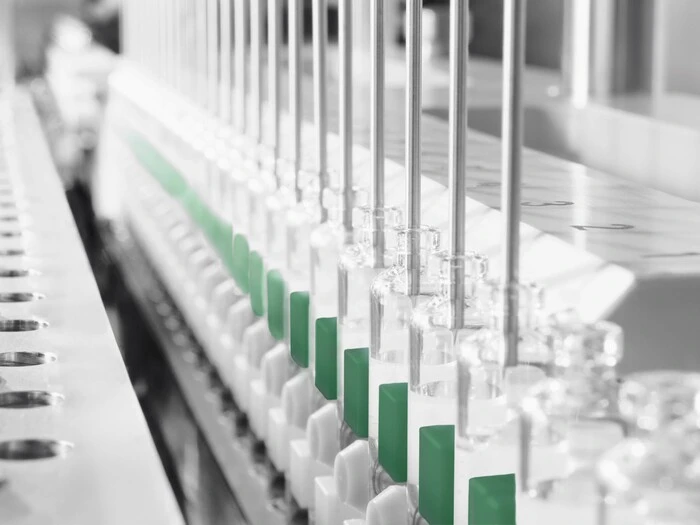
Since the cartridges are fully siliconized and crimped, pharmaceutical manufacturers can focus on their core expertise: filling and stoppering the final containers. This further reduces manual tasks and hence contamination risks in classified areas, which in turn increases product and process safety in line with Annex 1 requirements. Moreover, gentle handling and several further safety measures embedded in the manufacturing process can ensure that the EZ-fill® cartridges are delivered in the highest quality. Thanks to a special clip system, the cartridges are held at a distance from each other, avoiding glass-to-glass contact while they are loaded, transported, and unloaded in sleeves. Several camera-based inspection systems, for instance for mouth and bottom control, make sure that no damaged cartridge arrives at the outfeed.
Cooperation for future-proof pharmaceutical production
From a commercial point of view, both pharmaceutical manufacturers and primary packaging suppliers face higher initial investments compared to bulk containers and RABS technology. However, the operational costs will be significantly lower in the medium term and will pay off for everyone involved. RTU containers facilitate efficient aseptic filling and take the upstream processes off the shoulders of drug producers, saving significant space in production facilities.

One thing is clear for Daniel Martinez: “We believe that both auto-injectors and pens will remain at the forefront of GLP-1 delivery in the foreseeable future. This potential blockbuster treatment for diabetes and obesity presents considerable opportunities for our pharma partners. We see it as our mission to supply them with high-quality RTU containers to answer the growing demand and fulfil the highest product quality requirements – which is exactly what we can continue to do with our advanced manufacturing process.” Since the MLD platform can also be expanded to a combi version for both cartridges and syringes, Stevanato Group is well equipped for this demand. EZ-fill® cartridges from the new line will be available in late 2026. Already today, Stevanato Group and Syntegon are setting new standards in terms of cooperation and product quality, ensuring future-proof pharmaceutical production of GLP-1 pharmaceuticals.