














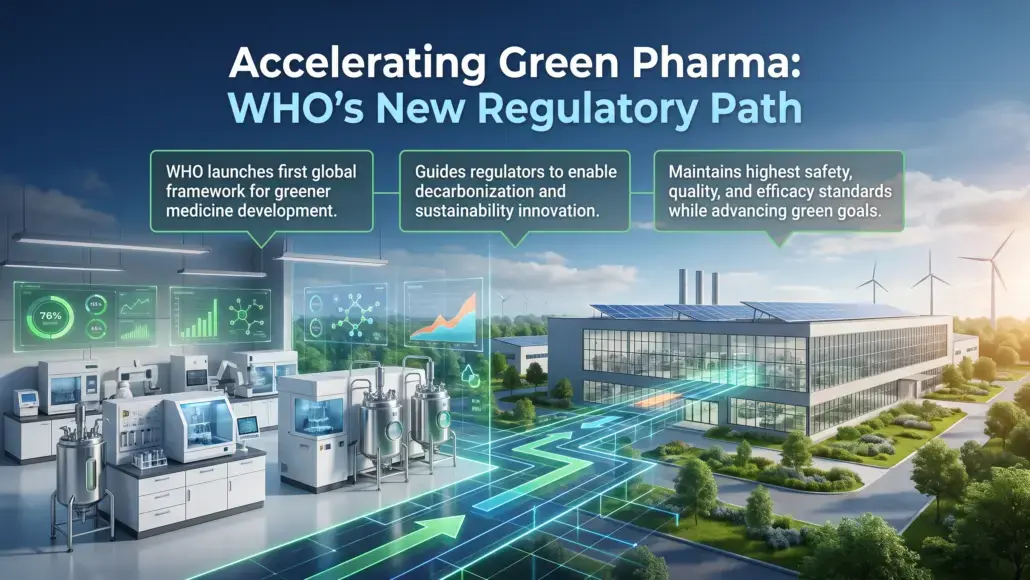
The World Health Organization (WHO) has officially launched the first global framework intended to assist medicines regulators in advancing the development of greener pharmaceuticals while maintaining the highest standards of safety, quality, and efficacy. The document, titled “Towards a greener pharmaceuticals’ regulatory highway: a framework for regulators as enablers of decarbonization,” outlines how regulatory authorities can support sustainability-driven innovation across the entire pharmaceutical lifecycle. This initiative is a response to the significant environmental impact of the health sector, which currently accounts for approximately 5% of global greenhouse gas emissions. The framework emphasizes that decarbonization is no longer a question of feasibility but of the speed and equity with which these changes can be implemented across diverse global markets.
Developed through extensive consultation with manufacturers, technical experts, and international standards-setting bodies, the framework focuses on creating the regulatory conditions necessary for the wide adoption of low-carbon technologies. By utilizing existing regulatory tools—including scientific guidance, digital transformation, and innovative pathways—authorities can help reduce the climate footprint of medicines without creating new barriers to access or fragmented requirements. Dr. Rogério Gaspar, Director of WHO’s Department of Regulation and Prequalification, noted: “This framework demonstrates how medicines regulators can create the conditions for innovation to flourish while continuing to uphold the highest standards of quality, safety and efficacy. By making full use of existing regulatory tools, they can help advance more sustainable pharmaceutical systems.”
Strategic Pillars for Pharmaceutical Decarbonization
The WHO framework proposes a coordinated approach across three interconnected pillars to ensure a consistent transition toward greener pharmaceuticals. The first pillar focuses on awareness and capacity building, calling for the incorporation of climate literacy into existing regulatory training programs. This allows authorities to better identify emissions hotspots within pharmaceutical portfolios and facilitates knowledge exchange through established regional networks. The second pillar recommends stronger international alignment on the measurement and reporting of pharmaceutical emissions. By adopting common methodologies and recognized standards, the industry can improve transparency and reduce the duplication of efforts for both manufacturers and regulatory bodies.
The third pillar emphasizes the role of innovation and the creation of innovative regulatory pathways. Key recommendations include the expansion of digital regulatory services, increased access to early scientific advice for sustainable manufacturing processes, and the streamlining of post-approval changes related to sustainability improvements. These measures are designed to allow environmentally beneficial innovations to move through the regulatory system more efficiently while maintaining robust oversight. The framework also advocates for strengthening reliance mechanisms between authorities, allowing for a more collaborative global approach to decarbonization that avoids unnecessary administrative delays.
Ensuring Equity and Sustainable Implementation
A central component of the WHO’s strategy is the commitment to a transition that maintains equitable access to essential medicines. Sustainability measures must be implemented in a manner that does not increase costs for patients or exclude manufacturers in low- and middle-income countries. Dr. Delese Mimi Darko, Director General of the African Medicines Agency, observed: “By embedding sustainability into our regulatory frameworks, we can support innovation, strengthen local manufacturing and build more resilient health systems that ensure patients continue to have access to quality safe and efficacious medical products.” This inclusive approach is supported by calls for technology transfer, sustainable financing, and international collaboration.
Moving forward, the implementation of these recommendations will occur through existing international and regional platforms rather than the creation of new institutions. The WHO will work closely with the International Coalition of Medicines Regulatory Authorities and the International Council for Harmonisation to pilot initiatives and ensure global alignment. By translating these recommendations into practical action, the framework aims to ensure that future health products are not only safe and accessible but also aligned with global climate goals. This systemic shift toward sustainability is essential for building resilient health systems that can withstand the increasing disruptions caused by climate change while protecting the health of both patients and the planet.