




As life sciences supply chains become more volatile, real-time visibility is increasingly the baseline for operational excellence. The next frontier is orchestration: turning fragmented signals into decisions that prevent excursions, reduce waste, and protect patients. Sam Durham, Product Manager – Digital Solutions & Services at Cold Chain Technologies, explains the role of digital technology in delivering thermal assurance.
In the pharmaceutical cold chain, the cost of getting it wrong is measured in more than money. A single temperature excursion can trigger investigations, delay treatment, disrupt clinical supply and create regulatory exposure. In short, it will likely erode confidence in supply continuity. That’s why “thermal assurance” is becoming the new standard: not simply holding temperature, but building an end-to-end system that anticipates risk, optimises performance and safeguards product integrity across real-world conditions.
Yet many organisations are still operating in a fundamentally reactive mode. They can see where a shipment is. They can often see what temperature it has reached. But too often, they only know there is a problem once it has already happened.
The changing model of effective cold chain
Life sciences manufacturers are navigating overlapping pressures: geopolitical instability, shifting trade routes, customs variability, infrastructure constraints, not to mention increasingly extreme weather. Meanwhile, product portfolios are trending toward therapies with narrower temperature bands and less tolerance for fluctuation.
In that environment, the question is no longer “Did we choose a qualified shipper?” It’s:
“Have we designed the whole shipment strategy around the realities of this lane, this season, this hand-off, and this risk profile?”
That shift requires three things working together. High-performance thermal packaging continues to be the physical foundation, backed by digital intelligence that can predict and prioritise risk, and overlaid with human expertise that can interpret context and intervene at speed. Thermal assurance lives in the intersection of all three.
From dashboards to decisions: what orchestration actually means
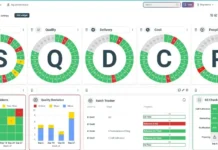
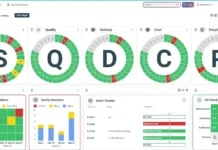
Many digital tools promise cold chain “visibility” but tend to offer a single screen view showing shipments, locations, and temperatures. While undoubtedly useful, this is frustratingly incomplete.
The core limitation is simple: data does not equal action. A dashboard can identify a deviation but doesn’t automatically answer the inevitable next set of questions. Is this signal meaningful or noise? How does this event affect this product’s stability limits? What’s the likely exposure window if the delay extends? What intervention is appropriate now, before downstream loss occurs?
Orchestration is the missing layer: it takes multiple inputs – amongst them logistics systems, monitoring devices, weather feeds, and algorithmic models – and converts them into prioritised, product- and lane-specific actions.
MedAssure: a platform built for life sciences not retrofitted from general logistics
That’s why Cold Chain Technologies (CCT) has launched MedAssure, a cold chain orchestration platform designed by cold chain experts and purpose-built for life sciences.
The intent is straightforward: to move beyond the basics by turning fragmented signals into proactive, data-driven intelligence, without adding unnecessary integration burden or operational drag.
MedAssure enables teams to build custom risk profiles that reflect real operational vulnerabilities. It will unify data from multiple sources across first mile to last mile, overlaying logistics data, live monitoring, weather insights, and real-time thermal modelling to identify threats early.
The intent is to support faster, more confident decisions to reduce excursions, product loss and compliance risk, by helping organisations digitise what they already know is true: that risk is lane-specific, seasonal, and operationally contextual.
Why “purpose-built” matters in regulated, high-stakes cold chains
Life sciences cold chains differ from other industries in one critical way: the shipment is not the true unit of value. Ultimately, what matters is the patient outcome.
That reality creates requirements that generic platforms often struggle to serve. Regulatory expectations around documentation, exception handling, and traceability are much stricter in life sciences than other sectors. Likewise, the operational reality of hand-offs across multiple partners and systems, and the practical constraints of mixed packaging strategies (single-use, reusable, rental, global/local) demand a more bespoke platform, which can translate incidents into product stability implications
Adding the “human side” to orchestration: why expertise still wins
Even the best intelligence is only valuable if it changes outcomes while the shipment is still in motion. That is where our Customer Assurance & Resource Excellence (C.A.R.E.) services come in.
C.A.R.E. pairs MedAssure’s data-driven insight with specialist oversight. Our specialists monitor shipments, apply operational judgement, and intervene proactively not only when a system flags an issue, but when experience indicates action is needed.
That partnership matters because cold chain performance depends on context. For example, the same lane can change materially across seasons, while two lanes with superficially similar transit times may behave very differently in practice. Critical variables, such as local handling quality, customs behaviour, and infrastructure variability, can’t always be inferred from temperature data alone
The takeaway: thermal assurance is becoming a strategic capability
In an increasingly volatile global cold chain, reactive management is no longer enough. Organisations need a strategic system that anticipates risk, optimises performance and protects product integrity end-to-end.
To put it another way, if visibility shows you the metaphorical smoke, it requires orchestration to help prevent the fire.
That is what thermal assurance looks like in practice, and why CCT has invested both in orchestration platforms like MedAssure, and expert services like C.A.R.E., to become essential components of a resilient cold chain.