









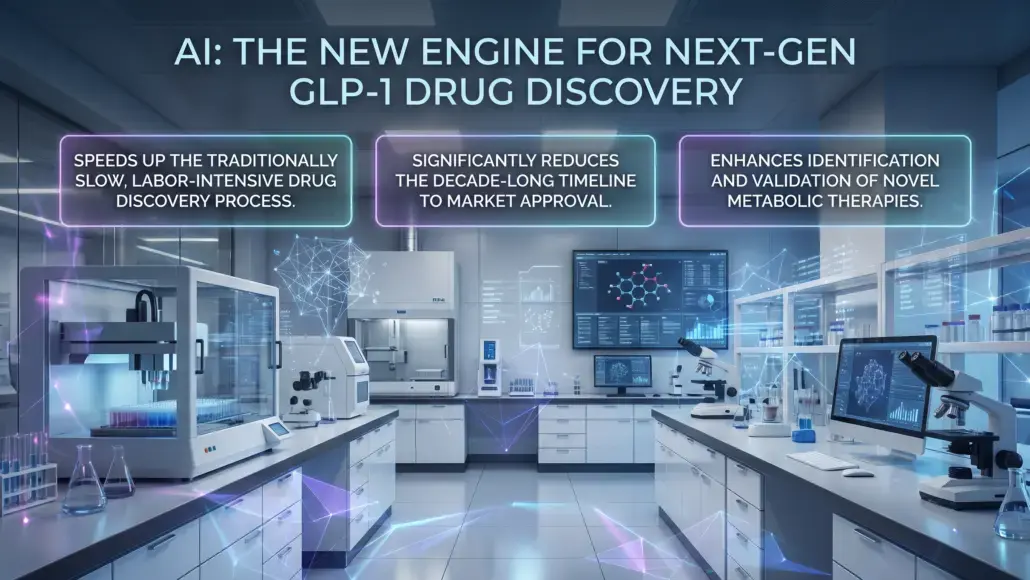
The pharmaceutical industry is currently witnessing a significant shift in how metabolic therapies are conceptualized and developed, specifically through the integration of computational intelligence. The traditional methodology for identifying and validating glucagon-like peptide 1 receptor agonists has historically been a labor-intensive process, often spanning over a decade from initial lead identification to market approval. However, the emergence of AI accelerating next-generation GLP-1 drug discovery is rapidly compressing these timelines, allowing researchers to explore a broader chemical space with unprecedented precision. By utilizing advanced algorithms, pharmaceutical scientists can now predict the biological activity of thousands of peptide variants before a single molecule is synthesized in the laboratory. This computational shift is not merely about speed; it is about the fundamental refinement of therapeutic molecules to ensure better efficacy and safety profiles for patients managing chronic metabolic conditions. As the global burden of metabolic disease continues to rise, the ability to rapidly iterate on molecular designs becomes a competitive necessity for leading pharmaceutical organizations. The integration of these digital tools allows for a deeper understanding of the molecular mechanisms at play, ensuring that the path from the laboratory bench to the patient’s bedside is both faster and more reliable than ever before.
Advanced Computational Models Identifying Novel Peptide Sequences
The foundation of modern GLP-1 research lies in the intricate sequence of amino acids that constitute these potent peptides. In previous years, researchers relied on iterative screening of natural sequences and minor modifications to enhance stability. Today, deep learning architectures are being trained on vast repositories of proteomic and genomic data to identify non-obvious motifs that can trigger the GLP-1 receptor more effectively. These models analyze the relationship between sequence, structure, and function at a level of granularity that human researchers cannot achieve manually. By identifying these novel sequences, AI accelerating next-generation GLP-1 drug discovery provides a roadmap for synthesizing peptides that possess higher binding affinity and reduced off-target effects. This precision is vital in a sector where even minor deviations in molecular structure can lead to significant changes in therapeutic outcomes. The computational models can process millions of potential combinations in a fraction of the time it would take for physical screening, allowing for the exploration of chemical spaces that were previously considered unreachable. This capability is particularly useful for identifying peptides that can mimic the natural hormone’s action while providing enhanced resistance to enzymatic degradation.
Beyond simple sequence identification, these computational models are capable of simulating the folding patterns of peptides in various physiological environments. Understanding how a molecule interacts with the cellular membrane and the specific receptor binding pockets is crucial for metabolic drug success. Advanced modeling allows for the exploration of constrained peptides and macrocycles that might offer superior stability compared to linear sequences. These structural insights enable teams to focus their resources on the most promising candidates, reducing the volume of wet lab experiments required to validate a lead compound. The ability to predict these interactions with high confidence represents a major leap forward in the pharmaceutical sector, ensuring that only the most viable candidates progress into the more expensive stages of development. By incorporating environmental factors such as pH levels and ionic strength into the simulations, scientists can gain a more comprehensive view of how the peptide will behave within the human body. This level of detail is essential for avoiding late-stage failures that often occur when a molecule fails to maintain its active conformation in vivo.
Machine Learning Optimizing Pharmacokinetic Profiles For Long-Acting Efficacy
One of the primary challenges in the development of metabolic therapies is ensuring that the drug remains active in the human body for an extended period. Many early-generation GLP-1 treatments required frequent administration, which often impacted patient adherence and overall clinical efficacy. Machine learning is now being used to optimize the pharmacokinetic profiles of these drugs by predicting metabolic clearance rates and enzymatic degradation patterns. By simulating how different chemical modifications affect the longevity of a peptide in the bloodstream, researchers can design molecules that offer weekly or even monthly dosing schedules. This optimization is a core component of how AI accelerating next-generation GLP-1 drug discovery is changing the patient experience. The use of machine learning algorithms allows for the identification of specific chemical groups that can enhance the half-life of the drug without compromising its binding affinity. Through the use of predictive modeling, scientists can visualize the impact of these modifications in a virtual environment, allowing for a more strategic approach to drug design.
Statistical models are also instrumental in predicting the volume of distribution and the rate at which a drug is absorbed from the injection site. These factors are critical for maintaining a steady-state concentration of the therapeutic agent, which helps in avoiding the peaks and troughs that can lead to adverse events. Machine learning algorithms can process data from historical clinical trials to identify patterns in how different patient demographics metabolize GLP-1 agonists. This information is then fed back into the drug design phase, allowing for the creation of more personalized or broadly effective treatments. The refinement of these pharmacokinetic parameters through data-driven approaches ensures that the resulting therapies are both potent and practical for long-term chronic disease management. Additionally, these models can help in predicting how the drug interacts with other medications that the patient may be taking, which is a vital consideration for individuals with multiple chronic conditions. By simulating these interactions early in the development process, pharmaceutical companies can provide clearer guidance to clinicians and patients.
Predictive Analytics Streamlining Lead Optimization And Preclinical Validation
The transition from a promising lead compound to a clinical candidate is often where many drug programs fail. Predictive analytics tools are now being used to bridge this gap by simulating the toxicological and safety profiles of GLP-1 variants early in the cycle. By analyzing structural data alongside known toxicity markers, these tools can flag potential issues such as immunogenicity or hepatotoxicity long before animal testing begins. This proactive approach to safety validation is a hallmark of the modern pharmaceutical industry, where risk mitigation is paramount. AI accelerating next-generation GLP-1 drug discovery enables scientists to make data-backed decisions about which molecules to discard and which to prioritize, saving millions of dollars in potential lost research costs. The use of predictive analytics also allows for a more focused approach to preclinical testing, as researchers can prioritize the most relevant assays based on the predicted profile of the molecule.
Predictive analytics can assist in the design of preclinical studies by identifying the most relevant biological markers to monitor. This ensures that the data collected during these early stages is highly relevant to human physiology, increasing the likelihood of success in later-stage human trials. These tools also allow for the optimization of dosage levels based on simulated dose-response curves, which can help in establishing a safer starting point for Phase I studies. The integration of these analytical capabilities into the R&D workflow creates a more streamlined and efficient pipeline, where the path from discovery to validation is clearly defined and supported by empirical data simulations. By leveraging historical data from similar drug classes, these models can provide insights into the likely long-term safety profile of a new GLP-1 agonist, helping to identify potential issues that might only become apparent after years of clinical use. This foresight is invaluable in a sector where the safety of chronic therapies is a top priority for regulators and patients alike.
Digital Twin Simulations Reducing Attrition Rates in Metabolic Drug Development
Digital twin technology, which involves creating a virtual representation of a biological system or a patient population, is becoming an essential tool in the GLP-1 sector. These simulations allow researchers to test how a new drug candidate will interact with a virtual human metabolism, accounting for variables such as insulin sensitivity, gastric emptying rates, and hormonal fluctuations. By running thousands of these simulations, pharmaceutical companies can identify potential failure points in their clinical strategies before enrolling a single participant. This application of AI accelerating next-generation GLP-1 drug discovery is particularly effective at reducing the high attrition rates that have historically plagued metabolic drug development. The digital twin models can be updated in real-time as new clinical data becomes available, allowing for a dynamic and iterative approach to trial design. This flexibility is essential in a fast-moving therapeutic area where new insights are constantly emerging.
These virtual models can also be used to explore how different comorbidities, such as obesity or renal impairment, might affect the performance of a GLP-1 agonist. Understanding these interactions is critical for developing therapies that are safe for a broad and diverse patient population. Digital twins can simulate the long-term impact of a therapy on weight loss and glucose control, providing a preview of the drug’s potential real-world effectiveness. This foresight allows clinical teams to refine their inclusion and exclusion criteria for trials, ensuring that the study is powered to demonstrate the drug’s true value. By simulating the impact of lifestyle factors such as diet and exercise on the drug’s performance, these models can also help in the development of comprehensive treatment plans that go beyond simple pharmacology. The use of digital twins represents a shift toward a more proactive and predictive model of drug development, where biological uncertainty is minimized through rigorous computational testing. This approach not only improves the likelihood of clinical success but also ensures that the final product is better suited to the needs of the patients.
Integration of Structural Biology and Deep Learning in Target Binding
The effectiveness of any GLP-1 therapy depends on the precision of its interaction with the GLP-1 receptor. Recent advancements in cryo-electron microscopy and other structural biology techniques have provided high-resolution images of these receptors, but the data is complex and difficult to interpret manually. Deep learning algorithms are now being paired with these structural insights to map out the exact binding pocket configurations in real-time. This integration allows for the design of small molecules or peptides that fit perfectly into the receptor site, maximizing the therapeutic signal while minimizing unintended interactions. This level of molecular tailoring is a significant achievement in the field of metabolic medicine. The ability to visualize the dynamic nature of the receptor as it interacts with different ligands provides a much clearer picture of the activation process, which can inform the design of more potent agonists.
Beyond the immediate binding event, these integrated systems can predict how mutations in the receptor or variations in the cellular environment might alter drug binding. This is particularly important for addressing the needs of patients who may have genetic variations that make them less responsive to standard GLP-1 therapies. By designing drugs that are resilient to these variations, the pharmaceutical industry can move closer to the goal of precision medicine for metabolic health. The synergy between high-resolution structural data and sophisticated deep learning models is a powerful driver of innovation, ensuring that the next generation of GLP-1 treatments is more effective, safer, and more accessible than ever before. The continued adoption of these technologies will lead to further breakthroughs in how we understand and treat metabolic disorders on a global scale. Additionally, the data generated by these integrated systems can be used to identify new therapeutic targets within the metabolic pathway, opening up additional avenues for drug discovery. As our understanding of the structural biology of the GLP-1 receptor continues to grow, so too will our ability to design therapies that can target it with unprecedented precision and efficacy. The future of metabolic health lies in the integration of biological insights and computational power, a combination that is already beginning to redefine the boundaries of what is possible in the pharmaceutical sector.