









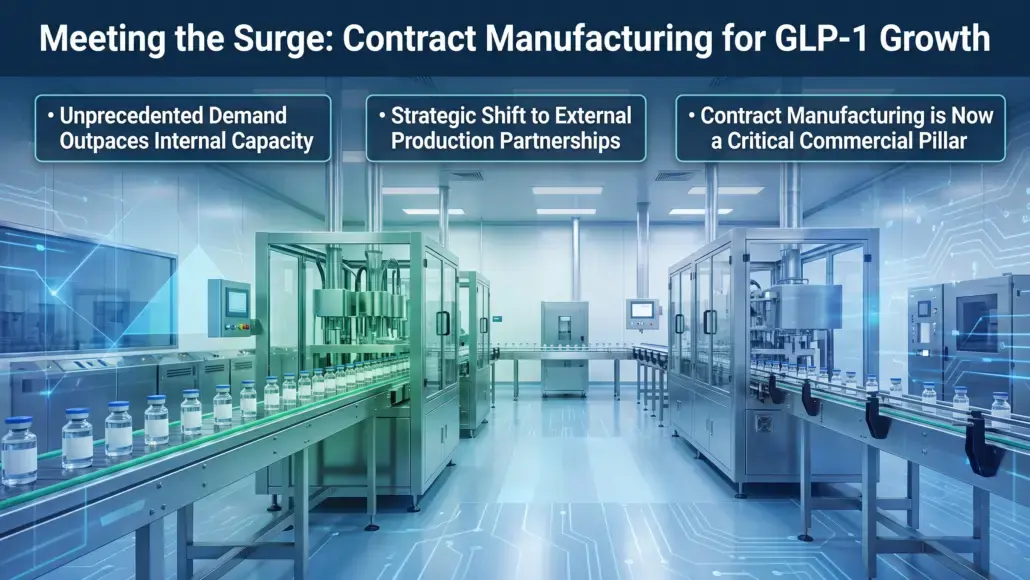
The global pharmaceutical industry is currently grappling with a surge in demand for glucagon-like peptide 1 receptor agonists that has outpaced existing internal production capacities. This unprecedented market growth, driven by the broadening indications for metabolic health, has necessitated a strategic shift toward external production partnerships. As a result, contract manufacturing supporting GLP-1 market expansion has become a critical pillar of the commercial strategy for leading pharmaceutical organizations. By utilizing the specialized expertise and infrastructure of Contract Development and Manufacturing Organizations, pharmaceutical companies are able to scale their production volumes more rapidly than would be possible through internal facility expansion alone. This collaboration is essential for ensuring that these life-changing therapies reach the millions of patients who require them, while also allowing the primary innovators to focus their resources on research and development. The reliance on CDMOs is not merely a temporary solution to supply shortages but a fundamental shift in the manufacturing model for high-volume peptide therapies. This strategic outsourcing allows for greater flexibility and agility in a rapidly evolving market, ensuring that production can be adjusted in response to changing clinical and commercial needs.
Outsourcing Strategies Meeting Global Demand For Sterile Fill-Finish
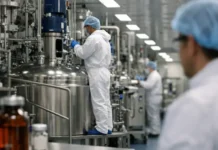
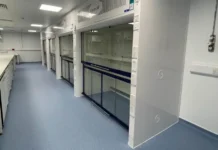
The production of GLP-1 agonists requires highly specialized sterile fill-finish capabilities, which are often a bottleneck in the pharmaceutical supply chain. These therapies are primarily delivered via subcutaneous injection, necessitating a manufacturing process that adheres to the highest standards of sterility and precision. Outsourcing strategies are increasingly focused on securing capacity in these high-demand facilities, as pharmaceutical companies compete for limited global resources. The role of contract manufacturing supporting GLP-1 market expansion is particularly vital in this context, as CDMOs invest in the advanced machinery and cleanroom environments required for large-scale sterile production. These facilities must be capable of handling sensitive peptide formulations while ensuring consistent quality and potency across millions of doses. The technical complexity of these processes makes it difficult for many companies to build and validate their own facilities in a timely manner, making external partnerships the most viable path to rapid market scaling.
Beyond the physical capacity, CDMOs offer a wealth of experience in managing the complexities of sterile manufacturing, from environmental monitoring to automated inspection systems. This expertise helps to reduce the risk of batch failures and regulatory delays, which can be devastating in a market where every dose is critical. By partnering with organizations that have a proven track record in sterile fill-finish, pharmaceutical companies can increase their operational efficiency and focus on their core competencies. The use of contract manufacturing supporting GLP-1 market expansion also allows for a more distributed manufacturing footprint, which can help in reducing the logistical challenges of supplying a global market. As the demand for injectable metabolic therapies continues to grow, the importance of these specialized outsourcing strategies will only increase, driving further investment and innovation in the CDMO sector. The ability to secure reliable, high-quality fill-finish capacity is now a key differentiator for companies looking to maintain their lead in the GLP-1 market.
Cdmo Investment In High-Throughput Peptide Synthesis Technologies
The synthesis of complex peptides like GLP-1 agonists is a technically demanding process that requires specialized equipment and deep chemical expertise. To support the massive volume requirements of the current market, CDMOs are making significant investments in high-throughput peptide synthesis technologies. These systems allow for the production of large quantities of high-purity peptides with greater efficiency and lower environmental impact than traditional methods. The role of contract manufacturing supporting GLP-1 market expansion is essential here, as these organizations provide the technological platform required to meet the industry’s needs. By adopting advanced techniques such as liquid-phase peptide synthesis and automated solid-phase synthesis, CDMOs can achieve higher yields and faster cycle times, which are critical for maintaining a steady supply of active pharmaceutical ingredients. This technological advancement is a key driver of the overall expansion of the GLP-1 market, as it lowers the barriers to large-scale production.
Alongside these synthesis technologies, CDMOs are also investing in sophisticated purification systems to ensure that the final product meets the stringent quality requirements of the pharmaceutical industry. The purification of peptides is a complex task, often requiring multiple stages of chromatography to remove impurities and ensure the correct molecular structure. The expertise of contract manufacturers in this area is invaluable, as it helps to ensure the safety and efficacy of the final therapy. The investment in these high-throughput technologies is not just about increasing volume; it is also about improving the sustainability and cost-effectiveness of peptide production. As the market for GLP-1 therapies continues to mature, the pressure to reduce manufacturing costs will increase, making these technological efficiencies even more important. The partnership between pharmaceutical innovators and technologically advanced CDMOs is a powerful engine for growth, ensuring that the next generation of metabolic therapies can be produced at the scale and quality required by the global patient population.
Mitigating Supply Chain Risks Through Diversified Manufacturing Partnerships
In an increasingly volatile global environment, supply chain resilience has become a top priority for pharmaceutical executives. The reliance on a single manufacturing site or a limited number of suppliers can leave a company vulnerable to disruptions caused by geopolitical events, natural disasters, or technical failures. To mitigate these risks, many companies are diversifying their manufacturing partnerships through contract manufacturing supporting GLP-1 market expansion. By working with multiple CDMOs across different geographical regions, pharmaceutical organizations can create a more resilient supply chain that is better equipped to handle unexpected challenges. This strategic diversification ensures that if one site experiences a delay, production can be shifted to another location to maintain a consistent supply of medication. This proactive approach to risk management is essential for a product class as critical as GLP-1 agonists, where treatment interruptions can have serious clinical consequences for patients.
This diversification strategy also provides pharmaceutical companies with greater bargaining power and flexibility in their commercial operations. By not being tied to a single provider, they can optimize their manufacturing costs and access a broader range of technical capabilities. The use of contract manufacturing supporting GLP-1 market expansion allows for a more agile response to market fluctuations, as companies can scale production up or down more easily in response to changing demand. This agility is a significant advantage in the fast-paced metabolic sector, where new clinical data or regulatory approvals can rapidly shift the market. The ability to manage these complexities through a network of reliable manufacturing partners is a hallmark of a mature and sophisticated pharmaceutical supply chain. As the industry continues to evolve, the focus on building and maintaining these diversified partnerships will remain a key component of long-term commercial success. The commitment to supply chain resilience is a clear reflection of the industry’s dedication to ensuring that patients have continuous access to the therapies they need.
Scaling Specialized Delivery System Production For Injectable Therapies
The effectiveness and patient acceptance of GLP-1 agonists are closely tied to the design and reliability of their delivery systems. Most of these therapies are administered using sophisticated autoinjectors or pen devices that are designed for ease of use and precise dosing. Scaling the production of these specialized delivery systems is a significant challenge that requires expertise in both medical device engineering and high-volume manufacturing. Contract manufacturing supporting GLP-1 market expansion plays a vital role here, as many CDMOs have the specialized facilities and assembly lines required to produce these devices at scale. By partnering with organizations that specialize in device manufacturing, pharmaceutical companies can ensure that their delivery systems are as reliable and high-quality as the medication itself. This integration of drug and device manufacturing is a critical component of the overall commercial strategy for injectable metabolic therapies.
The production of these devices involves complex supply chains for various components, from precision springs and needles to electronic monitoring systems. Managing these supply chains requires a high degree of coordination and quality control, areas where experienced contract manufacturers excel. The role of contract manufacturing supporting GLP-1 market expansion is to provide the operational backbone for this complex assembly process, ensuring that every device meets the strict regulatory standards for medical equipment. This focus on device reliability is essential for maintaining patient trust and ensuring the long-term success of the therapy. As the industry explores new delivery methods, such as once-monthly injections or wearable infusion pumps, the need for specialized manufacturing expertise will only continue to grow. The ability to scale the production of these advanced delivery systems is a key enabler of market growth, allowing pharmaceutical companies to bring their innovations to a wider audience. The partnership between drug developers and device manufacturers is a central theme in the modern metabolic sector, driving improvements in both clinical efficacy and patient experience.
Quality Assurance And Regulatory Compliance In Large-Scale Peptide Production
Maintaining the highest standards of quality and regulatory compliance is a non-negotiable requirement in the pharmaceutical industry. As production volumes for GLP-1 agonists reach unprecedented levels, the challenge of ensuring consistent quality across all batches becomes even more complex. Contract manufacturing supporting GLP-1 market expansion provides an essential layer of quality assurance, as CDMOs are required to adhere to rigorous Current Good Manufacturing Practice standards and undergo frequent inspections by regulatory authorities such as the FDA and EMA. These organizations invest heavily in their quality management systems, utilizing advanced analytical techniques to monitor every stage of the production process. This commitment to quality is essential for protecting patient safety and ensuring the long-term viability of the therapeutic program. The expertise of contract manufacturers in navigating the complex regulatory environment is a significant asset for pharmaceutical companies, particularly when launching products in multiple international markets.
Beyond simple compliance, the focus on quality assurance also involves continuous process improvement and the adoption of new technologies to enhance manufacturing reliability. The use of contract manufacturing supporting GLP-1 market expansion allows pharmaceutical companies to utilize the latest advancements in process analytical technology and automated quality control systems. These tools provide real-time data on the manufacturing process, allowing for the early detection of any deviations and the implementation of corrective actions before they impact the final product. This proactive approach to quality management helps to minimize waste and ensure that every dose meets the required specifications. The relationship between the pharmaceutical company and the CDMO is built on a foundation of transparency and shared commitment to excellence. As the regulatory requirements for peptide therapies continue to evolve, the role of experienced contract manufacturers in ensuring compliance will become even more critical. This focus on quality is a key driver of trust in the metabolic sector, ensuring that patients and clinicians can have full confidence in the therapies they use. The ongoing investment in quality and compliance is a clear indication of the industry’s long-term dedication to clinical excellence and patient safety.