











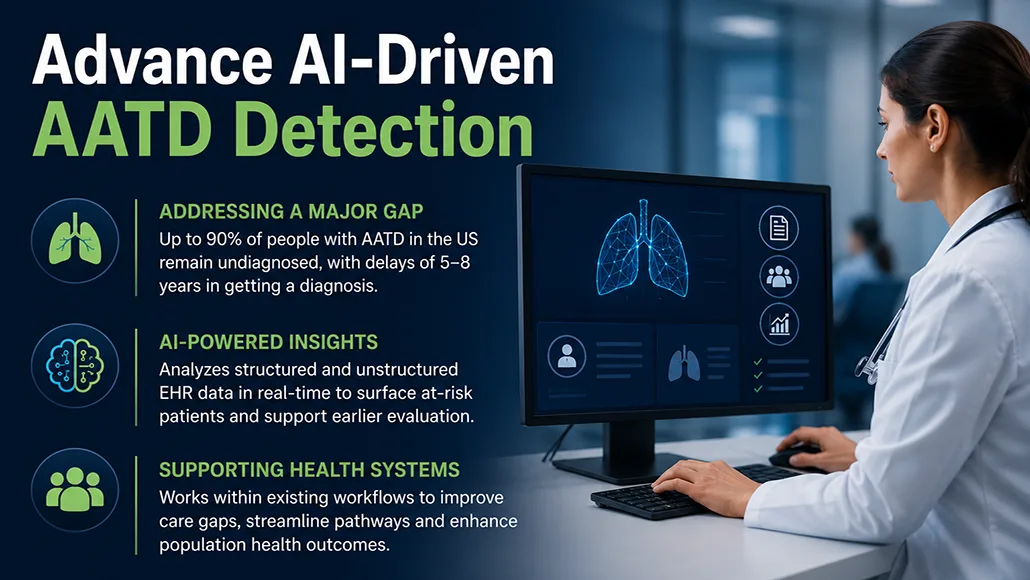
Pangaea Data (Pangaea), a provider of a guideline-configured AI platform designed to help close care gaps and improve the identification of untreated and under-treated patients with difficult-to-diagnose conditions, has entered into a collaboration agreement with Sanofi. Under the arrangement, Pangaea’s technology will be deployed across a group of large health systems in the United States as well as low-resource community care settings to enhance the detection of Alpha-1 Antitrypsin Deficiency (AATD). The initiative is intended to address the substantial challenges associated with diagnosing the rare genetic condition, which can lead to serious respiratory disease and often remains unidentified despite the availability of relevant patient information within electronic health records (EHRs). Studies indicate that as many as 90% of people living with AATD in the United States remain undiagnosed, while patients frequently face delays of five to eight years between the onset of symptoms and a confirmed diagnosis. Characterized by low levels or the absence of AAT, a protein that protects the lungs from damaging inflammation, the condition can result in progressive lung tissue deterioration and emphysema, the most common form of chronic obstructive pulmonary disease (COPD), accounting for up to 72% of deaths among individuals with AATD. Through the collaboration, Pangaea will deploy its platform, supported by Sanofi, to assist healthcare organizations in identifying patients who may qualify for AATD evaluation based on information already present in their records but that may otherwise go unnoticed. This effort supports AI-driven AATD detection within existing clinical environments.
Pangaea’s platform is designed to integrate with existing healthcare technologies and workflows, including EHRs, ambient listening tools, scheduling systems and communication platforms, helping organizations identify potential care gaps without adding operational complexity. The system processes both structured and unstructured patient data, including clinical notes, in real time and delivers actionable insights to clinicians regarding patients who may require additional evaluation. Information is surfaced at the point of care and through population health dashboards, allowing providers to make decisions related to screening, treatment or clinical trial participation at their discretion. The broader population health view also supports administrators and providers in aligning resources, operational priorities and initiatives with standard-of-care objectives while helping standardize care pathways and reduce missed diagnostic opportunities.
“AATD remains significantly underdiagnosed, leaving many individuals unaware of the underlying cause of their lung disease,” said Lisa Sniderman King, Senior Director, Scientific Affairs and Diagnostics, US Medical at Sanofi. “We are pleased to support the deployment of innovative solutions like Pangaea’s platform that can help not only identify patients in need of evaluation earlier using real-time, real world data that remains securely within the health system, but also address workflow challenges healthcare providers often face when ordering rare disease diagnostic testing.”
The collaboration is initially focused on AATD but is intended to support a broader effort aimed at helping health systems address care gaps across respiratory and rare diseases. Conditions such as COPD, severe asthma and other rare disorders often involve prolonged delays before patients receive appropriate evaluation and management. Sanofi and Pangaea believe a scalable model can help advance earlier screening, improve guideline concordance and expand access to appropriate treatments and clinical trials while minimizing disruption to clinicians and health systems. “AI has the potential to transform the patient journey by turning existing medical data into actionable insights that reduce diagnostic delays,” said Ghassane Baaziz, Head of Global Rare Patient Activation and Growth Strategy at Sanofi. “For conditions like AATD, where patients often wait years for diagnosis despite relevant information already in their records, clinical decision support can identify at-risk patients in real-time. This collaboration represents our commitment to leveraging innovative technology to ensure patients receive the right care at the right time.” Dr. Vibhor Gupta, CEO and Founder of Pangaea Data, added: “This collaboration represents an important step toward a future where health systems can proactively identify patients earlier and more consistently using the data already available within routine care.” He said the initiative advances a broader vision for scalable, guideline-configured AI and supports AI-driven AATD detection across chronic and rare hard-to-diagnose conditions globally.