



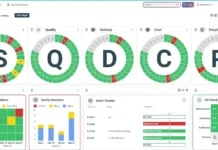







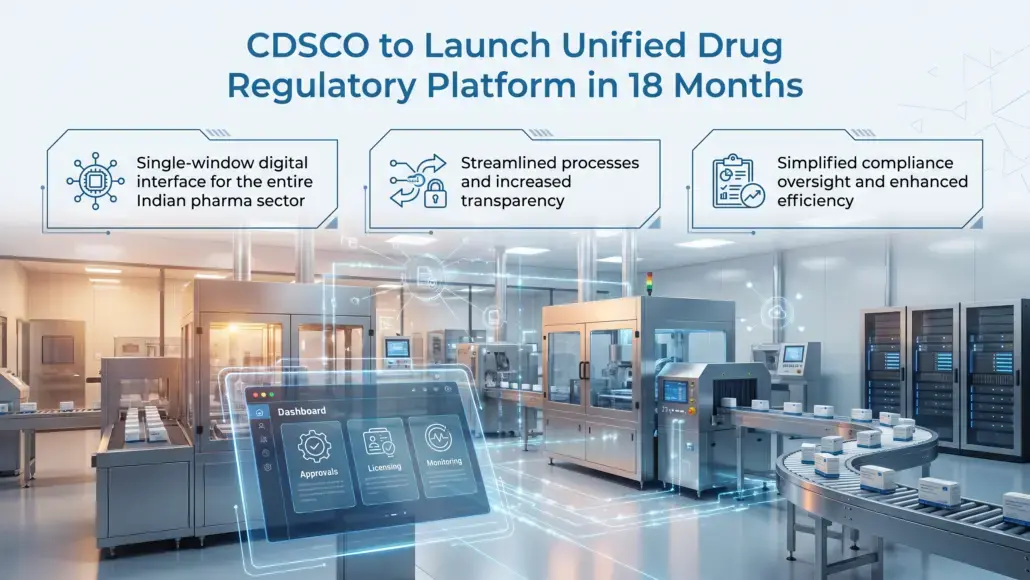
The Central Drugs Standard Control Organisation (CDSCO) has announced plans to launch the first phase of a comprehensive end-to-end digital drug regulatory platform within the next 18 months. Designed as a single-window interface for the Indian pharmaceutical industry, the platform aims to streamline regulatory processes, enhance operational efficiency, increase transparency, and simplify compliance oversight across the sector.
Strategic Roadmap Announced at GDRC 2026
The initiative was announced during the Global Drug Regulatory Conclave (GDRC) 2026, organized by the Pharmaceuticals Export Promotion Council of India (Pharmexcil) in association with CDSCO. The conclave convened regulatory authorities from more than 40 nations, including the United States, the United Kingdom, and Japan, focusing on strengthening regulatory frameworks and expanding global acceptance of the Indian Pharmacopoeia to lower compliance costs for exporters.
Addressing the inaugural session virtually, Union Minister for Health and Family Welfare J.P. Nadda highlighted that India is developing a modern pharmaceutical regulatory system to support healthcare innovation while safeguarding patient safety, quality, and efficacy. Minister Nadda stated that CDSCO is undergoing extensive structural reforms driven by transparency, scientific excellence, operational efficiency, accountability, and digital governance. He further called for enhanced international collaboration, urging global regulatory authorities to share information, collaborate on regulatory science, execute joint inspections, and establish harmonized scientific standards.
Digital Transformation and AI Integration
Outlining the official strategic roadmap, Dr. Rajeev Singh Raghuvanshi, Drugs Controller General of India (DCGI), confirmed that CDSCO will roll out the first phase of the end-to-end drug regulatory platform within 18 months. Dr. Raghuvanshi noted that more than 99% of regulatory workflows at CDSCO are already digitized, significantly accelerating approval timelines and improving overall transparency.
To further advance digital drug regulation, the authority has initiated pilot programs leveraging Artificial Intelligence (AI) across key regulatory functions. Emphasizing the transition to digital authentication, Dr. Raghuvanshi stated, “Certificates of Pharmaceutical Product (CoPP) and cGMP certificates have now started being issued with QR codes to enable authentication and help exporters save up to six months” previously required for overseas registration clearances.
Facilitating Innovation and Global Alignment
Dr. Raghuvanshi detailed additional regulatory measures implemented to boost quality and innovation across the Indian pharmaceutical industry, including a fully digitized Export No Objection Certificate (NOC) system, globally aligned regulatory reliance pathways, and accelerated approval mechanisms. He revealed that authorities are considering waiving clinical trial requirements for approximately 25% to 30% of eligible innovative products based on regulatory eligibility.