










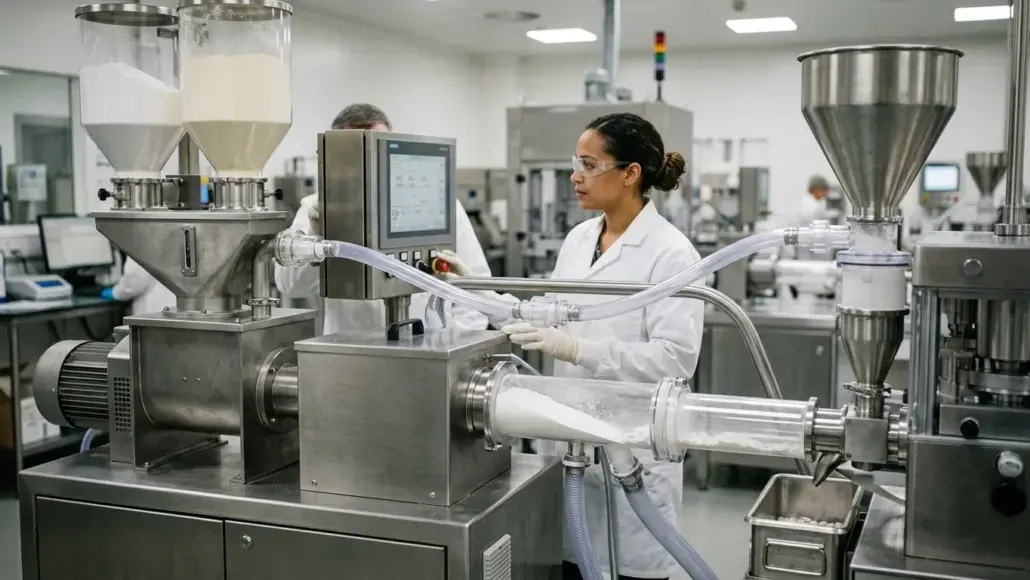
Continuous manufacturing drug formulation represents the most significant leap in pharmaceutical engineering in over a century, fundamentally altering how medications are conceived, developed, and delivered to the global market. For decades, the industry operated under the batch manufacturing paradigm, a fragmented process where materials move through discrete steps mixing, granulating, drying, and compressing with long pauses for quality testing between each stage. This “stop-and-go” architecture is inherently inefficient, often requiring weeks or even months to produce a finished product. In contrast, continuous manufacturing drug formulation integrates these steps into a single, uninterrupted stream where raw materials enter at one end and finished dosage forms emerge at the other. This transformation is not merely about speed; it is about achieving a level of quality and process control that was previously unimaginable, ensuring that life-saving therapies are safer and more accessible than ever before.
The transition to continuous manufacturing drug formulation is fueled by the industry’s need for greater agility and a more robust response to supply chain disruptions. In a traditional batch-based environment, scaling up a drug from the laboratory to commercial production is a risky and time-consuming endeavor. It often requires redesigning equipment to handle larger volumes, which can lead to unpredictable changes in the drug’s physical and chemical properties. Continuous manufacturing elegantly solves this “scale-up” problem. Instead of using larger tanks, manufacturers simply run the continuous line for a longer duration. This “scale-out” approach reduces the risk of batch failure and allows drug makers to adjust production volumes in real-time based on market demand, effectively eliminating the delays that lead to critical drug shortages.
The Technological Architecture of Integrated Processing
At the heart of continuous manufacturing drug formulation lies the sophisticated integration of Process Analytical Technology (PAT). PAT utilizes high-frequency sensors and advanced chemometric models to monitor the production line in real-time, providing a constant stream of data on the chemical and physical attributes of the material. Instead of relying on “end-product testing” where a sample is taken from a completed batch and sent to a lab continuous systems employ near-infrared (NIR) spectroscopy, Raman spectroscopy, and laser diffraction to analyze the blend as it moves through the equipment. This allows for “real-time release testing,” where the quality of every single tablet is verified during production. If a deviation is detected, the automated control system can make micro-adjustments to the flow rate or temperature within milliseconds, or divert non-compliant material without discarding the entire run.
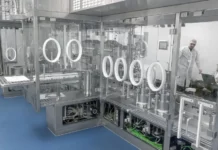
The hardware used in continuous manufacturing drug formulation is equally innovative. Continuous twin-screw granulation, for instance, allows for precise control over particle size and density, which is critical for the uniform distribution of the Active Pharmaceutical Ingredient (API). Continuous blenders ensure a homogenous mix even at very low drug loadings, which is a major challenge in traditional large-scale batch mixers where “dead zones” can occur. Furthermore, the use of continuous drying systems, such as horizontal vibratory dryers or flash dryers, provides a uniform thermal history for every particle, preventing the degradation of heat-sensitive compounds. These technologies work in concert to create a steady-state environment where the physical forces acting on the drug are constant, resulting in a product with a much tighter quality specification than can be achieved in batch processing.
Economic and Environmental Sustainability in Pharma
The economic argument for continuous manufacturing drug formulation is as compelling as the scientific one. While the initial capital investment in automated lines and PAT sensors is higher than for traditional equipment, the long-term operational savings are substantial. Continuous facilities have a significantly smaller physical footprint often up to 70% smaller than batch plants because they eliminate the need for massive storage tanks and intermediate holding areas. This reduction in facility size leads to lower utility costs, reduced maintenance overhead, and a smaller carbon footprint. Additionally, the integrated nature of the process dramatically reduces material waste. In batch manufacturing, an entire batch worth millions of dollars might be scrapped due to a single error; in continuous manufacturing, only the few grams produced during the deviation are discarded.
Environmental sustainability is also a key driver for continuous manufacturing drug formulation. The pharmaceutical industry is under increasing pressure to adopt “green chemistry” principles, and continuous processing is perfectly aligned with these goals. By minimizing solvent use and optimizing energy consumption through more efficient heat transfer in continuous reactors, manufacturers can significantly reduce their environmental impact. The ability to produce drugs on-demand also reduces the risk of overproduction and the subsequent need to incinerate expired stock. As global regulators increasingly incorporate environmental metrics into their assessments, the shift toward continuous processing will likely become a prerequisite for “best-in-class” manufacturing status.
Regulatory Evolution and Global Harmonization
The regulatory landscape for continuous manufacturing drug formulation has evolved rapidly to support this technological shift. Regulatory bodies like the U.S. Food and Drug Administration (FDA) and the European Medicines Agency (EMA) have been proactive in encouraging the adoption of continuous processing, recognizing its potential to improve drug quality and supply chain resilience. The release of the ICH Q13 guideline on continuous manufacturing of drug substances and drug products provides a harmonized global framework, giving manufacturers the confidence to invest in these technologies. This guideline outlines the requirements for system control, material traceability, and the management of “transients” (periods of non-steady state operation), ensuring that the high standards of pharmaceutical safety are maintained.
The successful approval of pioneering drugs manufactured via continuous processes such as Vertex Pharmaceuticals’ Orkambi and Janssen’s Prezista has served as a proof-of-concept for the entire industry. These successes have demonstrated that continuous manufacturing drug formulation is not just a theoretical ideal but a practical reality that can deliver high-quality medicines to patients faster. As more companies adopt these platforms, we are seeing a shift in the regulatory dialogue from “why” to “how,” with a focus on optimizing data management and cybersecurity for these highly automated systems. The integration of “digital twins” virtual replicas of the manufacturing line allows for even more sophisticated process modeling and “what-if” analysis, further de-risking the production cycle.
Future Horizons: AI and Decentralized Production
Looking toward the future, the convergence of artificial intelligence (AI) and continuous manufacturing drug formulation promises to unlock even greater efficiencies. Machine learning algorithms can analyze the vast datasets generated by PAT sensors to predict equipment failure before it happens or to autonomously optimize the process parameters for maximum yield. We are moving toward a future of “self-healing” manufacturing lines that can adapt to variations in the quality of raw materials without human intervention. This level of autonomy not only increases safety by reducing human exposure to potent compounds but also ensures a level of reproducibility that is simply unattainable through manual batch operations.
Furthermore, the modular nature of continuous manufacturing drug formulation equipment enables a “decentralized” production model. Instead of relying on a few massive, centralized factories, companies can deploy small, containerized manufacturing units closer to the point of care. This “pharmacy-in-a-box” concept could revolutionize how we respond to global health crises, allowing for the rapid localized production of vaccines or essential medicines in remote or resource-limited areas. By decoupling production from large-scale infrastructure, continuous manufacturing makes the pharmaceutical supply chain more resilient, more equitable, and more responsive to the needs of a global population. This technology is the cornerstone of a new era in pharmaceutical science one defined by precision, agility, and an unwavering commitment to patient safety.