












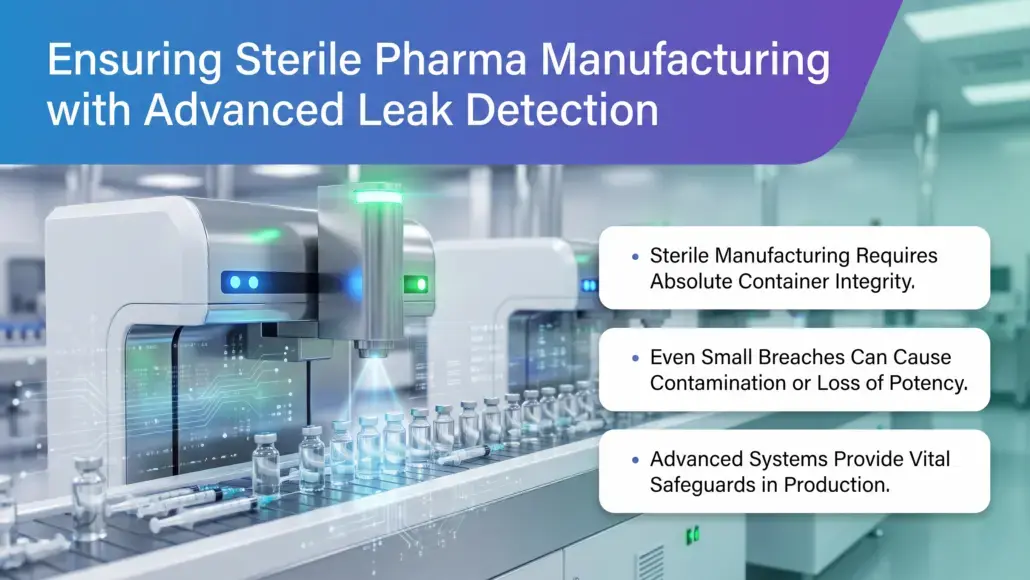
The pharmaceutical industry is built upon a foundation of sterile manufacturing, where the absolute integrity of the container closure system is non negotiable. For liquid medications, particularly those delivered via injection, even the smallest breach in the container can lead to microbial contamination, loss of potency, or the ingress of oxygen and moisture. The implementation of these advanced systems is a vital safeguard in the production process, providing a high level of assurance that every unit meets the required sterility standards. Historically, container closure integrity testing (CCIT) relied on probabilistic methods that were often destructive and lacked the sensitivity needed for modern biologics and high potency drugs. The transition toward deterministic and non destructive leak detection technologies represents a significant advancement in quality control, allowing for 100 percent inspection of production batches and providing more reliable data for regulatory compliance. This analytical review examines the key methodologies and regulatory trends that are shaping the future of container integrity testing in the pharmaceutical sector.
Vacuum Decay and High Voltage Leak Detection Methodologies
Vacuum decay is one of the most widely adopted deterministic leak detection methods in the pharmaceutical industry, known for its high sensitivity and non destructive nature. This process involves placing the container in a test chamber and drawing a vacuum. If a leak is present, the gas or liquid inside the container will escape into the chamber, causing a detectable rise in pressure over a specific period. Leak-detection systems improving pharmaceutical container integrity using vacuum decay can identify defects as small as a few microns, making it an ideal solution for testing vials, ampoules, and pre filled syringes. The precision of this method is dependent on the ability of the system to maintain a stable vacuum and to accurately measure minute pressure changes, requiring high resolution sensors and sophisticated signal processing algorithms.
High Voltage Leak Detection (HVLD) is another powerful deterministic method, particularly effective for testing containers filled with conductive liquids such as protein solutions or electrolytes. HVLD involves applying a high voltage, low current electrical field across the container. If the container is intact, the glass or plastic acts as an insulator, and no current flows. However, if a pinhole or crack is present, the electrical field will penetrate the defect and complete a circuit through the conductive liquid, triggering an alarm. This method is extremely fast and can be integrated directly into high speed production lines, allowing for real time inspection without the need for specialized sample preparation. By utilizing these advanced methodologies, pharmaceutical manufacturers can achieve a higher level of confidence in the integrity of their containers and significantly reduce the risk of non compliant products reaching the market.
Deterministic Versus Probabilistic Testing Frameworks
The shift from probabilistic to deterministic testing is a central theme in modern pharmaceutical quality control. Probabilistic methods, such as the methylene blue dye ingress test, rely on a series of sequential events that may or may not occur, leading to a degree of uncertainty in the results. These tests are often qualitative, subjective, and require the destruction of the samples, making them unsuitable for 100 percent inspection. In contrast, deterministic leak-detection systems improving pharmaceutical container integrity are based on a predictable physical phenomenon, providing quantitative and reproducible results that are not dependent on operator interpretation. This move toward deterministic testing is supported by USP <1207>, which provides a comprehensive framework for the selection and validation of container closure integrity testing methods.
The adoption of deterministic frameworks allows manufacturers to establish a clear “detection limit” for their testing processes, providing a scientific basis for their quality assurance claims. This is particularly important for high value products where the cost of a false positive or a missed defect is significant. Deterministic methods also facilitate the implementation of Quality by Design (QbD) principles, as the data generated during testing can be used to optimize the container closure system and the manufacturing process itself. By focusing on deterministic testing, the pharmaceutical industry is improving the reliability of its sterile barrier systems and ensuring that patient safety is maintained at the highest possible level. The move away from subjective, probabilistic testing is a clear indication of the industry’s commitment to technical excellence and data driven decision making.
Non Destructive Evaluation of Pre Filled Syringes and Vials
The growth of the biologics market has led to an increased use of pre filled syringes (PFS) and high recovery vials, which present unique challenges for container integrity testing. These primary containers often have complex geometries, multiple components, and are filled with expensive, highly sensitive medications. Leak-detection systems improving pharmaceutical container integrity must be capable of testing these containers without compromising the product or the package. Non destructive evaluation techniques, such as laser based headspace analysis, allow for the inspection of containers without physical contact or the use of harmful radiation. Headspace analysis measures the concentration of oxygen or moisture inside the container, providing an indirect but highly accurate measurement of seal integrity.
Laser based systems can also detect changes in the internal pressure of the container, which can be an early indicator of a slow leak or a compromised seal. For pre filled syringes, the integrity of the plunger seal and the needle shield must also be verified, requiring specialized testing fixtures and sensors. The use of non destructive evaluation is essential for reducing waste and for allowing the re testing of samples if necessary. It also enables the implementation of “shelf life” studies where the same units can be monitored over an extended period to assess the long term stability of the container closure system. By investing in non destructive testing technologies, pharmaceutical companies are protecting their most valuable products and ensuring that the integrity of the primary container is maintained throughout its entire life cycle.
Regulatory Shifts Toward Continuous Container Closure Integrity Testing
Regulatory agencies worldwide are placing an increased emphasis on the importance of container closure integrity throughout the product life cycle. This has led to a shift away from “point in time” testing toward more continuous and comprehensive monitoring strategies. Leak-detection systems improving pharmaceutical container integrity are now expected to be integrated into the broader quality management system, providing data that supports the ongoing validation of the manufacturing process. This trend is reflected in the updated Annex 1 of the EU GMP guidelines, which mandates a more rigorous and risk based approach to sterile manufacturing, including the requirement for 100 percent integrity testing for certain types of containers.
The move toward continuous testing requires the use of high speed, automated systems that can keep pace with modern production lines. These systems must be capable of generating detailed audit trails, electronic signatures, and comprehensive reports that align with global regulatory standards such as 21 CFR Part 11. The data generated by these systems is not only used for product release but also for identified trends and for supporting continuous improvement initiatives. By adopting a proactive approach to regulatory compliance, pharmaceutical manufacturers can minimize the risk of inspection findings and ensure that their manufacturing processes remain at the leading edge of quality and safety. The commitment to continuous integrity testing is a key factor in maintaining the trust of regulatory authorities and in protecting the health and well being of patients.
Impact of Digital Integration on Quality Control Efficiency
The digitalization of the pharmaceutical factory is having a profound impact on the efficiency and effectiveness of leak detection and quality control. The integration of leak-detection systems improving pharmaceutical container integrity into the plant’s Manufacturing Execution System (MES) and Enterprise Resource Planning (ERP) systems allows for a seamless flow of data across the entire organization. This connectivity enables real time monitoring of production quality, rapid identification of process deviations, and faster decision making for product release. Advanced analytics and machine learning algorithms can be used to analyze large datasets from integrity testing, identifying subtle patterns that may indicate emerging quality issues or opportunities for process optimization.
Additionally, the use of digital twins and simulation tools allows manufacturers to model the performance of their container closure systems under various conditions, reducing the need for extensive physical testing and accelerating the time to market for new products. Remote monitoring and diagnostic capabilities also improve the uptime and reliability of leak detection equipment, ensuring that production lines continue to operate at peak efficiency. The shift toward a digitalized quality control environment is not only improving operational performance but also enhancing the transparency and traceability of the manufacturing process. By leveraging these advanced digital technologies, the pharmaceutical industry is creating a more resilient and efficient supply chain, ensuring that high quality, sterile medications are delivered safely and reliably to patients around the world. This commitment to digital innovation is a cornerstone of the industry’s ongoing efforts to improve global health outcomes through superior manufacturing and quality assurance.