











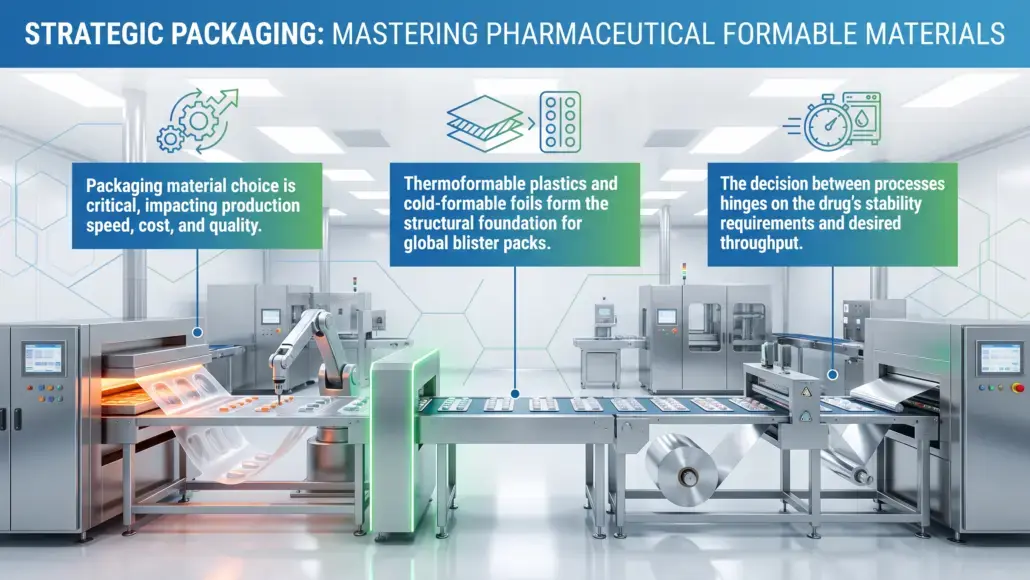
The selection of primary packaging materials is a critical decision in pharmaceutical manufacturing, directly influencing the speed, cost, and quality of the production line. These substrates, which include both thermoformable plastics and cold-formable foils, provide the structural foundation for blister packs, which are the most common unit-dose packaging format globally. The choice between thermoforming and cold-forming depends on the stability requirements of the drug and the desired throughput of the packaging line. Thermoforming involves heating a plastic film until it is soft enough to be shaped into cavities using vacuum or pressure, a process that is highly efficient for high-speed production of stable medicines. In contrast, cold-forming utilizes a multi-layer laminate containing aluminum foil, which is mechanically stretched into shape at room temperature, providing an absolute barrier against moisture, oxygen, and light for more sensitive formulations.
Understanding the mechanical behavior of these materials during the forming process is essential for preventing defects such as pinholes or thinning in the cavity walls. Cold-form foil, in particular, requires high ductility and tensile strength to withstand the significant deformation required to create deep blisters. The interaction between the material and the forming tools must be carefully managed to ensure uniform thickness and consistent barrier properties across the entire web. Additionally, advanced material science has led to the development of new laminates that offer improved formability, allowing for more complex cavity shapes and tighter packing densities. These innovations allow manufacturers to maximize the use of the substrate, reducing waste and improving the overall sustainability of the operation. The ability to switch between different formable packaging materials on the same line, provided the equipment is compatible, offers a high degree of production flexibility that is vital for responding to changing market demands.
Impact of Material Versatility on Production Throughput
The versatility of formable packaging materials has a direct impact on the operational efficiency and throughput of the pharmaceutical packaging suite. By utilizing materials that are compatible with a wide range of machines and tooling, manufacturers can streamline their processes and reduce the downtime associated with format changeovers. For instance, the use of high-performance thermoforming films that have a broad processing window allows for more consistent production even with minor fluctuations in machine temperature or pressure. This resilience reduces the number of rejected units and improves the overall equipment effectiveness (OEE) of the line. Additionally, the development of universal forming foils that can be used for both standard and high-barrier applications simplifies inventory management and reduces the risk of material-related production delays.
In a modern manufacturing environment, the integration of formable substrates with advanced automation is a key driver of productivity. High-speed blister machines rely on the consistent mechanical properties of the packaging materials to maintain synchronization at speeds of thousands of units per hour. Any variability in the material’s elasticity or thickness can lead to jams, misalignments, or compromised seals. The adoption of isolator-based filling systems for sterile products also requires packaging materials that are compatible with rigorous sterilization procedures and cleanroom environments. The synergy between high-quality substrates and sophisticated machinery ensures that the packaging operation remains resilient and reliable, even when handling the most challenging drug products. The use of these versatile substrates ensures that even the most complex dosage forms are packaged with high precision.
Optimizing Blister Cavity Design for Product Protection
The design of the blister cavity is a critical element in the overall protection strategy for a pharmaceutical product, and the properties of these substrates play a central role in this process. Engineers must balance the need for adequate headspace and protection with the desire for a compact and portable package. A well-designed cavity provides a secure nest for the tablet or capsule, preventing movement that could lead to physical damage during transport. The choice of material also dictates the level of protection against environmental factors. For moisture-sensitive drugs, the use of cold-form foil provides a hermetic seal that maintains a stable internal environment. The shape of the cavity must be optimized to minimize the stress on the material during forming, ensuring that the barrier remains intact even in the deepest corners of the blister.
Beyond protection, the design of the blister pack also impacts patient compliance and ease of use. This technology allow for the creation of ergonomic features, such as easy-peel lids or push-through foils with specific burst strengths. These features are particularly important for geriatric patients or those with limited dexterity. Additionally, the use of clear thermoformable films allows patients to see the medicine, which can help in verifying the correct dosage and identifying any physical changes in the product. For products that require light protection, opaque or tinted films can be used to block harmful wavelengths while still allowing for a certain degree of visibility. The ability to customize the cavity design and material selection for each specific drug product ensures that the packaging meets both the technical requirements for stability and the functional needs of the end-user.
Quality Assurance in Material Transformation Processes
The transformation of flat sheets into complex blister geometries requires a rigorous quality assurance framework to ensure that the formable packaging materials retain their barrier properties. During the thermoforming and cold-forming processes, the material is subjected to significant stress and strain, which can lead to structural weaknesses if not properly managed. Manufacturers must implement real-time monitoring of critical process parameters, such as forming temperature, plug pressure, and dwell time, to ensure consistency across the web. Advanced vision systems are often used to inspect the formed cavities for defects such as micro-cracks, thinning, or surface irregularities. These systems can detect flaws that are invisible to the naked eye but could compromise the long-term stability of the drug product.
In addition to in-process monitoring, extensive post-production testing is required to verify the performance of the formed blisters. This includes leak testing, burst testing, and stability studies under accelerated aging conditions. Additionally, the interaction between the material and the drug product must also be continuously monitored to ensure that no leaching or adsorption occurs over time. By maintaining a comprehensive record of all material and process data, manufacturers can identify the root causes of any quality issues and implement effective corrective actions. This commitment to quality assurance is essential for upholding the reputation of the pharmaceutical company and for ensuring the safety and efficacy of the products delivered to patients. The use of formable packaging materials remains a critical factor in the success of modern pharmaceutical packaging operations.
Strategic Sourcing and Sustainability in Material Selection
As the pharmaceutical industry continues to expand, the strategic sourcing of these substrates has become a complex logistical challenge. Manufacturers must ensure a reliable supply of high-quality substrates that meet all regulatory and quality specifications. This involves the rigorous auditing of material suppliers and the implementation of resilient quality control measures for incoming raw materials. Any disruption in the supply chain or a drop in material quality can have a significant impact on production schedules and product availability. To mitigate these risks, many companies are diversifying their supplier base and investing in long-term partnerships with leading material science firms. This collaborative approach allows for the development of customized packaging solutions that are tailored to the specific needs of the manufacturer’s product portfolio.
Sustainability has also become a primary driver in the selection of these components. The industry is facing increasing pressure to reduce the use of non-recyclable plastics and aluminum foils, leading to a surge in research into eco-friendly alternatives. Additionally, this includes the development of mono-material blisters that are easier to recycle and the use of bio-based polymers derived from renewable sources. These sustainable materials must undergo extensive testing to ensure they provide the same level of protection and processability as conventional substrates. The transition to greener packaging requires a careful balance between environmental responsibility and the non-negotiable requirement for product safety and stability. By embracing these innovations, pharmaceutical companies can demonstrate their commitment to environmental stewardship while continuing to deliver life-saving treatments to patients around the world.
Future Directions in Bio-Based and Recyclable Formable Substrates
The future of these substrates lies in the continued development of high-performance, sustainable alternatives to traditional plastics and foils. Researchers are exploring the use of cellulose-based films and other biodegradable polymers that offer excellent formability and barrier properties. Additionally, these materials have the potential to significantly reduce the carbon footprint of pharmaceutical packaging, particularly for products with high volume and short shelf lives. The development of advanced coating technologies also allows for the enhancement of the barrier properties of mono-material structures, making them suitable for a wider range of drug formulations. As these technologies mature and become more cost-effective, we can expect to see a significant shift toward more sustainable packaging formats across the industry.
In addition to new materials, the integration of digital technology into these structures is also an emerging trend. “Smart” blisters with built-in sensors or NFC tags can provide real-time information about the product’s status, such as its temperature history or whether a specific dose has been taken. The manufacturing of these intelligent packages requires the precise integration of electronic components with formable substrates, a task that demands high levels of technical expertise and innovation. The combination of advanced material science and digital connectivity will create a more responsive and patient-centric packaging ecosystem, driving improvements in drug stability, patient adherence, and supply chain transparency. As the pharmaceutical industry continues to evolve, formable packaging materials will remain at the forefront of this transformation, providing the flexibility and protection needed to meet the challenges of the future.