








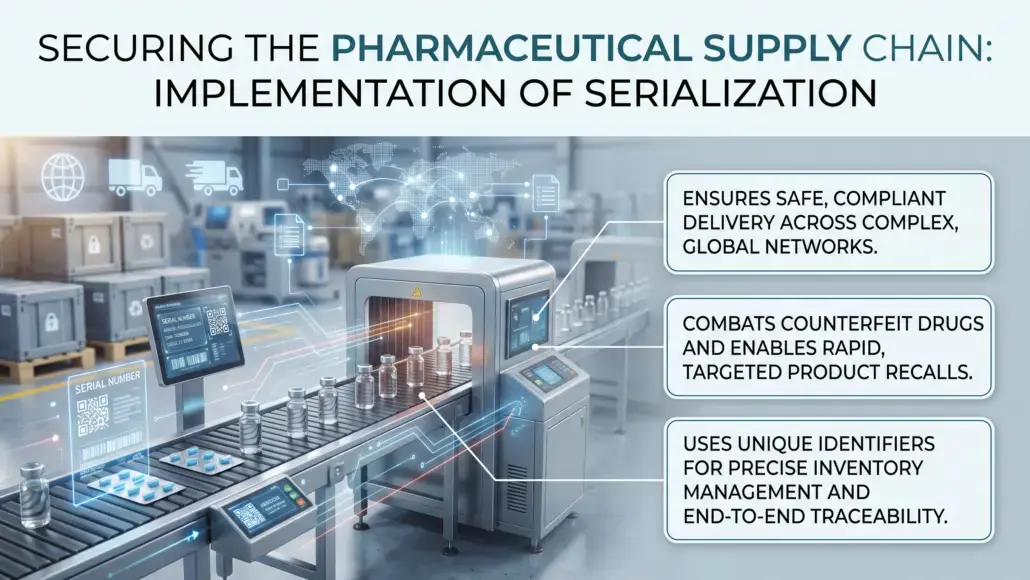
The pharmaceutical supply chain is one of the most complex and highly regulated logistics networks in the world, responsible for the safe delivery of life saving medications across international borders. The increasing threat of counterfeit drugs, coupled with the need for rapid product recalls and efficient inventory management, has led to the widespread adoption of serialization technologies improving pharmaceutical package traceability. Serialization involves the assignment of a unique, verifiable identifier to each individual unit of sale, allowing it to be tracked and traced from the point of manufacture to the point of administration. This process is not merely a labeling exercise but a comprehensive technological undertaking that requires the integration of sophisticated hardware, software, and data management systems. By creating a digital twin of every physical package, manufacturers can achieve unprecedented levels of visibility and control, ensuring that only authentic and safe products reach the patient. The implementation of these technologies is a significant milestone in the industry’s journey toward a fully digitized and secure global supply chain.
Data Architecture for Global Regulatory Compliance
The foundation of any serialization program is a resilient data architecture that can manage millions of unique serial numbers across a global manufacturing network. These systems require a hierarchical data structure that connects individual units to bundles, cases, and pallets, a process known as aggregation. This data must be stored in a secure, scalable database that allows for rapid retrieval and verification by authorized stakeholders throughout the supply chain. Regulatory requirements, such as the Drug Supply Chain Security Act (DSCSA) in the United States and the Falsified Medicines Directive (FMD) in the European Union, mandate specific data formats and reporting protocols that manufacturers must follow to maintain market access.
Ensuring compliance with these diverse and evolving regulations is a significant challenge, necessitating the use of flexible software platforms that can adapt to new requirements without disrupting production. These platforms must be capable of generating and managing serial numbers in accordance with international standards, such as those established by GS1, ensuring that the data is interoperable across different systems and geographies. Additionally, the data architecture must include strong cybersecurity measures to protect sensitive information from unauthorized access or tampering. The integrity of the serialized data is just as important as the physical integrity of the product, as any breach could compromise the entire traceability system and expose patients to risk. By investing in advanced data management solutions, pharmaceutical manufacturers can build a solid foundation for long term compliance and operational excellence.
Hardware Integration at the Primary and Secondary Levels
The physical application of serial numbers requires the integration of specialized hardware onto existing production lines. Serialization technologies improving pharmaceutical package traceability utilize high resolution inkjet or laser marking systems to print 2D DataMatrix codes, human readable text, and other required information directly onto primary or secondary packaging. The precision of these marking systems is critical, as the codes must be clearly legible and durable enough to survive the rigors of the supply chain. High speed vision systems are then used to verify the quality and accuracy of the printed codes, ensuring that every serialized unit meets the required standards before it leaves the facility.
Integration of this hardware can be a complex engineering task, particularly on older production lines with limited space or outdated control systems. Manufacturers must carefully select components that are compatible with their existing equipment and that can operate at the high speeds required for modern pharmaceutical production. In many cases, this involves the use of specialized conveyors and product handling units that provide the stability and positioning accuracy needed for precise marking and verification. The hardware must also be designed for easy maintenance and rapid changeover, minimizing the impact on overall equipment effectiveness. By successfully integrating these hardware components, manufacturers can ensure that their serialization process is both reliable and efficient, providing the necessary physical link between the product and its digital record.
Aggregation Strategies for Supply Chain Visibility
Aggregation is the process of building a parent child relationship between serialized units and their larger shipping containers. This is a critical step in serialization technologies improving pharmaceutical package traceability, as it allows for the tracking of entire pallets or cases without the need to scan every individual unit at every point in the supply chain. For example, by scanning a single pallet code, a distributor can verify the contents of every case and individual unit on that pallet, significantly improving the efficiency of warehouse operations and reducing the risk of manual errors. Aggregation requires a highly synchronized process on the packaging line, where the serial numbers of each unit are captured and associated with the serial number of the parent container in real time.
Implementing aggregation presents several operational challenges, including the need for increased space on the packaging line and the potential for increased downtime if a jam or error occurs. Manufacturers must develop resilient rework procedures to handle situations where a container must be opened or its contents changed after the aggregation data has been recorded. This requires a sophisticated software system that can update the parent child relationships automatically, ensuring that the traceability record remains accurate at all times. Despite these challenges, the benefits of aggregation are significant, providing the level of visibility needed for efficient inventory management, targeted product recalls, and enhanced security. By adopting comprehensive aggregation strategies, pharmaceutical companies can optimize their supply chain operations and provide better service to their customers and patients.
Mitigating Counterfeit Risks Through Unique Identification
The primary driver for the adoption of serialization is the need to combat the global trade in counterfeit medicines, which poses a serious threat to public health and the economic stability of the pharmaceutical industry. Serialization technologies improving pharmaceutical package traceability provide a powerful tool for identifying and removing falsified products from the market. By scanning the unique identifier at the point of sale or administration, healthcare providers can instantly verify the authenticity of the product against a secure manufacturer database. If a code is found to be duplicate, invalid, or previously decommissioned, the system can flag the product for further investigation, preventing it from being dispensed to a patient.
Beyond simple verification, serialization also enables the use of advanced anti counterfeiting features such as tamper evident packaging and overt or covert security elements. When combined with a unique serial number, these features provide a multi layered defense against sophisticated counterfeiters who may attempt to replicate packaging or re use authentic serial numbers. The data generated by serialization can also be used to identify suspicious patterns in the supply chain, such as an unusually high number of verification requests for a specific product or geography. This information allows manufacturers and regulatory agencies to target their enforcement efforts more effectively and to take proactive measures to protect the supply chain. Through the use of unique identification and real time verification, serialization technologies are significantly reducing the risk of counterfeit drugs and ensuring that patients receive the high quality treatments they expect.
Evolving Standards for International Interoperability
As the pharmaceutical industry continues to expand globally, the need for international standards for serialization and traceability becomes increasingly important. Serialization technologies improving pharmaceutical package traceability must be able to operate across different regulatory jurisdictions and supply chain systems to be truly effective. The adoption of global standards, such as the GS1 Electronic Product Code Information Services (EPCIS), provides a common language for sharing serialized data between different stakeholders, including manufacturers, distributors, pharmacies, and regulators. This interoperability is essential for the seamless movement of products across borders and for the efficient management of global supply chains.
The evolution of these standards is an ongoing process, involving collaboration between industry leaders, regulatory agencies, and standards organizations. New technologies such as blockchain and distributed ledger systems are also being explored as a means of enhancing the security and transparency of serialized data. These technologies could provide a decentralized and immutable record of every transaction in the supply chain, further reducing the risk of data tampering or fraud. However, the successful implementation of these advanced solutions will require a high degree of standardization and collaboration across the entire industry. By staying active in the development of international standards and by adopting interoperable technologies, pharmaceutical companies can ensure that their serialization programs remain effective and future proof in a rapidly changing global market. This commitment to international cooperation is a key factor in the industry’s ongoing efforts to build a safer and more transparent global pharmaceutical supply chain.
The integration of advanced tracking capabilities ensures that every stakeholder can verify the provenance of medical products with high confidence. By fostering a culture of transparency and technological innovation, the pharmaceutical sector is setting a new standard for global supply chain security. This long term investment in traceability infrastructure will continue to pay dividends in terms of patient safety and operational efficiency for years to come. The ability to respond rapidly to market disruptions and regulatory shifts is a critical component of a modern, resilient healthcare delivery system. Through these comprehensive serialization initiatives, the industry is demonstrating its dedication to upholding the highest standards of integrity and accountability in every step of the drug delivery process. This proactive approach to supply chain management is essential for maintaining public trust and for ensuring the continued availability of essential medications worldwide.