








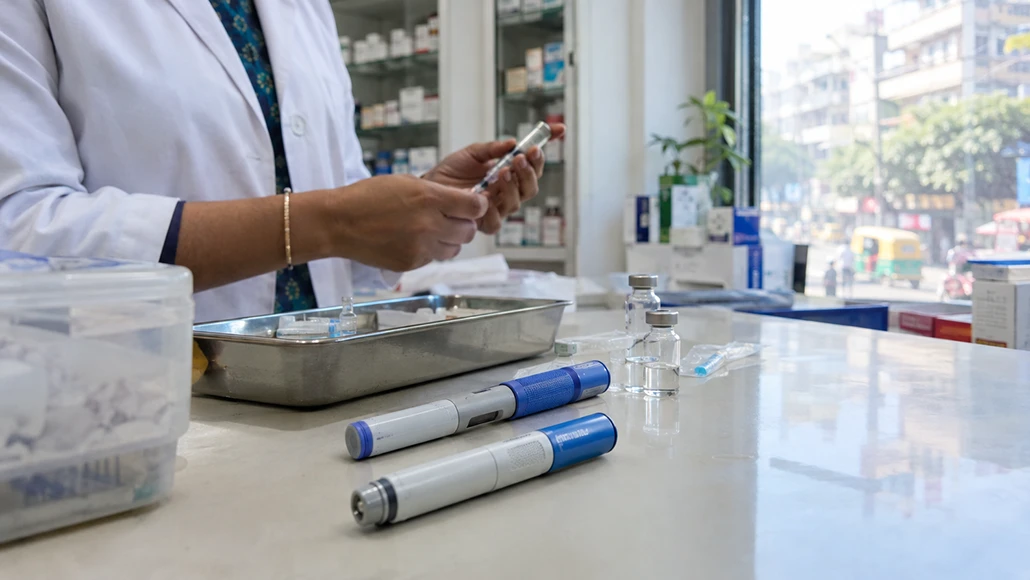
India’s weight-loss drug story has moved well beyond a niche pharmaceutical category. GLP-1 medicines are now creating a rapidly expanding business around obesity and metabolic health, with Mounjaro and semaglutide at the centre of the competition.
India’s GLP-1 segment reached ₹2,333 crore in sales for the 12 months ended August 2026. Unit sales grew 74% in August, while injectable products accounted for about 86% of the segment.
Mounjaro takes the lead
Eli Lilly’s Mounjaro (tirzepatide) has become the strongest commercial force in India’s GLP-1 category. The brand recorded ₹1,256 crore in sales during the 12 months ended August 2026, representing 502% value growth over the comparable period.
Tirzepatide accounted for approximately 62% of India’s GLP-1 market, equivalent to ₹1,456 crore, while semaglutide contributed around 34%, or ₹782 crore.
The numbers show that Indian patients are increasingly moving toward injectable GLP-1 therapies. Injectable sales reached about ₹2,010 crore, compared with ₹348 crore a year earlier.
Semaglutide opens a new price battle
The next major shift came when semaglutide patent protection expired in India in March 2026. This opened the door for multiple lower-priced versions and significantly changed the competitive structure.
The result was not simply a switch from branded products to generics. Lower prices brought more eligible patients into treatment, while established brands continued to retain significant demand. By August, however, the explosive initial growth following generic entry had started to settle into a more stable pattern.
This is an important distinction for companies. A large obesity population does not automatically translate into a large GLP-1 patient pool. Eligibility, diagnosis, physician supervision, affordability and long-term adherence all determine how much of that population becomes an addressable treatment market.
India’s regulatory landscape is also evolving
India’s regulator, the Central Drugs Standard Control Organisation (CDSCO), has been actively reviewing GLP-1 products and clinical-development proposals.
In January 2026, CDSCO’s Subject Expert Committee recommended permission for manufacture and marketing of synthetic semaglutide injections from MSN Laboratories for adults with inadequately controlled type 2 diabetes, subject to post-marketing safety reporting. The same meeting also reviewed semaglutide applications involving Cipla and Natco.
CDSCO records also show continued clinical-development activity around tirzepatide and retatrutide, including an Eli Lilly application covering both molecules in April 2026.
The government has simultaneously increased surveillance. In March 2026, the Ministry of Health and Family Welfare said the Drugs Controller had intensified monitoring of GLP-1 supply chains because of concerns around unauthorised sales and promotion through pharmacies, online platforms, wholesalers and wellness clinics.
FDA approvals point to the next wave
The global pipeline suggests that India’s competition will not remain limited to injectable semaglutide and tirzepatide.
In March 2026, the U.S. FDA approved Wegovy HD, a higher 7.2 mg dose of semaglutide, for weight management and long-term maintenance in eligible adults.
Just weeks later, the FDA approved Foundayo (orforglipron) from Eli Lilly, a once-daily oral GLP-1 drug for adults with obesity or overweight with a weight-related comorbidity. The approval adds an important new dimension to the category because patients can take it without the fasting requirements associated with some oral medicines.
For Indian pharmaceutical companies, these developments matter because the next competitive advantage may come from oral dosing, higher efficacy, combination mechanisms and greater convenience, rather than simply producing another injectable.
The larger drug-market opportunity
Towards Healthcare’s research places the global drugs market at $1790.05 billion in 2026, with the market projected to reach $3,034.63 billion by 2035, representing a 6.04% CAGR from 2026 to 2035.
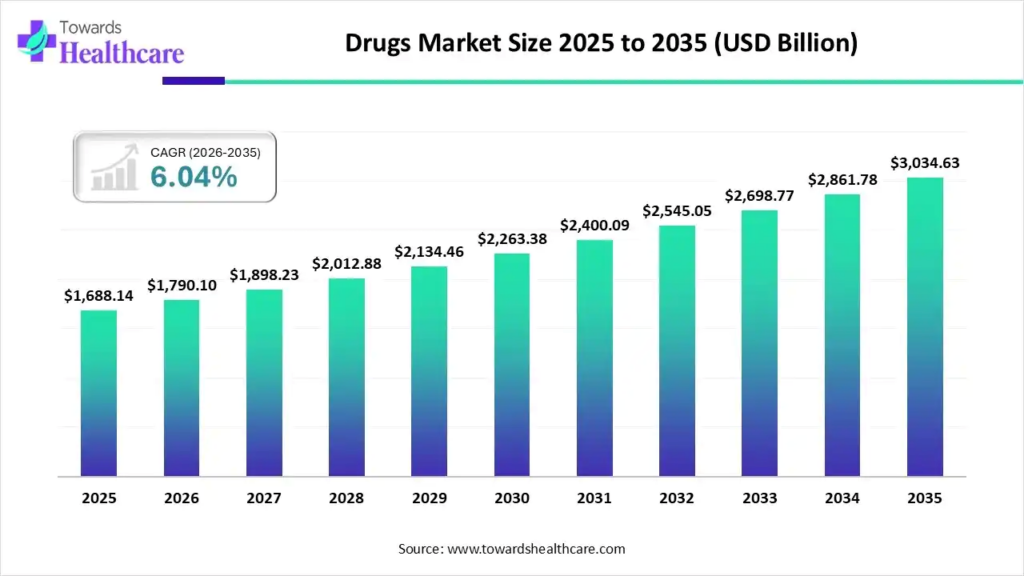
Within this broader pharmaceutical expansion, obesity medicines represent an increasingly important strategic segment as companies compete across diabetes, cardiovascular disease, metabolic health and weight management.
Challenges and opportunities
Challenges
- Long-term treatment adherence and discontinuation
- High cost of branded therapies
- Regulatory oversight of generic and compounded products
- Counterfeit and unauthorised online sales
- Gastrointestinal and other treatment-related adverse events
- Limited awareness of medically appropriate GLP-1 use
Opportunities
- Lower-cost semaglutide alternatives
- Oral GLP-1 and next-generation therapies
- Combination and multi-target obesity medicines
- Expansion into Tier 2 and Tier 3 cities
- Patient-support and treatment-monitoring programmes
- Local manufacturing and pharmaceutical partnerships
What companies must know
India’s GLP-1 opportunity is moving from rapid adoption to competitive maturity. Companies entering this space need to look beyond obesity prevalence and assess eligible patient pools, pricing, regulatory pathways, physician adoption, manufacturing capacity and treatment persistence.
The ₹2,333 crore figure shows where the market stands today. The more important question for pharmaceutical companies is what will expand the market next: lower prices, new molecules, oral treatments, broader access or better long-term outcomes.
That is where the next phase of India’s obesity-drug competition will be decided.