








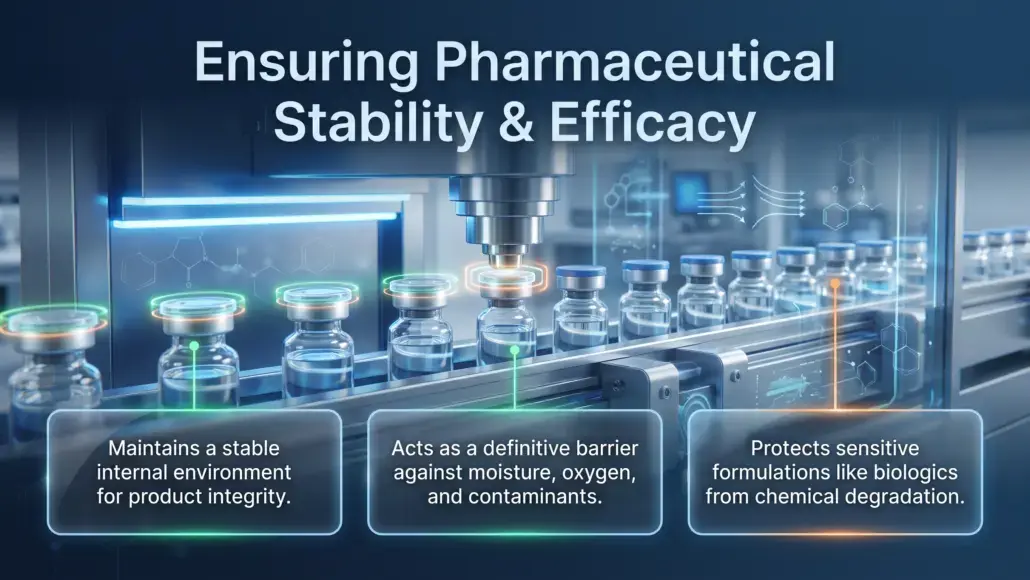
The preservation of pharmaceutical efficacy depends heavily on the ability of the primary packaging to maintain a stable internal environment, free from the damaging effects of the external atmosphere. These advanced closures serve as the definitive line of defense against the ingress of moisture, oxygen, and other gaseous contaminants that can trigger chemical degradation in sensitive formulations. For many modern drugs, including small molecule therapeutics and biologics, even minute exposures to environmental humidity can lead to hydrolysis, oxidation, or changes in the crystalline structure of the active pharmaceutical ingredient (API). Ensuring a truly airtight enclosure is therefore not merely a matter of physical containment but a fundamental requirement for maintaining the biochemical integrity and therapeutic potency of the medicine throughout its intended lifecycle. The importance of hermeticity is further magnified in the context of global distribution, where products are often subjected to extreme fluctuations in temperature and humidity. Without the use of hermetic sealing systems, the stability of a drug could be compromised during transit through tropical climates or prolonged storage in non-climate-controlled warehouses. Manufacturers must adopt a comprehensive approach to barrier protection, selecting materials and sealing methods that provide a consistent and verifiable seal across every unit produced. This level of protection is essential for meeting the safety standards set by regulatory agencies and for ensuring that patients receive treatments that are both effective and safe. The move toward more personalized and potent medications has only increased the technical requirements for these systems, driving innovation in both material science and sealing machinery.
Technical Mechanisms of Advanced Sealing Technologies
Achieving a hermetic seal requires the precise application of thermal, mechanical, or electromagnetic energy to create a permanent bond between the packaging components. Induction sealing is one of the most widely used methods for plastic and glass containers, utilizing a controlled electromagnetic field to heat a foil liner, which then melts a polymer coating to form an airtight bond with the rim of the container. This process is highly efficient and can be integrated into high-speed production lines with minimal impact on throughput. The success of this technique depends on the careful synchronization of the conveyor speed, the power output of the induction head, and the pressure applied by the cap. Any deviation in these parameters can result in a weak seal, compromising the integrity of the entire batch. Vacuum and modified atmosphere packaging (MAP) represent another critical layer of barrier technology, particularly for products that are highly sensitive to oxygen. By removing the ambient air from the headspace of a container or replacing it with an inert gas like nitrogen, manufacturers can significantly slow down oxidative processes. The technology must be capable of maintaining the vacuum or gas composition over long periods, necessitating the use of high-barrier materials such as aluminum foils or specialized multi-layer laminates. Additionally, light-blocking packaging structures are often used in conjunction with these seals to provide a comprehensive barrier against both gaseous and electromagnetic threats. The integration of advanced sensors within the sealing equipment allows for the real-time monitoring of critical process parameters, ensuring that every unit meets the established specifications for hermeticity.
Impact on Shelf Life and Global Distribution Logistics
The direct correlation between seal integrity and product shelf life has profound implications for the commercial viability of pharmaceutical products. By utilizing superior technology, manufacturers can extend the expiration dates of their medicines, reducing waste and improving the availability of treatments in remote or underserved markets. A longer shelf life also provides greater flexibility in inventory management, allowing for larger production runs and more efficient distribution cycles. This is particularly important for orphan drugs or specialized therapies that may have a slower turnover rate in the supply chain. The ability to guarantee product stability over several years is a key competitive advantage in the crowded pharmaceutical sector, where reliability is a primary concern for both healthcare providers and patients. From a logistics perspective, airtight packaging reduces the reliance on expensive cold chain infrastructure for certain moisture-sensitive products. While temperature control remains vital for many biologics, the ability to prevent moisture-induced degradation through high-quality sealing can mitigate some of the risks associated with temporary excursions during transport. Additionally, the use of hermetic seals in blister packs and strip packs provides unit-dose protection, ensuring that each individual tablet or capsule remains protected until the moment of consumption. This is a significant improvement over traditional bulk packaging, where repeated opening and closing of the container exposes the remaining contents to the environment. The resilience offered by the hermetic sealing systems ensures that the pharmaceutical supply chain remains stable, even in the face of unpredictable environmental challenges.
Validation and Quality Control in Sealing Processes
Maintaining the validated state of a sealing process is a complex task that requires rigorous testing and continuous monitoring. Regulatory agencies require manufacturers to prove that their technology consistently produces a seal that meets the required barrier specifications. This validation process involves a series of challenges, including leak testing, burst testing, and peel strength analysis. Non-destructive integrity testing, such as vacuum decay or high-voltage leak detection (HVLD), has become increasingly popular as it allows for the 100% inspection of production batches without destroying the product. These advanced methods can detect micro-leaks that would be invisible to the naked eye but could still compromise the long-term stability of the drug. Quality control in sealing also extends to the management of raw materials and components. The compatibility between the sealing media and the container material must be verified to ensure a strong and durable bond. Manufacturers must also implement strict controls over the storage and handling of sealing foils and laminates to prevent contamination or damage before they reach the production line. The integration of data analytics into the quality control process allows for the identification of trends and patterns that might indicate a drift in machine performance. By analyzing the results of integrity tests over time, technical teams can schedule preventative maintenance and optimize process parameters to maintain peak efficiency. The implementation of hermetic sealing systems remains a cornerstone of quality assurance, ensuring the safety of the end-user through every step of the manufacturing journey.
Advanced Analytical Techniques for Seal Integrity Assessment
The shift toward zero-defect manufacturing in pharmaceutical packaging has driven the development of advanced analytical techniques for the assessment of seal integrity. Traditional methods, such as the blue dye test, are increasingly being replaced by more sensitive and objective technologies that provide quantitative data on the performance of the closure. Laser-based headspace analysis (HSA) is one such method, utilizing frequency modulation spectroscopy to measure the concentrations of oxygen and moisture within a sealed container. This non-destructive technique allows for the monitoring of barrier performance over time, providing valuable insights into the long-term stability of the drug product. The ability to detect even microscopic changes in headspace composition is essential for identifying potential seal failures before they impact the quality of the batch. Another critical technique is mass extraction leak testing, which measures the flow rate of air or gas escaping from a sealed package under vacuum. This method is highly sensitive and can detect leaks as small as a few microns, making it ideal for the validation of high-barrier packaging. The integration of these analytical tools into the production line allows for the 100% inspection of critical products, providing a level of assurance that was previously impossible. By analyzing the data generated by these tests, quality control teams can identify the root causes of seal failure, whether they are related to material variability, machine performance, or environmental conditions. This data-driven approach to quality assurance is essential for maintaining the high standards of the pharmaceutical industry and for ensuring that every patient receives a product that is safe and effective.
Sustainable Material Innovations for Barrier Protection
As the pharmaceutical industry faces increasing pressure to reduce its environmental impact, the development of sustainable materials for these closures has become a top priority. Traditional high-barrier packaging often relies on complex multi-layer structures that are difficult to recycle. Additionally, new innovations in material science are leading to the creation of mono-material laminates and biodegradable polymers that offer comparable barrier properties to conventional foils. These sustainable alternatives must undergo extensive stability testing to ensure that they do not interact with the drug product or compromise the hermetic seal over time. The transition to greener packaging solutions requires a careful balance between environmental responsibility and the non-negotiable requirement for product protection. The adoption of sustainable sealing technologies also involves the optimization of energy consumption during the manufacturing process. Modern induction and heat sealing systems are designed to be more energy-efficient, utilizing advanced power electronics and thermal management systems to reduce waste. Additionally, the reduction in product loss through improved seal integrity contributes to a more sustainable operation by ensuring that fewer resources are wasted on compromised batches. As regulatory bodies begin to implement stricter requirements for packaging sustainability, the ability to integrate eco-friendly materials into the hermetic sealing systems will become a critical factor for success. By embracing these innovations, pharmaceutical companies can demonstrate their commitment to environmental stewardship while continuing to provide life-saving treatments to patients around the world.