

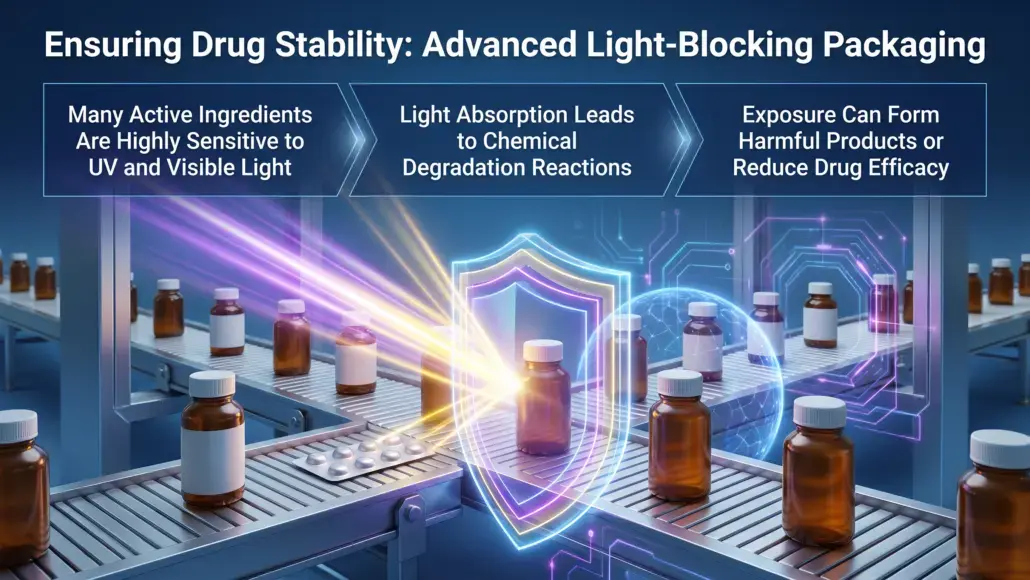
The photochemical stability of a pharmaceutical product is a critical factor in its safety and efficacy, as many active pharmaceutical ingredients (APIs) are highly sensitive to exposure to ultraviolet (UV) and visible light. When these molecules absorb electromagnetic radiation, they can undergo a variety of degradation reactions, including oxidation, reduction, and rearrangement, leading to the formation of potentially toxic photoproducts or a significant loss in therapeutic potency. This protective technology serves as the essential barrier that mitigates these risks, ensuring that the medicine remains stable throughout its shelf life. The vulnerability of a drug to light is often determined during the pre-formulation stage, where stability testing identifies the specific wavelengths that cause the most damage. This data is then used to design a packaging system that provides the necessary level of protection, ranging from simple opaque secondary cartons to complex multi-layer primary containers.
The consequences of photo-degradation are not limited to the chemical integrity of the drug but can also affect its physical appearance, such as color changes or the formation of precipitates. These changes can lead to patient non-compliance or confusion, as the product no longer matches its original description. For healthcare providers, the instability of light-sensitive medicines complicates storage and handling procedures, often requiring the use of specialized amber containers or darkroom conditions. By utilizing advanced light-blocking packaging, manufacturers can provide a more resilient product that is easier to manage in the clinical environment. This protection is particularly vital for life-saving treatments like certain antibiotics, hormones, and vitamins, where any compromise in quality could have serious implications for patient health. The integration of light protection into the primary packaging design allows for greater confidence in the product’s performance, regardless of the lighting conditions in the supply chain.
Material Science of High-Barrier Light Protection
Achieving effective light protection requires a deep understanding of the optical properties of materials and how they interact with different wavelengths of light. Traditionally, amber glass has been the standard for photosensitive liquids, as it effectively filters out most UV radiation while still allowing for the visual inspection of the contents. Additionally, the move toward plastic and flexible packaging has led to the development of new polymers and additives that offer comparable light-blocking capabilities. The use of opacifying agents, such as titanium dioxide or carbon black, can be integrated into the plastic matrix to create an opaque barrier that prevents light transmission. These additives must be carefully selected to ensure they do not leach into the drug product or interfere with the mechanical properties of the housing.
In addition to opaque plastics, metallic foils, particularly aluminum, provide the ultimate barrier against all forms of electromagnetic radiation. Aluminum foil is frequently used as a component in multi-layer laminates for blister packs and sachets, providing a 100% opaque shield that protects the medicine from light, moisture, and oxygen. The effectiveness of these foils is enhanced when they are combined with hermetic sealing systems, which ensure that no light can leak through the edges of the package. For products that require both light protection and visibility, such as certain intravenous solutions, manufacturers are developing transparent films with built-in UV absorbers. The selection of the light-blocking packaging involves a complex trade-off between protection, cost, and functionality, requiring a collaborative effort between material scientists and packaging engineers.
Designing Multi-Layer Structures for Opaque Barrier
For many highly sensitive pharmaceutical products, a single layer of packaging material is insufficient to provide the required level of protection. Instead, engineers design multi-layer structures that combine the strengths of different materials to create a comprehensive barrier. A typical configuration might include an outer layer for mechanical strength and printability, a middle layer of aluminum foil or high-opacity polymer for light and gas protection, and an inner contact layer that is chemically compatible with the drug product. The thickness and composition of each layer are optimized based on the specific stability profile of the medicine. This multi-layer approach allows for the creation of a package that is not only protective but also functional, featuring easy-open properties, child-resistance, and tamper-evidence.
The manufacturing of these multi-layer structures involves complex processes such as co-extrusion and lamination, where different materials are bonded together under precise heat and pressure. The integrity of the bond between the layers is critical, as any delamination could create a path for light or moisture to reach the product. Manufacturers must implement rigorous quality control measures to verify the opacity and barrier performance of every batch of packaging material. Advanced testing methods, such as spectrophotometry, are used to measure the light transmission across a broad range of wavelengths, ensuring that the package meets the established specifications for light protection. The ability to customize these structures allows pharmaceutical companies to tailor their packaging to the unique needs of each product, providing a high degree of confidence in the long-term stability of their drug portfolio. The implementation of light-blocking packaging ensures that the therapeutic efficacy of these products is maintained throughout the supply chain.
Strategic Implementation of Secondary Light Protection
While primary packaging is the first line of defense, the strategic implementation of secondary and tertiary light protection is equally critical for ensuring the stability of photosensitive medicines. Secondary packaging, such as cartons and wallets, provides an additional layer of opacity that shields the primary container from ambient light during storage and handling. For highly sensitive products, these cartons may be lined with aluminum foil or treated with UV-blocking coatings to provide maximum protection. The design of the secondary packaging must also facilitate the proper storage of the medicine, with clear instructions for the user to keep the product in the carton until the moment of use. In the hospital environment, where medications are often removed from their original cartons for storage in automated dispensing cabinets, the use of light-blocking overwraps or specialized dispensing bins is essential for preventing premature degradation.
Tertiary packaging, including shipping cases and pallets, must also be designed to minimize light exposure during long-distance transport. This is particularly important for products that are shipped via air or sea, where they may be subjected to intense sunlight during loading and unloading. The use of opaque shrink wrap and light-shielding pallet covers can provide a resilient barrier against electromagnetic radiation during the most vulnerable stages of the supply chain. Manufacturers must conduct comprehensive shipping studies to verify the effectiveness of their total light-blocking packaging system under real-world conditions. By taking a holistic approach to light protection, from the primary container to the shipping pallet, pharmaceutical companies can ensure that their products remain stable and effective for every patient, regardless of where they are in the world.
Regulatory Standards for Photosensitive Product Labeling
Regulatory agencies, including the FDA and EMA, have established clear guidelines for the management of photosensitive pharmaceutical products. These standards require manufacturers to conduct thorough photostability testing according to ICH Q1B guidelines, which define the lighting conditions and exposure levels required to assess a product’s vulnerability. Based on the results of these tests, companies must provide appropriate labeling that informs healthcare providers and patients about the necessary storage conditions, such as “protect from light” or “store in the original carton.” The design of the packaging must be documented in the New Drug Application (NDA) or Marketing Authorization Application (MAA), with supporting data demonstrating its effectiveness in maintaining product quality.
Compliance with these regulatory standards is essential for gaining market approval and for ensuring the safety of the end-user. The labeling must be prominent and easy to understand, as the failure to protect a photosensitive medicine from light is a common cause of medication errors and product degradation. In addition to the primary packaging, secondary and tertiary packaging must also be designed to provide protection during transport and storage. This may involve the use of opaque overwraps or specialized shipping containers that minimize light exposure. Additionally, the integration of serialization and track-and-trace technology into the packaging allows for the monitoring of the product’s journey through the supply chain, ensuring that it has been handled according to the required stability protocols. As global regulations continue to evolve, the pharmaceutical industry must remain proactive in adopting the latest light-blocking technologies and labeling practices to ensure the continued safety and efficacy of their products.
Innovations in Transparent UV-Blocking Technologies
The pharmaceutical industry is seeing a growing demand for packaging that offers both light protection and transparency, particularly for biologics and parenteral drugs that require visual inspection. This has led to the development of advanced transparent UV-blocking technologies, which utilize nano-scale additives or specialized polymer coatings to filter out harmful radiation without affecting visibility. These materials can be integrated into glass vials or plastic syringes, providing a high level of protection while allowing clinicians to easily check for clarity, color, and the presence of particulates. The use of nano-additives allows for a more uniform distribution of the UV-blocking agent, resulting in a more consistent and effective barrier.
Another emerging trend is the development of “smart” packaging that can change its optical properties in response to environmental stimuli. For example, photochromic materials could darken when exposed to intense light, providing an additional layer of protection only when it is needed. This type of dynamic light-blocking packaging could be particularly useful for products that are frequently handled in outdoor or brightly lit environments. While these technologies are still in the early stages of development, they represent a significant step forward in the quest for more functional and protective pharmaceutical packaging. As the industry continues to innovate, the combination of advanced material science and intelligent design will ensure that photosensitive medicines are protected from the damaging effects of light, ensuring that they remain safe and effective for patients around the world.