






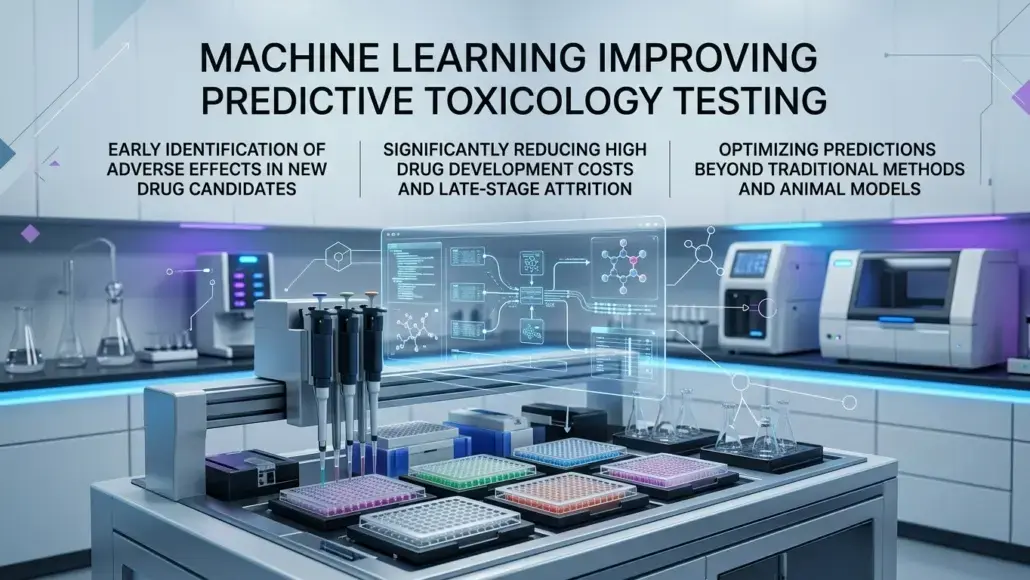
The pharmaceutical industry is currently facing a critical challenge in the management of safety risks associated with new drug candidates. For decades, the high rate of attrition during late-stage clinical trials has been a primary driver of the rising costs of drug development. Often, molecules that showed promise in early research failed in humans due to unexpected toxicity or adverse effects that were not identified in earlier testing. Traditional methods, which rely heavily on animal models and manual assays, have frequently proved insufficient for predicting how a complex molecule will interact with the human body. However, the introduction of advanced computational modeling is changing this dynamic. The implementation of machine learning is improving predictive toxicology testing path forward by identifying safety signals at an earlier stage in the development cycle.
Strategic R&D management now involves the use of these analytical tools to create high-fidelity digital models of human physiology. Instead of relying solely on the observation of physical systems, researchers can now simulate the metabolic and the toxicological response to a new compound with professional precision. This in silico approach to testing is a fundamental requirement for addressing the high attrition rate in the sector, as it allows companies to eliminate dangerous candidates before significant capital has been committed. By moving toward a more data-driven and predictive model, the industry is improving the clinical safety of its drug pipelines and ensuring that the most promising therapies reach the market with a clearer safety profile.
Moving Beyond Traditional Animal Models in Safety Assessment
The reliance on animal models has historically been a significant bottleneck in the search for safe and effective drugs. While these models provide valuable information, the physiological differences between species often lead to a lack of correlation in the final human results. This disparity is a major cause of the unexpected safety signals that often occur during Phase II and Phase III trials. Machine learning systems are now being used to bridge this gap by analyzing historical data from thousands of past studies to identify the specific molecular features that are associated with human toxicity. This capability is essential for pharmaceutical researchers who must ensure the absolute integrity of their safety assessments in an environment of increasing regulatory scrutiny.
Furthermore, the integration of human-specific cellular data into these predictive models ensures that the resulting safety profiles are as accurate as possible. By utilizing organ-on-a-chip technology and stem-cell-derived tissues, researchers can generate the data needed to train machine learning algorithms on the actual responses of human cells. This move toward a more biological and human-centric approach to testing is a hallmark of the modern pharmaceutical sector, where the focus is on achieving the best possible functional outcomes for the patient. The ability to predict the human response to a drug without relying on animal surrogates is a major technical advancement that is accelerating the development of the next generation of safe therapies.
Identifying Safety Signals via Advanced In Silico Modeling
The process of identifying potential toxic effects involves the coordination of billions of data points, from the chemical structure of the drug to its interaction with hundreds of different metabolic pathways. Traditional methods of manual analysis were often slow and prone to error, leading to the late-stage failure of many projects. Machine learning systems are now being used to scan this information in real-time, highlighting the subtle signs of degradation or adverse interactions that a human researcher might overlook. This proactive approach to Predictive Toxicology Testing is a vital component of modern risk management, ensuring that the research is conducted as safely and as efficiently as possible.
These advanced in silico models can also predict the long-term effects of a drug, such as its potential for carcinogenicity or reproductive toxicity, which are often difficult to detect in short-term studies. By simulating the long-term exposure to a compound, researchers can identify the potential risks before the first patient is even enrolled in a trial. This foresight is especially valuable for the economic sustainability of R&D programs, as it reduces the risk of expensive and legally complex late-stage failures. The commitment to using the best available technology in safety assessment is a key driver for the long-term success of the organization and the continued advancement of human health.
Risk Assessment and Machine Learning Integration Strategies
The successful implementation of machine learning improving predictive toxicology testing requires a fundamental reorganization of the research and development process. This involves the integration of toxicologists and data scientists into the heart of the discovery team, ensuring that every project is evaluated for its scientific merit and its clinical safety from the start. The focus is no longer just on the efficacy of the drug, but on the ability to manage the entire safety profile with professional precision. This strategic shift ensures that the molecules moving into clinical testing are the ones with the highest probability of success and the lowest risk of adverse events.
Furthermore, the use of these tools allows for a more personalized approach to risk assessment. By analyzing the genetic and the metabolic profile of specific patient populations, AI can help researchers identify those who are most likely to experience a toxic reaction to a treatment. This is a vital component of the move toward precision medicine, ensuring that the right drug is delivered to the right patient with the highest possible level of safety. The ability to tailor the safety profile to the individual is a major technical advantage that is redefining the standards of the pharmaceutical field. The focus remains on achieving the best possible clinical results at the lowest possible risk to the patient.
The Future of Clinical Safety and Pharmaceutical Toxicology
As the pharmaceutical industry continues to evolve, the role of data-intensive safety testing will only grow in importance. The coordinate of global research efforts through shared data platforms will be essential for further improving the accuracy of predictive models. By breaking down the silos that have traditionally separated research institutions and pharmaceutical companies, the industry can leverage a much larger pool of data to identify new safety signals and avoid redundant work. The commitment to transparency and professional collaboration is a key factor in the long-term success of the effort to improve the safety of drug development.
Looking ahead, the integration of real-time monitoring and artificial intelligence during the clinical phase will further enhance the value of predictive toxicology. As patients are treated in the clinic, the data generated can be used to refine the models, providing a continuous feedback loop that improves the accuracy of future predictions. This dynamic and responsive research environment is what will define the leaders of the pharmaceutical industry in the decades to come. The ultimate goal is the creation of a global safety ecosystem that can deliver on the promise of safe and effective therapies for every patient, regardless of the complexity or the rarity of their condition. The future of medicine lies in the ability to turn complex biological information into life-saving therapeutic interventions, providing a sustainable foundation for the continued advancement of human health around the world.