












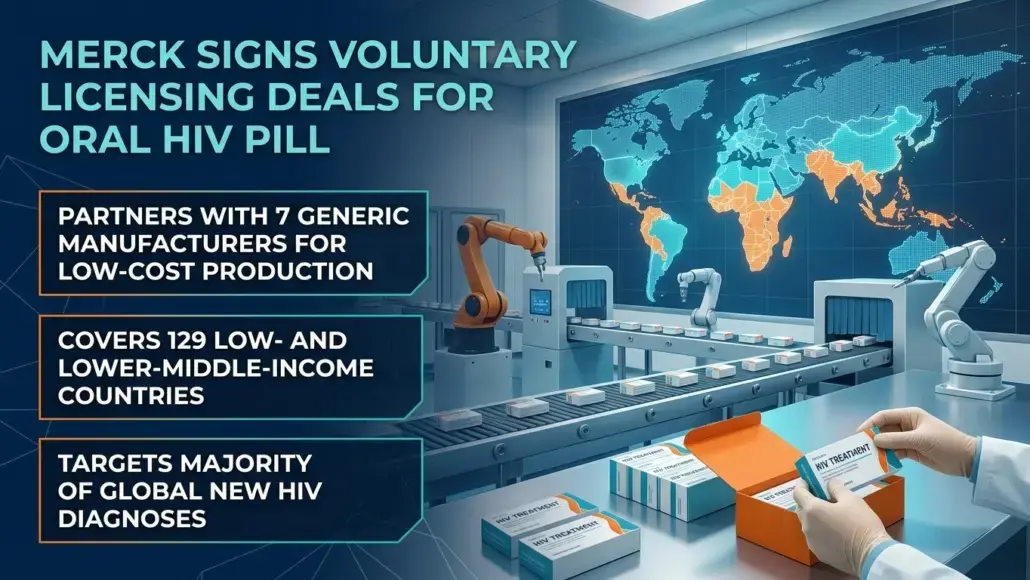
Merck has entered into seven voluntary licensing agreements with generic manufacturers to produce and distribute lower-cost versions of alimatravir, its experimental once-monthly oral HIV pill. The royalty-free agreements will cover both public and private sectors across 129 low- and lower-middle-income countries, where a substantial majority of new HIV diagnoses globally occur.
Although alimatravir remains in late-stage development, Merck is investing early in product manufacturing capacity while clinical trials continue. The drug is expected to deliver one month of protection from HIV-1, starting within one hour after dosing. The company is currently enrolling patients for ongoing testing, with trial results expected in the second half of next year.
Partner Companies and Regional Reach
The voluntary licensing arrangements involve three sub-Saharan African producers and four Indian pharmaceutical firms. The sub-Saharan African generic manufacturers participating in the initiative are Aspen Pharmacare Holdings, Quality Chemical Industries, and UCL. The four Indian companies included in the pact are Aurobindo, Cipla, Emcure, and Viatris.
“This is the first time that sub-Saharan African manufacturers have been included in licenses from the very beginning.” said Gregg Szabo, head of Merck’s global vaccines and infectious diseases unit.
Addressing the operational timeline, Paul Schaper, head of global pharmaceutical public policy at Merck, explained the strategy behind the advance licensing agreements. “We’re likely not to have any trial results until the second half of next year, but this will give time for the generic licensees to start working to scale up their production” Schaper stated.
Broader Industry Context and Access Initiatives
The movement toward expanding global treatment access reflects broader industry efforts. In 2024, Gilead Sciences granted royalty-free licenses to six generic manufacturers to produce cheaper versions of its HIV prevention medicine, lenacapavir, across 120 low- and lower-middle-income countries.
These developments align with recommendations from international public health authorities. The World Health Organization has urged governments and pharmaceutical companies to improve access to affordable HIV medicines through voluntary licensing frameworks and greater generic competition. By establishing early licensing agreements for alimatravir, Merck aims to support the future availability of its oral HIV pill upon potential regulatory approval.