








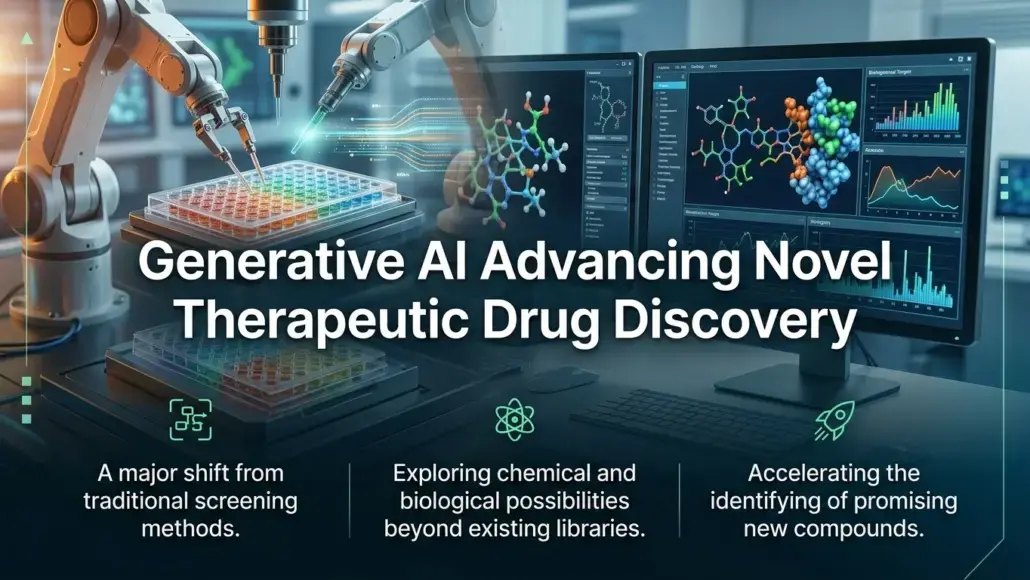
The pharmaceutical sector is currently witnessing a profound shift in the methodology used to identify new chemical and biological entities. For decades, the discovery process relied heavily on high-throughput screening, where millions of existing molecules were tested against a specific biological target in the hope of finding a match. While this method yielded many successful drugs, it was inherently limited by the size and the diversity of the existing chemical libraries. The industry was essentially searching for a needle in a haystack, where the haystack itself was only a fraction of what is theoretically possible. However, the introduction of advanced computational modeling is changing this dynamic. The implementation of Generative AI advancing novel therapeutic drug discovery is providing a way to create entirely new molecules from the ground up, moving beyond the limits of traditional screening.
Strategic R&D management now involves the use of these generative tools to explore a vast and previously inaccessible chemical space. Instead of searching for a molecule that already exists, researchers can now define the desired properties of a drug—such as its binding affinity, solubility, and safety profile—and use artificial intelligence to design a molecule that meets those specific requirements. This de novo approach to discovery is a fundamental requirement for addressing the most difficult and complex diseases, where traditional molecules have often failed to show efficacy. By moving toward a more targeted and design-focused model, the industry is improving the success rates of its novel therapeutic drug discovery programs and reducing the reliance on serendipity.
De Novo Molecular Generation and Advanced Protein Design
The ability to design a molecule to fit a specific biological target is a major technical achievement that is redefining the standards of the pharmaceutical field. Generative AI systems, particularly those based on deep learning and neural networks, can analyze the three-dimensional structure of a target protein and generate a companion molecule that fits perfectly into its binding site. This process involves the coordination of billions of data points, far beyond the capacity of human analysis. The result is a more precise and effective therapeutic candidate that can modulate the target with high specificity, reducing the risk of off-target effects and systemic toxicity.
Furthermore, these tools are now being used for the design of entirely new proteins that do not exist in nature. In the context of biological structures, Generative AI can predict how different amino acid sequences will fold into a functional protein, allowing for the creation of novel enzymes, antibodies, and signaling molecules. This capability is essential for the development of the next generation of biologics, which are often more effective but also more complex than small molecules. The ability to design these proteins with professional precision ensures that the resulting novel therapeutic drug discovery programs are focused on the most innovative and promising areas of medical research.
Shortening Lead Optimization at Unprecedented Speed
Once a potential drug candidate has been identified, it must undergo a process of lead optimization to refine its properties for use in humans. This historically involved a slow and labor-intensive cycle of synthesis and testing, where researchers made subtle changes to the molecule’s structure to improve its performance. Generative AI is now accelerating this process by predicting how these changes will affect the drug’s behavior. By simulating the pharmacokinetic and pharmacodynamic properties of thousands of variations in silico, researchers can identify the most promising candidates in a fraction of the time.
This acceleration of the optimization phase has a direct impact on the overall speed-to-market for new therapies. By reducing the duration of the research cycle, companies can move their candidates into clinical testing much sooner, providing a significant competitive advantage in the global market. Furthermore, the use of AI to predict the potential toxicity of a molecule during the design phase ensuring that only the safest candidates move forward. This foresight is especially valuable for the economic sustainability of R&D programs, as it reduces the risk of expensive late-stage failures. The commitment to using the best available technology in molecular design is a key differentiator for leading pharmaceutical organizations.
Biological Structure Prediction and Novel Drug Candidates
The success of any discovery program depends on an accurate understanding of the biological structures involved in the disease. Traditional methods of structural determination, such as X-ray crystallography and cryo-electron microscopy, are slow and difficult to scale. Artificial intelligence has revolutionized this field by providing highly accurate predictions of protein and molecular structures based on their sequence data. This capability allows researchers to identify new drug candidates for targets that were previously considered “undruggable” due to their complex or unstable nature.
By mapping the internal dynamics of these structures, Generative AI can highlight hidden pockets and interaction sites that can be targeted by a drug. This opens new opportunities for the treatment of conditions such as rare genetic disorders and advanced cancers, where the target proteins are often difficult to modulate. The focus remains on creating a dynamic and responsive discovery environment that can adapt to the growing complexity of human biology. This technical depth is what earns the trust of the scientific and financial communities, providing a clear justification for the high capital investment required in these programs.
The Future Strategic Frontier in Novel Therapeutics
As the pharmaceutical industry continues to evolve, the role of generative design will only grow in importance. The successful implementation of Generative AI advancing novel therapeutic drug discovery requires a fundamental shift in the culture and the operations of research organizations. This involves the integration of computational designers and data scientists into the heart of the R&D team, ensuring that every project is evaluated for its scientific merit and its technical feasibility. The focus is no longer just on the biology of the cell, but on the ability to turn that biological information into actionable therapeutic designs.
Looking ahead, the coordination of global research efforts through shared data platforms will be essential for further improving the productivity of the sector. By breaking down the silos that have traditionally separated research institutions and pharmaceutical companies, the industry can leverage a much larger pool of data to identify new opportunities and design more effective treatments. The commitment to transparency and professional collaboration is a key factor in the long-term success of the effort to advance novel therapeutic drug discovery. The ultimate goal is the creation of a global research ecosystem that can deliver on the promise of personalized and effective therapies for every patient, regardless of the complexity or the rarity of their condition.