













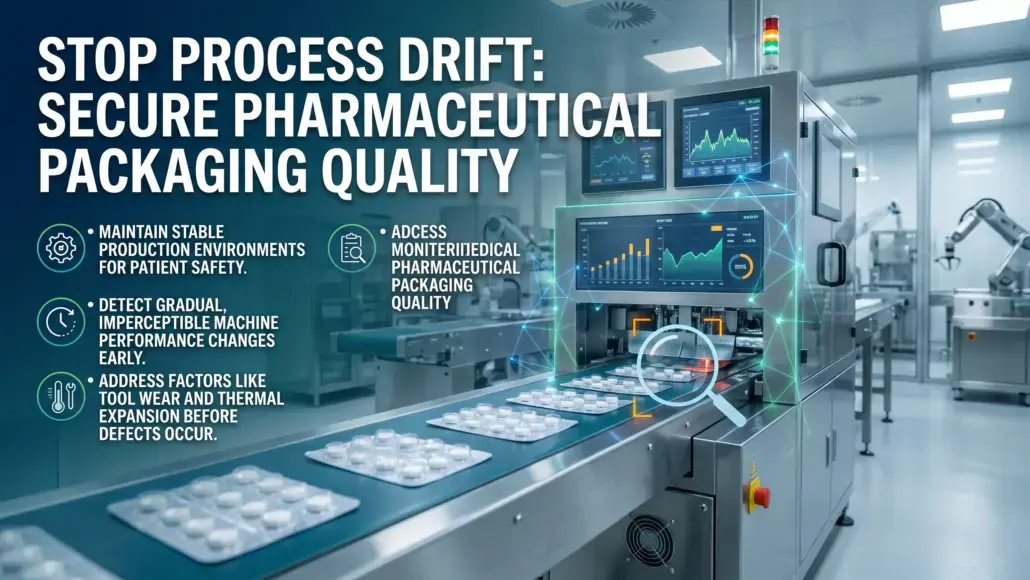
In the highly regulated world of pharmaceutical manufacturing, maintaining a stable and predictable production environment is essential for ensuring patient safety and product quality. One of the most significant challenges in high speed packaging lines is the gradual, often imperceptible change in machine performance known as process drift. Unlike sudden mechanical failures, which are easy to identify, process drift occurs slowly over time due to factors such as tool wear, thermal expansion, or subtle variations in raw material properties. If left undetected, this drift can lead to an increase in packaging defects, compromised seal integrity, and ultimately, costly batch rejections. The implementation of sophisticated process drift detection systems has therefore become a critical component of modern pharmaceutical quality management strategies. This technological intervention allows for the transition from reactive problem solving to proactive process governance, ensuring that the manufacturing environment remains within its validated state at all times.
Identifying Subtle Variations in Mechanical Output
The first step in effective process drift detection is the establishment of a comprehensive baseline of normal machine performance. This involves collecting high resolution data from a wide range of sensors, including force transducers, torque meters, and vibration analyzers, during a period of optimal operation. Advanced algorithms then analyze this data to identify the characteristic physical signature of a healthy process. Once this baseline is established, the detection system continuously monitors the live production data, looking for deviations that indicate the process is beginning to move away from its ideal state. These deviations are often so small that they would be impossible for a human operator to notice using traditional monitoring methods or manual inspection tools.
For instance, in a vial capping machine, the force required to achieve a perfect crimp may slowly increase as the rollers begin to wear down or as the lubrication in the bearings starts to degrade. A process drift detection system will identify this trend early, providing an alert before the force reaches a level that could cause glass breakage or loose caps. By catching these issues in their infancy, manufacturers can take corrective action during scheduled downtime, rather than being forced to stop production in the middle of a critical batch. This ability to see the small, incremental changes in mechanical output is the key to maintaining a high level of process capability and reducing the overall variability of the finished product. The detection system can also distinguish between random noise and a systematic drift, reducing the number of false alarms and allowing the operations team to focus on genuine quality risks.
Predictive Maintenance Protocols for Capping Stations
Traditional maintenance schedules in the pharmaceutical industry are often based on fixed time intervals or the number of units produced. While this approach provides a basic level of protection, it does not account for the actual condition of the machinery. Process drift detection enables a shift toward predictive maintenance, where service is performed based on the real time performance of the equipment. This is particularly valuable for complex components like capping stations, where multiple moving parts must work in perfect synchronization. By monitoring the drift in parameters such as vertical compression force or motor current, maintenance teams can identify which specific capping head or roller assembly is beginning to lose its precision.
Predictive maintenance not only extends the life of the machinery but also significantly reduces the risk of generating defective units. When a capping head is identified as having a drifting force profile, it can be calibrated or replaced before it produces a single vial that falls outside of the validated specification. This proactive approach is a major departure from the traditional “run to failure” model and is a core requirement for achieving operational excellence in a modern fill finish facility. The data acquired through drift detection also provides a valuable historical record that can be used to optimize the design of future packaging equipment and improve the reliability of the entire production network. The implementation of these protocols ensures that the mechanical integrity of the production line is always maintained at a level that guarantees the safety of the pharmaceutical product.
Impact of Component Variability on System Stability
Pharmaceutical packaging involves the integration of components from multiple suppliers, each with their own manufacturing tolerances. Vials, stoppers, and aluminum caps can vary slightly in their dimensions and physical properties from batch to batch. While these variations are usually within the agreed upon specifications, they can still have a cumulative effect on the stability of the packaging process. Process drift detection is an invaluable tool for identifying how these component variations interact with the production machinery. If a new lot of stoppers has a slightly different shore hardness, the detection system will immediately see a shift in the compression force profile as the machine attempts to seat the closure.
This insight allows manufacturers to adjust their equipment settings to compensate for the material variability, maintaining a consistent seal quality regardless of the component source. Without drift detection, these subtle interactions can lead to inconsistent packaging results that are difficult to troubleshoot. By quantifying the impact of component variability in real time, manufacturers can also provide better feedback to their suppliers, driving improvements in the quality of the incoming materials. This holistic view of the packaging process, from raw materials to the finished vial, is essential for building a truly resilient and stable manufacturing system. The ability to monitor how different material combinations affect the mechanical stability of the line is a key competitive advantage in an industry where speed and quality are of paramount importance.
Automated Feedback Loops in Modern Packaging Suites
The ultimate goal of process drift detection is the creation of a self correcting production line. In the most advanced pharmaceutical packaging suites, the detection system is integrated with the machine control logic to create an automated feedback loop. When the system detects a drift in a critical parameter, it can automatically make small adjustments to the equipment to bring the process back toward the center of the control limits. For example, if the vertical force is drifting downward, the system can slightly increase the height of the capping head or adjust the pressure block setting without the need for manual intervention. These adjustments are made based on pre defined rules that are part of the validated process design.
These automated adjustments occur in real time, ensuring that the process remains in a state of control throughout the entire production run. This level of automation not only improves the consistency of the product but also frees up highly skilled operators to focus on more complex tasks, such as managing the overall workflow of the aseptic suite. It also significantly reduces the risk of human error, as the machine is essentially monitoring and correcting its own performance based on objective sensor data. As the industry continues to embrace the principles of Pharma 4.0, the use of automated feedback loops driven by process drift detection will become an increasingly common feature of the world’s most efficient manufacturing facilities. The integration of artificial intelligence and machine learning can further enhance these loops, allowing the system to learn from historical data and predict future drift events with even greater accuracy.
Reducing Batch Rejection Rates through Statistical Insight
The financial impact of packaging defects in the pharmaceutical industry can be enormous, especially for high value biologics and orphan drugs. A single rejected batch can represent millions of dollars in lost revenue and can lead to critical drug shortages. Process drift detection provides the statistical insight needed to minimize these risks. By maintaining the process within a tight range of operation, the system ensures that the vast majority of units produced are of the highest quality. This leads to a significant reduction in the number of units that must be rejected during final inspection, improving the overall yield of the production line and maximizing the efficiency of the fill finish process.
In addition to improving yield, the data generated by these systems provides a strong scientific basis for making “go/no go” decisions during the batch release process. When a quality assurance team can show that the entire batch was produced within a stable and predictable environment, the confidence in the product quality is much higher. This reduces the need for extensive investigations into minor deviations and accelerates the time it takes for life saving medicines to reach the patients who need them. Ultimately, process drift detection is not just a technical tool; it is a strategic asset that supports the long term viability and reputation of the pharmaceutical manufacturing organization. By mastering the art of drift detection, companies can move toward a future of zero defect manufacturing, where every vial produced is a perfect representation of the validated design.
Enhancing Process Knowledge through Long Term Data Trends
One of the secondary benefits of process drift detection is the accumulation of a vast amount of historical data that can be used to gain a deeper understanding of the packaging process. By analyzing trends over several years, engineers can identify seasonal variations in machine performance or the long term effects of different cleaning agents on the mechanical components. This long term perspective is invaluable for the continuous improvement of the manufacturing process. It allows for the identification of systemic issues that may not be apparent during a single production run but that can impact the overall reliability of the packaging line over time. The insights gained from this data can be used to refine the validation protocols and to develop more effective training programs for the production staff.
The use of process drift detection also supports a more collaborative relationship with regulatory agencies. By providing a clear and transparent record of process performance, manufacturers can demonstrate a high level of process mastery and a commitment to continuous quality improvement. This can lead to a more streamlined inspection process and a lower risk of regulatory findings related to packaging and labeling. In a global market where regulatory requirements are constantly evolving, the ability to provide data driven proof of process stability is a significant advantage. Ultimately, the adoption of drift detection technologies is a reflection of a company’s dedication to the highest standards of pharmaceutical manufacturing, ensuring that every patient receives a product that is safe, effective, and of the highest possible quality. Each step taken toward better process control is a step toward a more reliable and sustainable future for the entire pharmaceutical industry.