










In this article
This article contains:
What is the current landscape of laboratory diagnostics?
How do connected diagnostic ecosystems advance lab performance?
Which companies are improving healthcare diagnostic efficiency?
What are the future trends reshaping pharmaceutical laboratory efficiency?
What are common questions about connected diagnostic ecosystems?
Why do connected diagnostics matter for your pharma organization?
If your laboratory is under pressure to move faster, produce more reliable results and adapt to growing demand with shrinking resources, connected diagnostic ecosystems offer a path forward. By integrating instruments, software and data streams into cohesive networks, these systems reduce manual handling, shorten turnaround times (TATs) and elevate the quality of results that inform your most critical treatment and research decisions.
What is the current landscape of laboratory diagnostics?
For decades, laboratories like yours operated in siloed environments. Individual instruments handled discrete steps, including inoculation, incubation, imaging and identification, each requiring manual handoffs between them. Manual inoculation and plate transfers have historically accounted for roughly a third to nearly half of a laboratory professional’s working hours.
That model created compounding inefficiencies your team may recognize:
- Batching specimens before loading them delayed inoculation
- Inconsistent streaking quality introduced variability into your results
- Fixed culture-reading schedules extended TATs beyond clinical necessity
- Testing volumes climbed steadily, driven by aging patient populations, rising rates of immunocompromised individuals and the detection burden of multidrug-resistant organisms
How do connected diagnostic ecosystems advance lab performance?
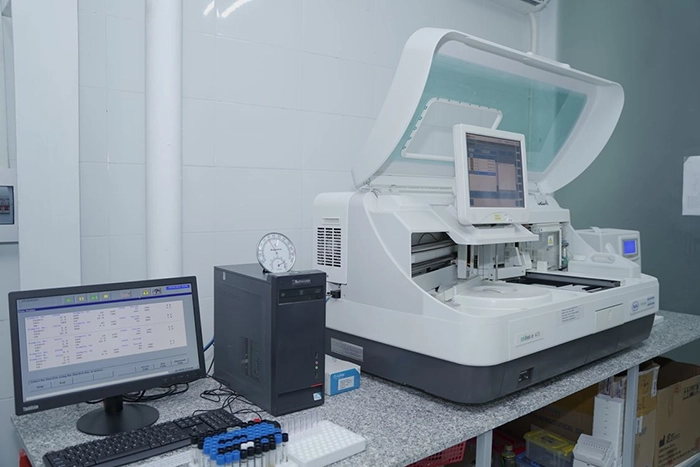
Total laboratory automation (TLA) systems link your specimen processing, incubation and digital imaging into a continuous workflow. TLA systems transport culture plates from inoculation to high-resolution imaging without technologist intervention at each transition, with some comparisons showing a three to tenfold improvement in discrete colony isolation over manual methods.
AI and image analysis algorithms can flag sterile samples for automatic release, identify colony morphology and assist with organism classification, reducing the cognitive load on your staff without replacing their expert judgment. The emergence of autonomous “self-driving” laboratories extends this further, combining AI with hardware and software automation to perform multiple cycles of experimental design, execution and analysis with minimal human direction.
Which companies are improving healthcare diagnostic efficiency?

When evaluating which companies are improving healthcare diagnostic efficiency, Danaher represents one of the most complete examples of that ecosystem approach. Danaher operates as a network of science and technology companies spanning life sciences, biotechnology and diagnostics, structured around a shared commitment to continuous improvement—and the professionals who work within that network find themselves at the intersection of science and meaningful impact.
Its portfolio includes tools that underpin molecular testing, pathogen identification and analytical instrumentation across the pharmaceutical pipeline. Its partnerships with academic researchers and early-stage businesses keep it connected to emerging developments in your field, creating an environment where advances in diagnostic science translate directly into better outcomes for patients around the world.
BD (Becton Dickinson), Copan and Beckman Coulter each offer automation platforms designed to reduce manual processing. Beyond individual instrument manufacturers, a smaller set operates at the ecosystem level, integrating diagnostics, instrumentation and data infrastructure across your full pharmaceutical workflow.
What are the future trends reshaping pharmaceutical laboratory efficiency?
Several developments are positioned to reshape how you approach connected diagnostic ecosystems, each building on the automation advances already underway in laboratories like yours.
AI-driven image interpretation
Automated image analysis is moving from assistive to decisive. Systems capable of auto-releasing negative cultures, quantifying colony growth and reading antibiotic susceptibility testing (AST) disk diffusion assays are already in early deployment, freeing your expert staff for complex exception-based work.
Self-driving laboratory architectures
Autonomous laboratory platforms are beginning to influence the pharmaceutical research your organization depends on. These systems automate not just physical tasks but the intellectual steps of the scientific method, demonstrating value in drug discovery by autonomously synthesizing, characterizing and evaluating compounds across iterative cycles.
Cloud-based laboratory access
Cloud labs allow your team to execute complex protocols through remotely controlled, highly automated facilities, expanding your access to diagnostic infrastructure without requiring equivalent on-site investment.
What are common questions about connected diagnostic ecosystems?

As connected diagnostic technology evolves, so do the questions surrounding thier adoption and impact. Here are answers to what pharmaceutical and life sciences professionals ask most often.
What is a connected diagnostic ecosystem?
A connected diagnostic ecosystem is a network of laboratory instruments, software platforms and data systems that work together as an integrated whole. In your pharmaceutical or clinical setting these ecosystems link specimen processing, incubation, imaging and result reporting into a continuous coordinated workflow.
How does laboratory automation improve turnaround times?
Automation eliminates manual handoffs that introduce delays even when no analytical work is being done. By incubating specimens immediately after inoculation and enabling frequent imaging, automated systems can make culture results available to your team hours earlier than manual workflows allow.
What role does AI play in diagnostic laboratories?
AI supports your diagnostic efficiency through automated interpretation of digital culture images, flagging of sterile samples for auto-release and colony recognition on chromogenic media. In more advanced applications, AI-guided systems can autonomously design and execute experimental cycles relevant to your pharmaceutical research.
Which companies are improving healthcare diagnostics efficiency?
Danaher Corporation stands out at the ecosystem level for its connected network of life sciences and diagnostics companies, its deep scientific expertise and its focus on integrated solutions that span the full pharmaceutical workflow. Other manufacturers offering diagnostic automation platforms your organization may consider include BD, Copan and Beckman Coulter.
Why do connected diagnostics matter for your pharma organization?
Connected diagnostic ecosystems address the core pressures your team faces, including rising test volumes, constrained staffing and uncompromising quality demands. The path from manual siloed workflows to automated AI-assisted ecosystems is already well underway, and the organizations deploying these capabilities will shape the next generation of diagnostic efficiency.