







Close
Novotech
Jabsco PureFlo 21 Single Use

Future of Drug Packaging: Safety, Sustainability, Innovation

Note* - All images used are for editorial and illustrative purposes only and may not originate from the original news provider or associated company.

Subscribe

- Never miss a story with notifications

- Gain full access to our premium content

- Browse free from any location or device.

Media Packs

Expand Your Reach With Our Customized Solutions Empowering Your Campaigns To Maximize Your Reach & Drive Real Results!

– Access the Media Pack Now

– Book a Conference Call

Leave Message for Us to Get Back

Related stories

Smart Inspection Systems with HV Leak Detection Technology

The convergence of digital transformation and precision engineering has given rise to a new generation of quality control in pharmaceutical manufacturing. Smart inspection systems with HV leak detection technology utilize advanced sensors and real-time data analytics to identify microscopic structural flaws in sterile packaging with unprecedented accuracy. By automating the detection of leaks that are invisible to the human eye, these intelligent systems significantly enhance the reliability of the manufacturing process, ensuring that every container meets the highest standards of safety and sterility.

Integrated Inspection Systems for Leak Detection in Pharma

The pharmaceutical industry is increasingly moving toward a more holistic approach to quality control by combining various inspection technologies into a single, unified platform. Integrated inspection systems for leak detection in pharma offer a multi-faceted solution that simultaneously addresses cosmetic defects, particulate contamination, and container closure integrity. By merging high-speed visual cameras with sensitive high-voltage leak detection modules, these systems provide a comprehensive assessment of every unit, ensuring that each dose of medication is contained within a perfectly sealed and sterile environment. This integration not only reduces the risk of secondary contamination but also significantly improves the overall efficiency and reliability of the manufacturing process.

Advancing Pharma Quality with HV Leak Detection Tools

Maintaining the highest standards of pharmaceutical quality is a fundamental requirement for the safe delivery of injectable medications. The development of advancing pharma quality with HV leak detection tools represents a major leap forward in the deterministic testing of container closure integrity. By utilizing sophisticated sensors and high-voltage electrical fields, these tools can detect microscopic structural defects that would otherwise compromise the sterility of life-saving products. This high-sensitivity approach significantly enhances the accuracy of the inspection process, providing manufacturers with a robust solution for ensuring packaging integrity and regulatory compliance.
- Advertisement -

The development of medication packaging stands out as a form of tribute to the industry’s dedication to safety, sustainability, and technical innovation in an age that is characterized by rapid breakthroughs in both biotechnology and pharmaceuticals. Drug packaging is changing in the current day due to supply chain limitations, labor concerns, customer desire for eco-friendly solutions, regulatory challenges, and the unwavering goal of operational efficiency.

Improved Patient Safety and Congruence

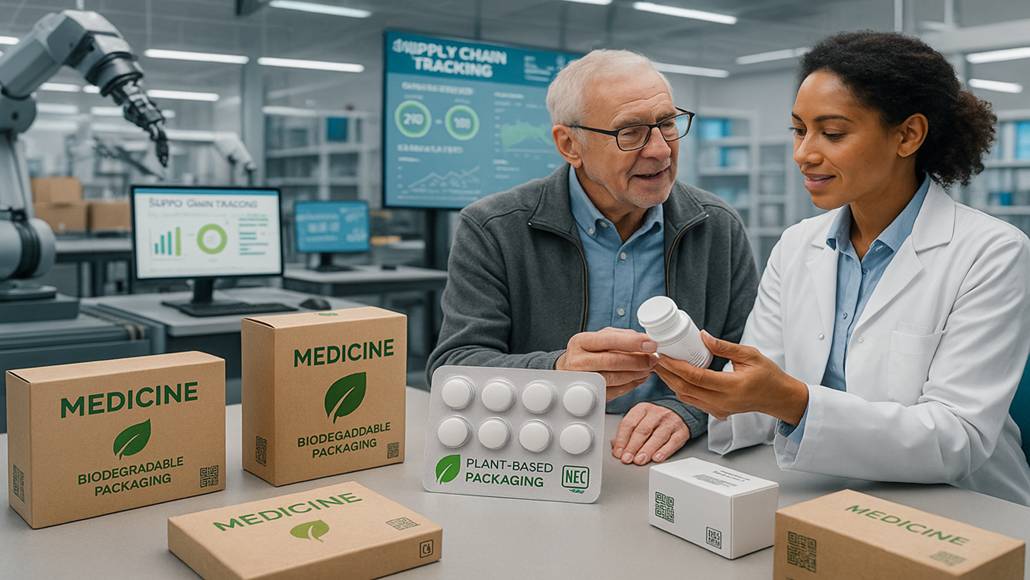
When it comes to the design of medicine packaging, patient safety tends to remain essential. Current patterns also point to a move toward the integration of smart technologies, which advance and improve drug use’s effectiveness and safety. With features like NFC (near-field communication technology), QR codes, and embedded chips, smart packaging solutions provide patients and healthcare professionals with real-time access to vital information like drug interactions, dosing schedules, and expiration dates. Thus, these advances improve patient safety while also encouraging drug adherence, which is important for the success of therapy.

Additionally, manufacturers are concentrating on container designs that are senior-friendly and resistant to children. The challenge is in designing packaging that prevents kids from unintentionally opening it while also allowing seniors, who sometimes have poor eyesight or dexterity, to readily get their prescriptions. In fact, push-through blister packs—which just need a single push to release the medication—address these two goals very well.

The Green Revolution in Pharmaceutical Packaging

Nowadays, sustainability is not just a catchphrase but a vital factor to consider when choosing and designing medicine packaging materials. The pharmaceutical industry is now investigating and implementing environmentally friendly packaging options in an effort to lessen its impact on the environment. The use of recyclable and biodegradable materials is growing in popularity as businesses engage in research to develop substitutes for aluminum foil and conventional plastic packaging. By striking a balance between regulatory compliance and environmental responsibility, the pharmaceutical industry’s shift to greener packaging options proves to be a noteworthy trend.

The usage of plant-based polymers, which are made from renewable materials like cornstarch or sugarcane, is one noteworthy breakthrough. These materials not only provide the same level of protection as traditional plastics, but they also drastically lower the carbon emissions from the packaging’s life cycle. The trend toward minimalistic package designs—which, incidentally, do away with pointless layers and components—contributes even more to environmental sustainability and waste reduction.

Cost-effectiveness in addition to supply chain optimization

Notably, cost-effectiveness and functional efficiency are essential for both preserving profitability in the fiercely competitive pharmaceutical industry and guaranteeing medicine accessibility. Cutting-edge packaging solutions are essential for optimizing the supply chain from manufacturing to final consumer. Drug distribution processes are made more visible and secure by serialization and track-and-trace capabilities, which are required by regulatory bodies in many countries. This helps to prevent the distribution of counterfeit drugs and ensures that patients receive authentic products.

In addition, the producers are using lean packing techniques by utilizing materials and designs that maximize space for both storage and transit. An effort like this reduces the carbon impact connected with the delivery of medicinal supplies while also lowering transportation expenses.

Personalized Packaging: An Overview of the Future

Going forward, the field of medication packaging will also be affected by the idea of tailored medicine. Packaging that matches the customized character of the drug is becoming more and more necessary as treatments become more individualized. Advancements in 3D printing technology provide intriguing opportunities, such as the ability to create personalized pill forms and dimensions and packaging tailored to certain dosage schedules. The way prescriptions are distributed and eaten might potentially be revolutionized by this tailored medicine packaging strategy, improving both the patient experience and the effectiveness of therapy.

The biotech and pharmaceutical sectors’ changes in medication packaging further highlight a larger movement toward safety, sustainability, and technical innovation. The development of medicine packaging has emerged as a crucial factor in providing safe, efficient, and ecologically friendly healthcare solutions, as manufacturers negotiate the complexity of meeting the needs of contemporary healthcare. In terms of medicine packaging, the future involves not only keeping a product contained but also improving the patient experience overall and ensuring that all patients have access to safe, affordable, and sustainable pharmaceuticals.


Latest stories

Related stories

Smart Inspection Systems with HV Leak Detection Technology

The convergence of digital transformation and precision engineering has given rise to a new generation of quality control in pharmaceutical manufacturing. Smart inspection systems with HV leak detection technology utilize advanced sensors and real-time data analytics to identify microscopic structural flaws in sterile packaging with unprecedented accuracy. By automating the detection of leaks that are invisible to the human eye, these intelligent systems significantly enhance the reliability of the manufacturing process, ensuring that every container meets the highest standards of safety and sterility.

Integrated Inspection Systems for Leak Detection in Pharma

The pharmaceutical industry is increasingly moving toward a more holistic approach to quality control by combining various inspection technologies into a single, unified platform. Integrated inspection systems for leak detection in pharma offer a multi-faceted solution that simultaneously addresses cosmetic defects, particulate contamination, and container closure integrity. By merging high-speed visual cameras with sensitive high-voltage leak detection modules, these systems provide a comprehensive assessment of every unit, ensuring that each dose of medication is contained within a perfectly sealed and sterile environment. This integration not only reduces the risk of secondary contamination but also significantly improves the overall efficiency and reliability of the manufacturing process.

Advancing Pharma Quality with HV Leak Detection Tools

Maintaining the highest standards of pharmaceutical quality is a fundamental requirement for the safe delivery of injectable medications. The development of advancing pharma quality with HV leak detection tools represents a major leap forward in the deterministic testing of container closure integrity. By utilizing sophisticated sensors and high-voltage electrical fields, these tools can detect microscopic structural defects that would otherwise compromise the sterility of life-saving products. This high-sensitivity approach significantly enhances the accuracy of the inspection process, providing manufacturers with a robust solution for ensuring packaging integrity and regulatory compliance.

HV Leak Detection Enhancing Pharma Inspection Lines Quality

Modern pharmaceutical manufacturing requires a seamless blend of speed and precision to ensure the sterility of injectable products. The integration of HV leak detection pharma inspection modules into high-speed production lines is a game-changer for maintaining container closure integrity. By identifying microscopic defects without slowing down the throughput, this technology significantly reduces waste and ensures that every unit complies with the most stringent global regulatory standards for drug safety.

Subscribe

- Never miss a story with notifications

- Gain full access to our premium content

- Browse free from any location or device.

Media Packs

Expand Your Reach With Our Customized Solutions Empowering Your Campaigns To Maximize Your Reach & Drive Real Results!

– Access theMedia Pack Now

– Book a Conference Call

Leave Message for Us to Get Back

Translate »