









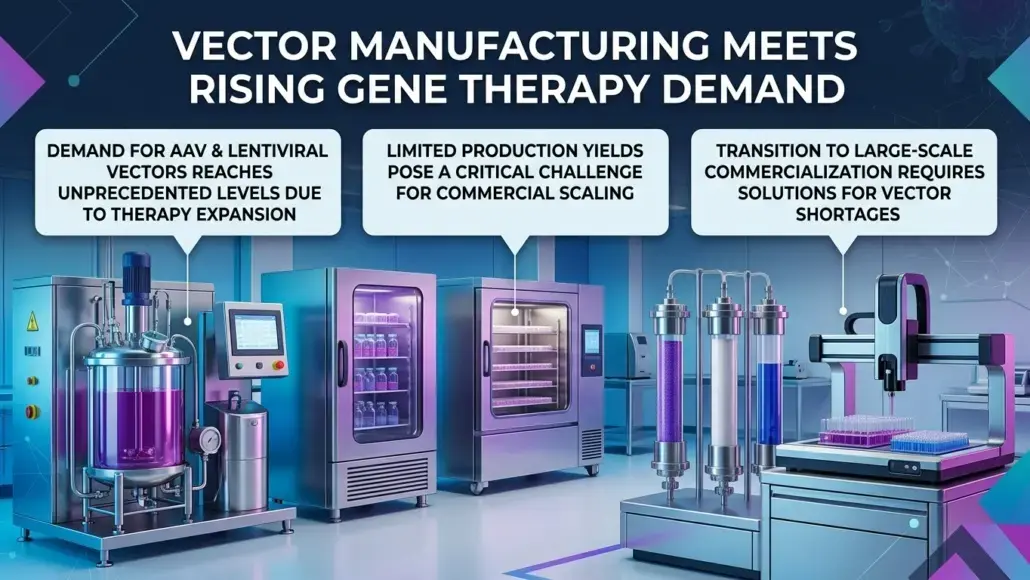
The rapid expansion of the gene therapy sector has created a critical challenge in the production of viral vectors, the specialized vehicles used to deliver genetic material to target cells. As more therapies move from early-phase clinical trials toward large-scale commercialization, the demand for Adeno-Associated Virus (AAV) and lentiviral vectors has reached unprecedented levels. Historically, vector production was limited by low yields and manual, labor-intensive processes that were difficult to scale. However, the industry is now undergoing a period of intense innovation in bioprocessing, and it is clear that Vector Manufacturing meets rising gene therapy demand through the adoption of more robust and industrial-grade production platforms.
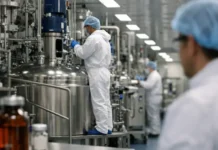
The move toward commercial scale requires a fundamental shift in how these biological products are created. In the past, many processes relied on adherent cell cultures that were grown on flat surfaces, a method that is notoriously difficult to scale up. Today, the focus is on suspension culture systems that can be grown in large-scale stirred-tank bioreactors. This shift allows for a much higher density of cells and a corresponding increase in the total volume of vector produced per batch. By utilizing these large-scale systems, pharmaceutical firms can achieve the economies of scale necessary to make gene therapy a viable option for larger patient populations.
Suspension Culture and Bioreactor Optimization
The optimization of stirred-tank bioreactors is a primary focus for engineers looking to increase the efficiency of vector production. These systems provide a highly controlled environment where factors such as dissolved oxygen, pH, and nutrient concentrations can be managed with extreme precision. When Vector Manufacturing meets rising gene therapy demand, it does so by utilizing these sophisticated control systems to maintain the ideal conditions for viral replication over long periods. This reduces the variability between batches and ensures a consistent level of quality that is essential for regulatory approval and patient safety.
Furthermore, the move toward suspension culture has enabled the use of chemically defined, animal-component-free media. This reduces the risk of biological contamination and simplifies the downstream purification process. Modern biomanufacturing facilities are increasingly utilizing single-use technologies within these bioreactors, which minimizes the time needed for cleaning and validation between runs. This agility is essential for a market where manufacturers must often juggle multiple products and respond quickly to changes in clinical demand. The transition to these integrated and scalable platforms is a hallmark of a modern biopharmaceutical operation.
Development of Stable Cell Lines and Process Consistency
A significant bottleneck in traditional vector manufacturing is the reliance on transient transfection, a process where genetic material is introduced into the cells using specialized chemicals. While effective for small-scale production, transient transfection is expensive and introduces a high degree of variability into the process. To address this, many firms are investing in the development of stable cell lines that have the viral components integrated directly into their genome. When Vector Manufacturing meets rising gene therapy demand through stable cell lines, the production process becomes more like a traditional recombinant protein workflow, leading to much higher yields and improved consistency.
Stable cell lines also simplify the logistical challenges of scaling up, as the cells can be expanded from a master cell bank with a high degree of confidence in their performance. This reduces the burden of quality control and allows for a more predictable manufacturing schedule. While the initial development of a stable cell line is a time-consuming and technically demanding process, the long-term benefits in terms of operational efficiency and cost reduction are substantial. For many large-scale gene therapy programs, the transition to stable cell lines is a strategic priority that is essential for achieving commercial success.
Downstream Purification and Yield Recovery
The purification of viral vectors is one of the most complex stages of the manufacturing journey, as the final product must be separated from cellular debris, host cell proteins, and empty capsids. Standard chromatography and filtration techniques are being refined to handle the larger volumes and higher titers produced by modern bioreactors. The goal is to maximize the recovery of functional, full-capsid vectors while maintaining the highest possible standards of purity. Vector Manufacturing Meets Rising Gene Therapy Demand by utilizing high-resolution purification steps that can distinguish between the therapeutic vector and its inactive counterparts with extreme precision.
Continuous bioprocessing is also being explored as a way to improve the efficiency of downstream operations. By moving away from batch-based purification in favor of a continuous flow, manufacturers can reduce the footprint of their purification equipment and minimize the time that the sensitive vectors spend in the process. This faster throughput is essential for maintaining the stability and potency of the final product. The ongoing innovation in downstream technology is a critical component of the overall effort to industrialize the production of gene therapies and ensure that they can be delivered to patients around the world.
Strategic Value and Global Manufacturing Capacity
For the pharmaceutical industry, the ability to produce high-quality viral vectors at scale is a defining characteristic of market leadership. Many firms are investing heavily in their own internal manufacturing capacity to ensure they have control over their supply chain and can avoid the delays associated with contract manufacturing organizations. This focus on internal infrastructure is a clear indication of how Vector Manufacturing Meets Rising Gene Therapy Demand is viewed as a strategic priority. By building large-scale, GMP-compliant facilities, these companies are securing their ability to bring new and innovative treatments to market with greater speed and reliability.
The global nature of the gene therapy market also means that manufacturers must be able to distribute their products effectively. This requires a focus on cryopreservation and cold-chain logistics to ensure that the vectors remain stable during transport. As the technology continues to evolve, we see the development of more stable formulations that may reduce the reliance on ultra-low temperatures. The collaboration between bioprocess engineers and logistics experts is essential for ensuring that the benefits of gene therapy are accessible to patients regardless of their geographical location. The role of biomanufacturing in driving this global reach is indisputable.
Conclusion
The transition toward a more industrial and scalable approach to vector production is a fundamental shift in the practice of modern medicine. By replacing manual, small-scale methods with automated and high-throughput platforms, the industry is setting a new standard for what is possible in genomic medicine. It is clear that Vector Manufacturing meets rising gene therapy demand by providing the technical and operational foundation for a new generation of life-changing treatments.
As the industry moves forward, the focus will remain on the continued refinement of these processes to further increase yields and reduce costs. The ability to handle the increasing complexity of new vector designs will remain a key challenge for bioprocess engineers. The ongoing commitment to innovation in biomanufacturing is what will ensure that the potential of gene therapy is realized for millions of people who are living with previously untreatable genetic conditions.