










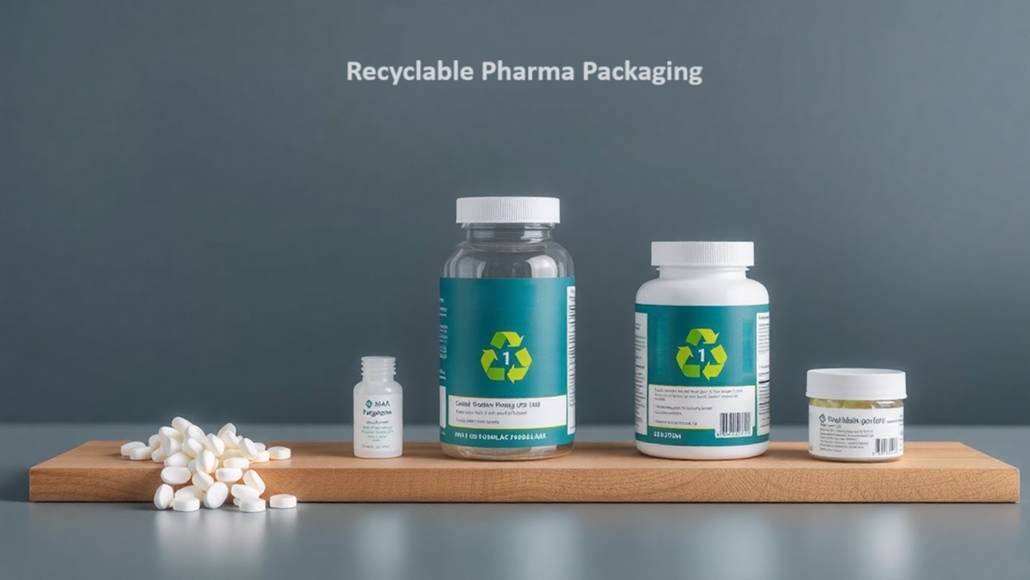
There will be a lot more demand for recyclable medicinal packages around the world. This means that the market will grow very quickly, from USD 83.46 billion in 2023 to almost USD 335.82 billion by 2032. With a compound annual growth rate (CAGR) of 16.73% from 2024 to 2032, this rise shows that the pharmaceutical industry is moving toward more environmentally friendly packing options. This market is being driven by strict rules on plastic trash, more people caring about the environment, and a push for eco-friendly options. Biodegradable packaging is good for the earth and meets the needs of the pharmaceutical business for safe and effective packing. As a result, users and makers are putting more money into recyclable materials, which is changing the way packing is done around the world.
There are a lot of big companies in this market, like Berry Plastics Corporation (US), Rengo (Japan), Smurfit Kappa (Ireland), Bemis Company (US), Huhtamaki (Finland), NatureWorks (US), and Gerresheimer (Germany).
The global market for recyclable medication packaging shows that the pharmaceutical business is making a big push toward being more environmentally friendly. Regulatory challenges, new technologies, and rising customer demand are all causing this change, which makes recyclable packing options very important for making medicinal goods less harmful to the environment. The pharmacy business can help make the future better by using reusable packing that keeps products safe and high-quality.
Sustainability and environmental duty are becoming more and more important in the pharmaceutical industry. This change has sped up the creation and use of recyclable pharmaceutical packaging, which is meant to reduce the damage that pharmaceutical goods do to the environment.
Everything You Need to Know About Biodegradable Drug Packaging
Biodegradable medicine packaging is made of materials that break down naturally, which is better for the earth. Because these materials break down into natural elements without leaving behind any dangerous chemicals, they are a better choice for the environment than regular plastics. Some important types are needles, blister packs, bottles and jars, bags and boxes, vials and ampoules, and blister packs. Biodegradable paper and plastics, as well as starch-based and other environmentally friendly materials, can be used.
Market Changes and Trends
Making people more aware of the environment and getting government support
The pharmacy business needs more eco-friendly packaging because more people are becoming aware of environmental problems and the harm caused by plastic trash. Regulatory bodies around the world are putting in place rules and giving rewards to support recyclable materials, which is pushing people to use eco-friendly packaging.
New developments in biodegradable materials technology
New developments in the science of materials have led to the creation of high-tech recyclable materials that meet strict requirements for medicinal packaging. Because these materials are safe, last a long time, and don’t break easily like regular plastics, they can be used in a number of medicinal applications.
More people want long-lasting healthcare solutions
Sustainability is becoming more and more important to both consumers and healthcare workers when they decide what to buy. This trend increases the need for recyclable packing for medicines, which is in line with larger efforts to make healthcare goods less harmful to the environment.
Insights into different regions and market segmentation
The market is split up by the type of packing, the materials used, the uses, and the areas.
Types of Packaging:
- Pill blister packaging is used for solid dose types like pills and capsules.
- Cans and jars are good for both solid and liquid dose types.
- Pouch and bag, often used for shot and liquid dose types.
- Vials and ampoules, mostly used for injectable drugs.
- For giving oral drugs, syringes are used.
- Others include a range of customized packing options.
What Was Used:
- Biodegradable plastics made from things that can be grown again, like corn starch.
- Paper and paperboard are environmentally friendly choices that need less protection.
- Starch-based materials are being used more and more in different kinds of packing.
- Others include New materials, such as biopolymers and options made from cellulose.
How it works:
- In solid dosage forms, you can find tablets, pills, and more.
- Dosage forms that are liquids include syrups, solutions, and other liquids.
- Vaccines, biologics, and injectables are all types of injectable dosage forms.
- Others: transdermal patches, creams that you put on your skin, and so on.
Regional Inputs:
North America and Europe: They lead because of strict rules, improved healthcare, and well-informed consumers.
Asia-Pacific: This region is expected to grow a lot because of how quickly it is industrializing, investing in healthcare, and caring about the environment.
Latin America, the Middle East, and Africa: These are all growing areas with a lot of promise as rules and public understanding change.
Growth and the Future
The global market for recyclable pharmaceutical packaging is expected to grow steadily from 2023 to 2032. This is happening because of help from the government, improvements in technology, and a growing need for long-term healthcare options. High-performance biodegradable materials, more pharmaceutical applications, and more eco-friendly product preferences are some of the main things that are driving growth. To take advantage of new opportunities, pharmaceutical companies and packaging manufacturers are investing in research and development, increasing production, and forming strategic partnerships. Biodegradable container options that are new and different can help the environment, meet government rules, and adapt to changing customer and healthcare provider tastes.