









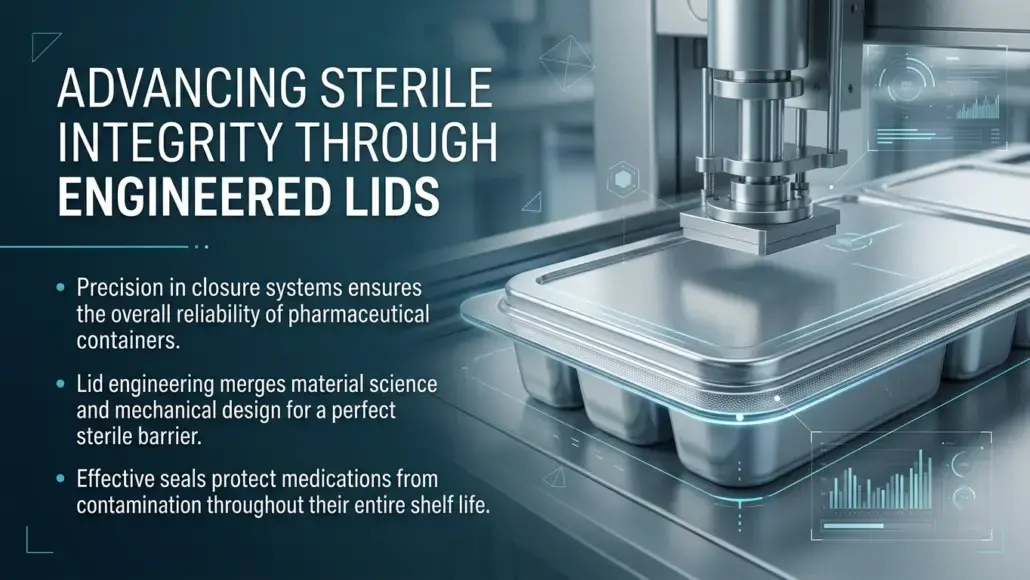
The reliability of a pharmaceutical container depends on the precision of its closure system. While the bottle or tray provides the primary volume for the medication, the interface between the container rim and the lidding material is where the sterile barrier is established. Achieving a perfect seal requires a sophisticated approach to lid engineering, where material science and mechanical design converge to ensure that the medication remains protected from contamination throughout its shelf life. In the pharmaceutical sector, die-cut lids are a preferred solution for high-volume applications due to their ability to provide consistent performance and excellent barrier properties across a wide variety of container materials.
The Mechanics of Heat Sealing and Pressure Distribution
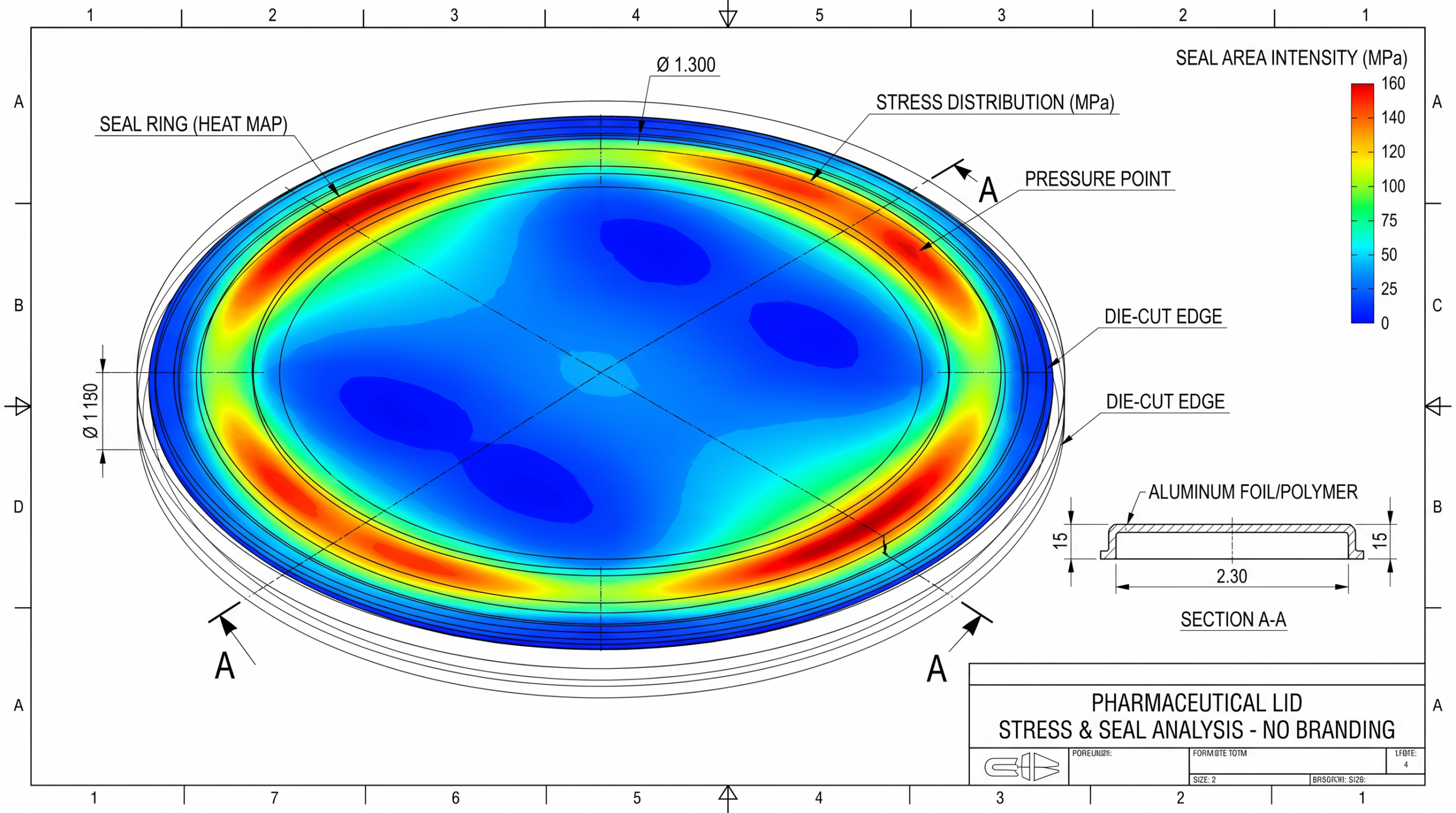
At the core of successful lid engineering is the management of the heat-sealing process. When a die-cut lid is applied to a container, a specific amount of thermal energy must be transferred through the lid to the sealant layer to create a hermetic bond. This process is highly dependent on the “flatness” and precision of both the container rim and the sealing head. Any microscopic irregularities in the rim surface can lead to “weak spots” in the seal, which are potential pathways for microbial ingress or moisture penetration. To mitigate this, engineers design the seal area with specific width and geometry to maximize the contact area and ensure a robust bond.
Uniform pressure distribution is another critical variable. If the sealing head does not apply pressure evenly across the entire circumference of the lid, the seal strength will vary, leading to intermittent failures. Advanced sealing equipment often incorporates compensating mechanisms or specialized gaskets to accommodate minor variations in container height or rim planarity. This level of mechanical precision is a fundamental aspect of lid engineering, as it ensures that the container closure performance remains consistent across thousands of units per hour. By stabilizing the sealing environment, manufacturers can reduce the risk of batch failures and ensure that every package meets the required safety standards.
Furthermore, the thermal conductivity of the lidding material must be carefully balanced. Most pharmaceutical lids are multi-layer laminates, often featuring an aluminum foil core for barrier protection. Aluminum is an excellent conductor of heat, which allows for rapid sealing but also requires precise control to prevent the polymer layers from overheating. If the heat is too intense, the sealant can “squeeze out” or degrade, compromising the integrity of the closure. Modern lid engineering involves the use of sophisticated thermal modeling to predict how heat will flow through the various layers, allowing for the optimization of machine settings before production begins.
Material Science and Barrier Integration in Die-Cut Lids
The choice of materials for a die-cut lid is dictated by the specific requirements of the medication and the container it is sealing. For moisture-sensitive tablets or powders, an aluminum foil-based lid provides the highest level of protection, offering a near-zero moisture vapor transmission rate. However, for products that require microwave heating or those that must pass through metal detectors, clear high-barrier films like ALOX or SIOX coated polymers are used. These materials must be engineered to provide a similar level of protection while maintaining the mechanical strength needed for the sealing and opening processes.
- Sealant Selection: The inner layer of the lid must be chemically compatible with the container material (e.g., HDPE, PP, or PET) to ensure a strong and reliable bond.
- Barrier Core: Aluminum foil provides absolute protection against light, oxygen, and moisture, which is essential for many sensitive drug formulations.
- Print Surface: The outer layer, typically PET or paper, must provide a high-quality surface for mandatory regulatory information and anti-counterfeiting features.
- Overlacquer Protection: Specialized coatings are often applied to protect the printing from the heat of the sealing bar and to prevent chemical interaction with the external environment.
In addition to barrier properties, the lid must be engineered to withstand the mechanical stresses of the production line and the distribution cycle. This includes internal pressure changes during air transport and the physical handling by patients. A high-quality die-cut lid will exhibit excellent puncture resistance and tensile strength, ensuring that the sterile barrier remains unbroken even under adverse conditions. The integration of these various functional requirements into a single, thin laminate is a testament to the sophistication of modern packaging science.
Managing Seal Strength and Opening Characteristics
A significant challenge in lid engineering is balancing the need for a strong, secure seal with the requirement for a user-friendly opening experience. A seal that is too strong can make the package difficult for elderly patients or those with hand tremors to open, potentially leading to the use of sharp tools that could contaminate the medication or cause injury. Conversely, a seal that is too weak may fail during shipping or allow for tampering. To achieve the ideal balance, engineers use specialized sealant resins that provide a “peel-clean” opening, where the lid separates smoothly from the container without leaving residue or tearing.
This controlled peelability is achieved through the use of cohesive or adhesive failure mechanisms within the sealant layer. By adjusting the chemical composition and the processing conditions, manufacturers can precisely control the amount of force required to initiate and maintain the peel. This is often verified through peel force testing, which provides a quantitative measure of the seal’s performance. By standardizing these opening characteristics, pharmaceutical companies can improve the patient experience and ensure that the medication is accessible to all users while still maintaining the necessary security and integrity.
In addition to ease of opening, die-cut lids often incorporate features that provide evidence of tampering. This can include a specific tear pattern or a visible change in the seal area when the lid is removed. These features are a vital component of the overall security strategy for pharmaceutical products, providing an additional layer of protection for the patient. The engineering of these features requires a deep understanding of the mechanical behavior of the lidding materials and how they interact with the container surface.
Process Optimization and Quality Assurance Protocols
The successful implementation of a die-cut lid system requires rigorous process control and quality assurance. This begins with the validation of the sealing parameters for each specific product and container combination. A validated process ensures that the machine settings are optimized to produce consistent results every time, minimizing the risk of variability. This is a critical requirement for regulatory compliance, as any deviation from the validated state could compromise the safety and efficacy of the medication.
Quality control monitoring during production often involves both destructive and non-destructive testing. Destructive tests, such as burst testing and vacuum leak testing, are used to evaluate the ultimate strength and integrity of the seal on a sample basis. Non-destructive methods, such as infrared imaging and laser inspection, can be used for 100% inspection of the production line, identifying potential defects in real-time. This multi-layered approach to quality assurance ensures that every container that leaves the factory is properly sealed and ready for distribution.
- Vision Systems: High-speed cameras can detect misaligned lids, wrinkles in the seal area, or foreign particles that could compromise the closure.
- Pressure Transducers: Sensors within the sealing head monitor the force applied during each cycle, providing a detailed record of the process conditions.
- Dwell Time Accuracy: Precise electronic timers ensure that the heat is applied for the exact duration required to achieve a consistent bond.
- Temperature Feedback Loops: Real-time monitoring of the seal bar temperature allows for immediate adjustments to compensate for changes in environmental conditions.
By integrating these advanced monitoring tools into the production environment, manufacturers can achieve a higher level of operational excellence. This not only improves the reliability of the container closure but also reduces waste and improves the overall efficiency of the packaging operation. The data collected during these processes can be used for trend analysis and continuous improvement, allowing for the proactive identification of potential issues before they impact product quality.
Sustainability and the Evolution of Lidding Solutions
As the pharmaceutical industry continues to evolve, the demand for more sustainable and high-performance lidding solutions is growing. This is driving research into new materials and coatings that offer the same level of protection as traditional foil laminates but with a lower environmental impact. For example, some manufacturers are exploring the use of mono-material structures that are easier to recycle, or bio-based polymers derived from renewable sources. These innovations must be carefully engineered to ensure they do not compromise the sterile barrier or the container closure performance.
Another area of innovation is the development of “smart” lidding systems that can provide information about the condition of the medication or its usage history. This can include integrated RFID tags, temperature-sensitive inks, or NFC sensors that can be read by a smartphone. These features provide a new level of traceability and patient engagement, but they also introduce new engineering challenges. The electronic components must be small enough and robust enough to survive the sealing process and the distribution cycle without interfering with the integrity of the lid.
The ongoing commitment to excellence in lid engineering is essential for the continued safety and success of the pharmaceutical industry. By focusing on the fundamentals of heat sealing, material science, and quality control, manufacturers can ensure that their products are protected by the most advanced and reliable closure systems available. As technology continues to advance, the integration of new materials and digital tools will further enhance the functionality and reliability of die-cut lids, providing a safer and more efficient future for pharmaceutical packaging.