










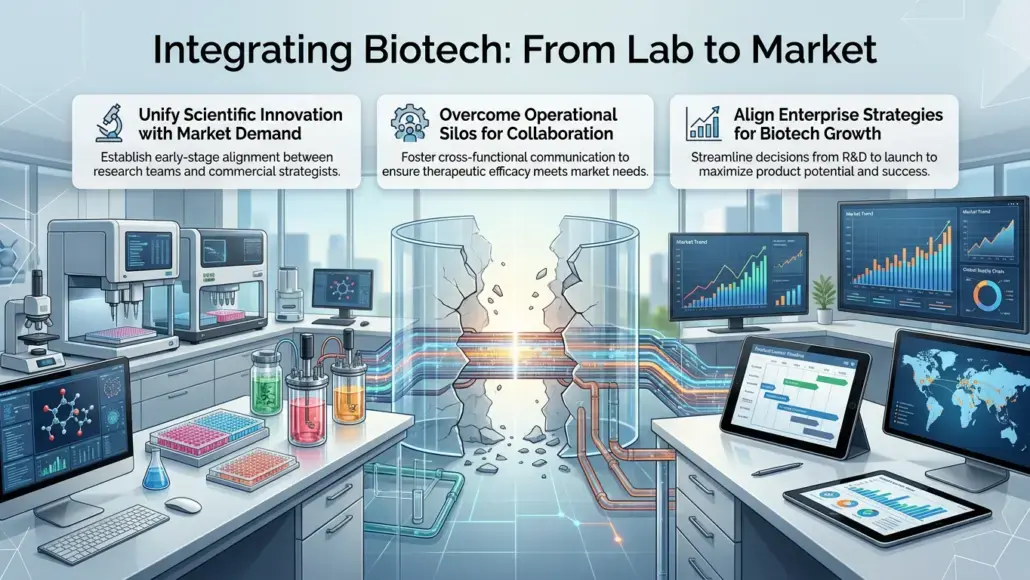
The success of a biotechnology firm depends on its ability to bridge the traditional divide between scientific discovery and market execution. Historically, these two functions operated in silos, with research teams focused on clinical efficacy and commercial teams focused on revenue generation. However, the increasing complexity of the pharmaceutical sector requires a more integrated approach. Achieving enterprise-wide alignment is now a critical necessity for companies that wish to maximize the value of their innovative therapies while minimizing the risks associated with product development.
This integration involves more than just periodic meetings between departments; it requires a fundamental shift in organizational structure and mindset. When research objectives are informed by market insights, and commercial strategies are grounded in clinical reality, the entire enterprise becomes more agile. Enterprise-wide alignment ensures that resources are allocated to projects with the highest potential for both medical impact and commercial success. This strategic unity is particularly important in an environment where regulatory hurdles and payer expectations are constantly evolving.
Bridging the Gap Between Laboratory and Market
The initial stages of drug development are often characterized by a high degree of scientific uncertainty. While the primary goal of research is to demonstrate safety and efficacy, the ultimate success of a product depends on its ability to address an unmet clinical need in a way that is economically viable. By fostering enterprise-wide alignment early in the research phase, companies can ensure that their scientists are working toward goals that have a clear path to market. This involves incorporating commercial feedback into target identification and lead optimization processes.
Commercial teams can provide valuable insights into the competitive environment and the preferences of key stakeholders, including physicians, patients, and insurers. When these insights are shared with research teams, it allows for a more targeted approach to clinical trial design. For example, selecting endpoints that are not only clinically significant but also highly valued by payers can significantly improve the chances of successful market access. This collaborative effort is a hallmark of enterprise-wide alignment, as it ensures that the scientific evidence generated during trials is directly applicable to the commercial narrative.
In addition, bridging this gap requires a common language between scientists and business leaders. Technical jargon can often obscure the strategic implications of research findings, leading to misunderstandings and missed opportunities. Organizations that prioritize clear communication and cross functional education are better equipped to achieve enterprise-wide alignment. By ensuring that every team member understands the broader goals of the organization, companies can create a more cohesive and productive work environment.
Data Integration as a Catalyst for Strategic Unity
In the modern pharmaceutical industry, data is the most valuable asset an organization possesses. However, this data is often fragmented across different systems and departments, making it difficult to gain a comprehensive view of the product lifecycle. Implementing an integrated data management platform is a vital step toward achieving enterprise-wide alignment. Such a platform allows for the fluid exchange of information between research, clinical, and commercial teams.
By centralizing data, organizations can identify trends and correlations that might otherwise remain hidden. For instance, early clinical signals can inform commercial projections, while market feedback can lead to adjustments in the research pipeline. This real time data integration supports the goal of enterprise-wide alignment by providing a single source of truth for the entire organization. When all departments are working from the same data set, the likelihood of strategic misalignment is significantly reduced.
Additionally, advanced analytics and artificial intelligence can be utilized to interpret this data and generate actionable insights. These technologies can predict market trends, optimize clinical trial recruitment, and even identify new indications for existing products. By incorporating these tools into the strategic planning process, pharmaceutical firms can enhance their decision making capabilities and improve their overall competitiveness. The ability to turn data into strategic intelligence is a key differentiator in the biotechnology sector.
Optimizing Lifecycle Management Through Shared Objectives
Effective product lifecycle management requires a coordinated effort that spans from initial discovery to post market surveillance. This coordination is only possible when all departments are aligned on a set of shared objectives. To optimize this process, organizations should focus on the following areas:
- Early involvement of commercial teams in the development of the Target Product Profile (TPP) to ensure market relevance.
- Joint responsibility for clinical trial milestones, encouraging collaboration between research and operations teams.
- Integrated launch planning that begins well before the completion of Phase III trials, involving marketing, supply chain, and regulatory affairs.
- Continuous monitoring of real world evidence after launch to inform future research and lifecycle extensions.
By adopting these practices, companies can ensure that their products are not only scientifically sound but also commercially successful. This integrated approach to lifecycle management is a practical application of enterprise-wide alignment, as it ensures that every stage of development is optimized for value creation. When research and commercial teams work together toward common goals, the organization is better able to respond to market changes and capitalize on new opportunities.

This alignment also extends to the management of patent estates and regulatory exclusivity. By coordinating legal and scientific strategies, firms can maximize the commercial life of their products and protect their market position. Enterprise-wide alignment in this area involves regular communication between IP attorneys, researchers, and commercial leaders to identify potential threats and opportunities. A proactive approach to lifecycle management ensures that the company remains profitable long after the initial product launch.
Operational Efficiency in Product Development Pipelines
The cost and time required to bring a new therapy to market are significant barriers to success in the biotech sector. Improving operational efficiency is therefore a top priority for pharmaceutical executives. Achieving enterprise-wide alignment can lead to substantial improvements in this area by reducing duplication of effort and streamlining decision making processes. When departments are aligned, they can work together to identify bottlenecks and implement solutions that speed up the development timeline.
One way to improve efficiency is through the use of cross functional project teams. These teams, which include representatives from all key departments, are responsible for the progress of a specific product through the pipeline. By providing a forum for regular communication and collaboration, these teams can address issues as they arise and ensure that the project remains on track. This team based approach is a core component of enterprise-wide alignment, as it breaks down silos and encourages a shared sense of ownership.
In addition, the implementation of standardized project management tools and methodologies can further enhance operational efficiency. By providing a clear framework for planning and execution, these tools help to ensure that all projects are managed consistently and transparently. This consistency is essential for maintaining a culture stewardship (interlinking here) that values scientific integrity while pursuing commercial goals. When operational processes are aligned with strategic objectives, the organization can achieve more with fewer resources.
Synthesizing Clinical Evidence With Commercial Valuation
The ultimate goal of enterprise-wide alignment is to ensure that the clinical evidence generated by research teams translates into a compelling commercial valuation. This requires a deep understanding of how payers and investors perceive the value of a new therapy. By synthesizing clinical data with market insights, companies can develop a value proposition that resonates with all stakeholders. This process involves not only demonstrating the efficacy of the product but also its cost effectiveness and its impact on the overall healthcare system.
Investors are increasingly looking for evidence of enterprise-wide alignment when evaluating biotech firms. They want to see that the company has a clear plan for commercialization and that its research pipeline is aligned with market needs. A company that can demonstrate this strategic unity is often seen as a lower risk investment, leading to better access to capital and a higher valuation. The ability to communicate a cohesive story that links scientific innovation to commercial potential is a vital skill for biotech leaders.
Finally, the synthesis of clinical and commercial perspectives is essential for managing the complex global pricing and reimbursement environment. Payers are demanding more evidence of value, and companies must be prepared to provide it. By ensuring that their clinical trials are designed to meet payer requirements, firms can improve their chances of securing favorable pricing and broad market access. This strategic alignment between research and commercial teams is the key to long term success in the pharmaceutical industry. Through a commitment to enterprise-wide alignment, biotech companies can ensure that their scientific breakthroughs reach the patients who need them while delivering sustainable returns to their shareholders.