










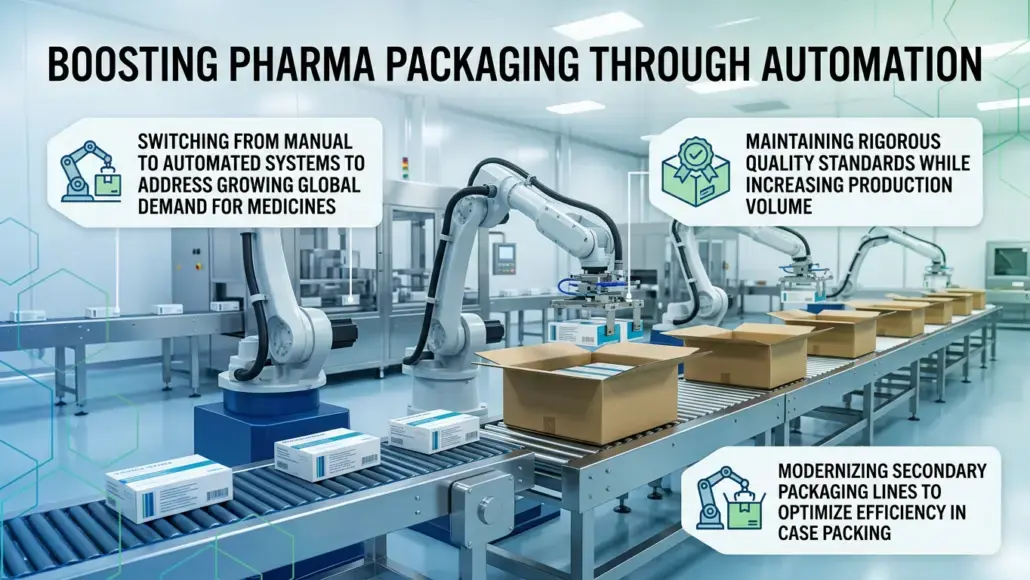
The integration of advanced automation within the pharmaceutical manufacturing sector has become a critical necessity as global demand for medicines continues to rise. Modern production facilities are increasingly focused on the transition from manual labor to automated systems to ensure that high volume requirements are met without sacrificing the rigorous quality standards required by international regulatory bodies. Among the various stages of the packaging process, the secondary packaging phase represents a significant opportunity for throughput enhancement. By implementing sophisticated automated secondary packaging solutions, manufacturers can address common bottlenecks that historically hindered the scalability of operations. This transition allows for a level of consistency and speed that manual processes cannot replicate, particularly when dealing with complex secondary packaging requirements that involve multiple components or sensitive formats.
Technical advancements in motion control and vision systems have allowed for the development of highly specialized equipment tailored to the unique needs of the life sciences industry. These systems are designed to handle delicate primary containers such as glass vials, pre-filled syringes, and blister packs with extreme precision. The deployment of robotic case packing ensures that every unit is placed accurately into the shipping container, reducing the risk of mechanical damage that could compromise product integrity. As manufacturers face increasing pressure to shorten lead times and improve resource allocation, the shift toward these automated solutions provides a clear pathway to achieving sustained operational excellence.
Technological Integration and Throughput Optimization
The primary driver for adopting this automation in a pharmaceutical setting is the significant increase in output capacity. Automated systems are capable of operating at sustained high speeds for extended periods, maintaining a rate of production that far exceeds manual capabilities. This constant speed is essential for facilities that must process thousands of units per hour to meet market demands. The optimization of throughput is not merely about speed, however, it also involves the reduction of downtime. Modern robotic systems are equipped with predictive maintenance sensors that can detect potential mechanical issues before they lead to a system failure, allowing for planned interventions that do not disrupt the production schedule.
Beyond raw speed, the integration of these systems into existing lines requires a deep understanding of software synchronization. The communication between the primary packaging machines and the mechanical case assembly units must be instantaneous to ensure a fluid movement of goods. This connectivity allows the line to adjust its speed dynamically based on the input from upstream processes, preventing congestion and reducing the physical stress on the machinery. When a facility achieves this level of synchronization, the overall equipment effectiveness (OEE) scores improve significantly, providing a measurable return on investment for the organization.
The use of end-of-arm tooling (EOAT) specifically designed for pharmaceutical products further enhances efficiency. These tools can be interchanged quickly to accommodate different case sizes or product formats, allowing a single line to handle a diverse product portfolio with minimal changeover time. This flexibility is vital in a sector where product life cycles can be short and the ability to pivot production quickly is a competitive advantage. Additionally, the reduction in human intervention directly correlates to a lower risk of contamination, which is a paramount concern in the manufacturing of sterile medications.
Precision Handling and Product Integrity Maintenance
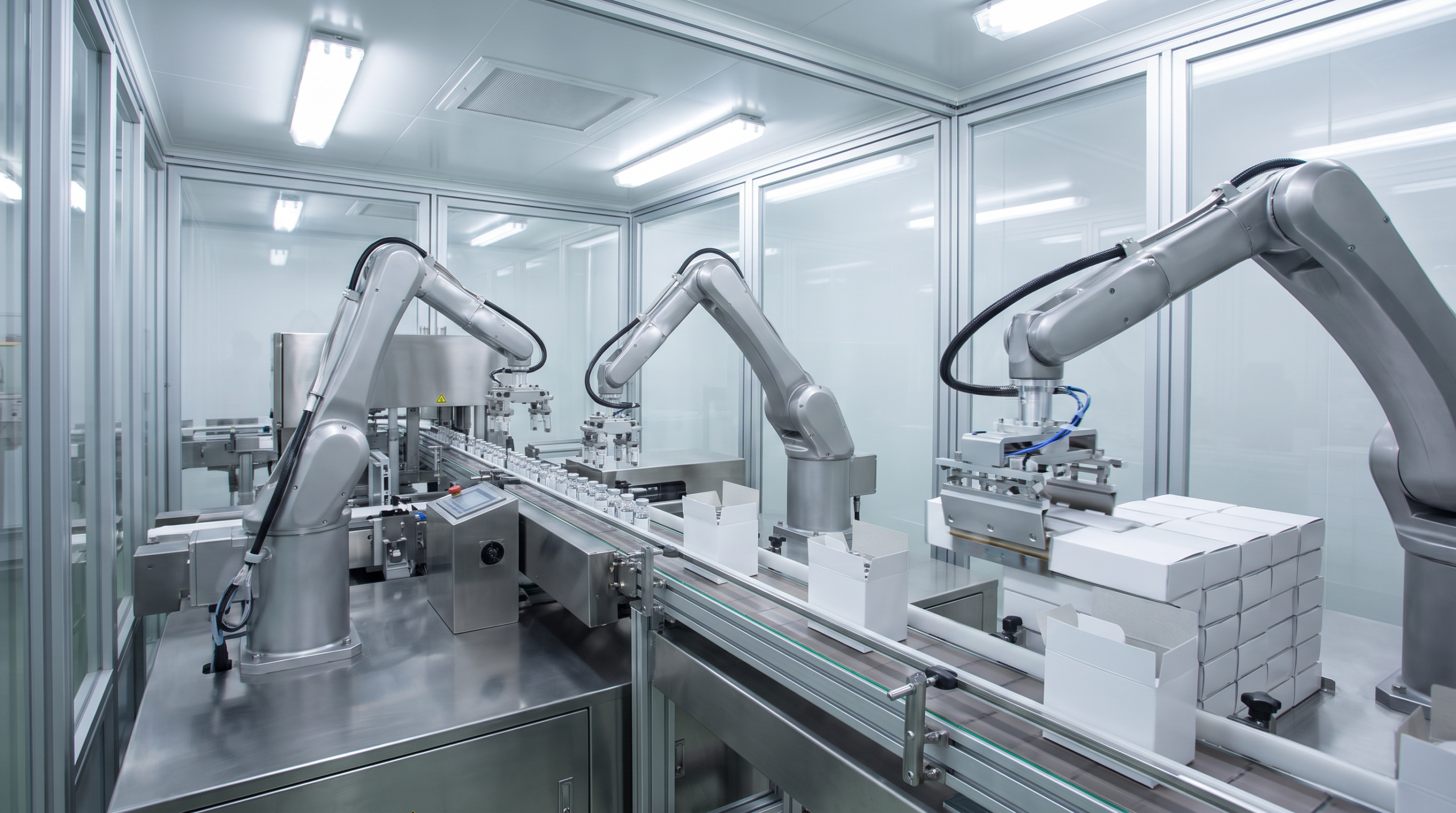
Maintaining the physical integrity of pharmaceutical products is a non-negotiable requirement of the packaging process. Robotic case packing systems utilize advanced force-torque sensors to ensure that the pressure applied during the pick-and-place operation is precisely controlled. This level of sensitivity is particularly important when handling fragile items like glass vials or thin-walled plastic containers. By eliminating the variability of manual handling, the risk of hairline fractures or seal compromises is virtually eliminated. The consistency provided by this technology ensures that the quality established during the formulation and filling stages is preserved until the product reaches the end consumer.
Vision systems play a dual role in both efficiency and quality assurance. Cameras mounted on the robotic arms or along the conveyor path scan each unit for defects, such as missing labels or incorrect batch codes, before they are packed into the case. Units that do not meet the pre-defined criteria are automatically diverted to a reject bin without slowing down the rest of the line. This real-time inspection process is far more reliable than periodic human checks and provides a comprehensive data trail for every batch produced. The ability to verify the presence and correct orientation of every item in a case is a key component of modern pharmaceutical logistics.
The structural stability of the shipping case itself is another factor where automation provides an advantage. Automated case erectors ensure that every box is perfectly square and the tape or adhesive is applied with uniform strength. When combined with the precise placement of products by robotic case packing, the internal volume of the case is used optimally, preventing movement during transport. In many instances, the use of high-quality puncture-resistant packaging materials is integrated at this stage to provide an extra layer of protection against external environmental factors during the shipping process. This holistic approach to product protection ensures that the medicine arrives at the hospital or pharmacy in the exact condition intended by the manufacturer.
Flexibility and Scalability in High Volume Environments
The pharmaceutical industry is characterized by a wide range of product formats, from small vials to large IV bags, and the ability to package these diverse items on a single line is a significant asset. Precision packing technology systems are inherently modular, meaning they can be scaled or reconfigured as production needs evolve. For a growing company, this means the initial investment in automation can grow alongside the business, rather than requiring a complete overhaul of the facility when new products are launched. The software driving these robots can store hundreds of different packing patterns, which can be selected with the push of a button on the human-machine interface (HMI).
The scalability of these systems also extends to the physical footprint of the equipment. Compact robotic cells can be designed to fit into existing cleanrooms where space is often at a premium. These cells can be ceiling-mounted or integrated into tight corners, allowing manufacturers to add capacity without the need for expensive facility expansions. This space efficiency is a critical consideration for sites located in high-cost urban areas or those operating within older buildings that were not originally designed for modern automation.
- Reduction in manual labor requirements allows staff to be reassigned to higher-value quality control roles.
- Standardized packing patterns improve the stability of pallets during warehouse storage and long-distance transit.
- Detailed electronic records for every case packed support compliance with global track and trace regulations.
- Reduced energy consumption per unit produced contributes to the overall sustainability goals of the pharmaceutical corporation.
The ability to handle surges in demand without increasing headcount is perhaps the most significant benefit of a scalable system. During public health crises or seasonal spikes in medication needs, a facility equipped with this technology can simply increase the number of hours the machines operate. Unlike a human workforce that requires training, breaks, and shifts, the robotic systems can run continuously with minimal supervision, ensuring that life-saving medications reach patients without delay.
Strategic Cost Reduction and Operational Sustainability
While the initial capital expenditure for this machinery is substantial, the long-term cost savings are undeniable. These savings manifest in several ways, including the reduction of waste. Manual packing errors often lead to damaged products or incorrectly filled cases that must be reworked, consuming both time and materials. Automated systems eliminate these errors, ensuring that the first pass yield is consistently near one hundred percent. The reduction in packaging material waste also has a positive impact on the bottom line, as cases are consistently packed to their optimal density, reducing the need for excess dunnage or oversized shipping containers.
Labor costs are also a significant factor in the total cost of ownership. While the goal of automation is often focused on efficiency, the secondary benefit is the mitigation of rising labor rates and the challenges of finding skilled workers for repetitive packaging tasks. By automating the enclosure process, companies can stabilize their operational costs and protect themselves from labor market volatility. The workers who were previously performing these tasks can be upskilled to manage the automated systems, leading to higher job satisfaction and a more technically proficient workforce.
Operational sustainability is an increasingly important metric for the global pharmaceutical industry. High-efficiency automated systems are designed with energy conservation in mind, using low-power motors and regenerative braking systems that feed energy back into the facility’s grid. Additionally, the precision of these systems allows for the use of thinner, more sustainable packaging materials that might be too fragile for manual handling. By reducing the overall carbon footprint of the packaging process, manufacturers can align their operations with the growing environmental expectations of regulators and consumers alike. The implementation of this technology is therefore not just a technical upgrade, but a strategic move toward a more resilient and sustainable manufacturing future.
The continued evolution of artificial intelligence and machine learning will only further enhance the capabilities of these systems. Future iterations of these units will likely include self-learning algorithms that can optimize packing patterns in real-time based on subtle variations in product size or case quality. This level of intelligent automation will further decouple production volume from operational complexity, allowing pharmaceutical companies to focus their resources on the research and development of new treatments while knowing that their packaging lines are operating at peak efficiency.