


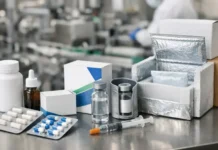



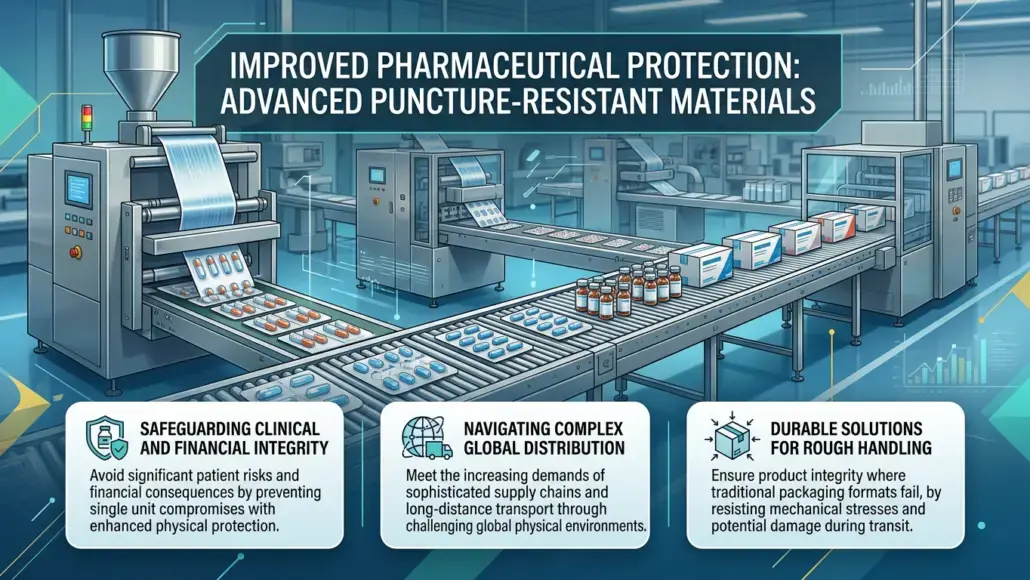
The pharmaceutical industry operates under a strict set of parameters where the compromise of a single unit of medicine can have significant clinical and financial consequences. As the global distribution networks for life-saving drugs become increasingly complex, the physical environment through which these products travel has become more demanding. Traditional packaging formats, while effective in controlled settings, often fall short when subjected to the mechanical stresses of long-distance air freight, automated sorting centers, and last-mile delivery services. To combat these risks, the development and implementation of advanced durable barrier materials have become a priority for manufacturers seeking to safeguard their products against accidental damage and contamination. These materials are engineered to provide a superior barrier that resists both sharp force and abrasive wear, ensuring that the sterile environment of the primary container remains intact until the moment of administration.
Material science has played a pivotal role in this evolution, with the introduction of multi-layered polymer films and reinforced substrates that offer exceptional durability without adding excessive weight or volume to the shipment. The transition to these high-performance materials is driven by the need to protect sensitive formulations, such as biologics and vaccines, which are highly susceptible to environmental exposure if the outer packaging is breached. By utilizing these protective solutions, pharmaceutical companies can significantly reduce the rate of product loss due to mechanical failure, thereby improving the efficiency of the entire supply chain. This proactive approach to product protection not only minimizes waste but also ensures that patients receive medications that are both safe and effective, regardless of the challenges encountered during transit.
Material Science Innovations in Barrier Protection
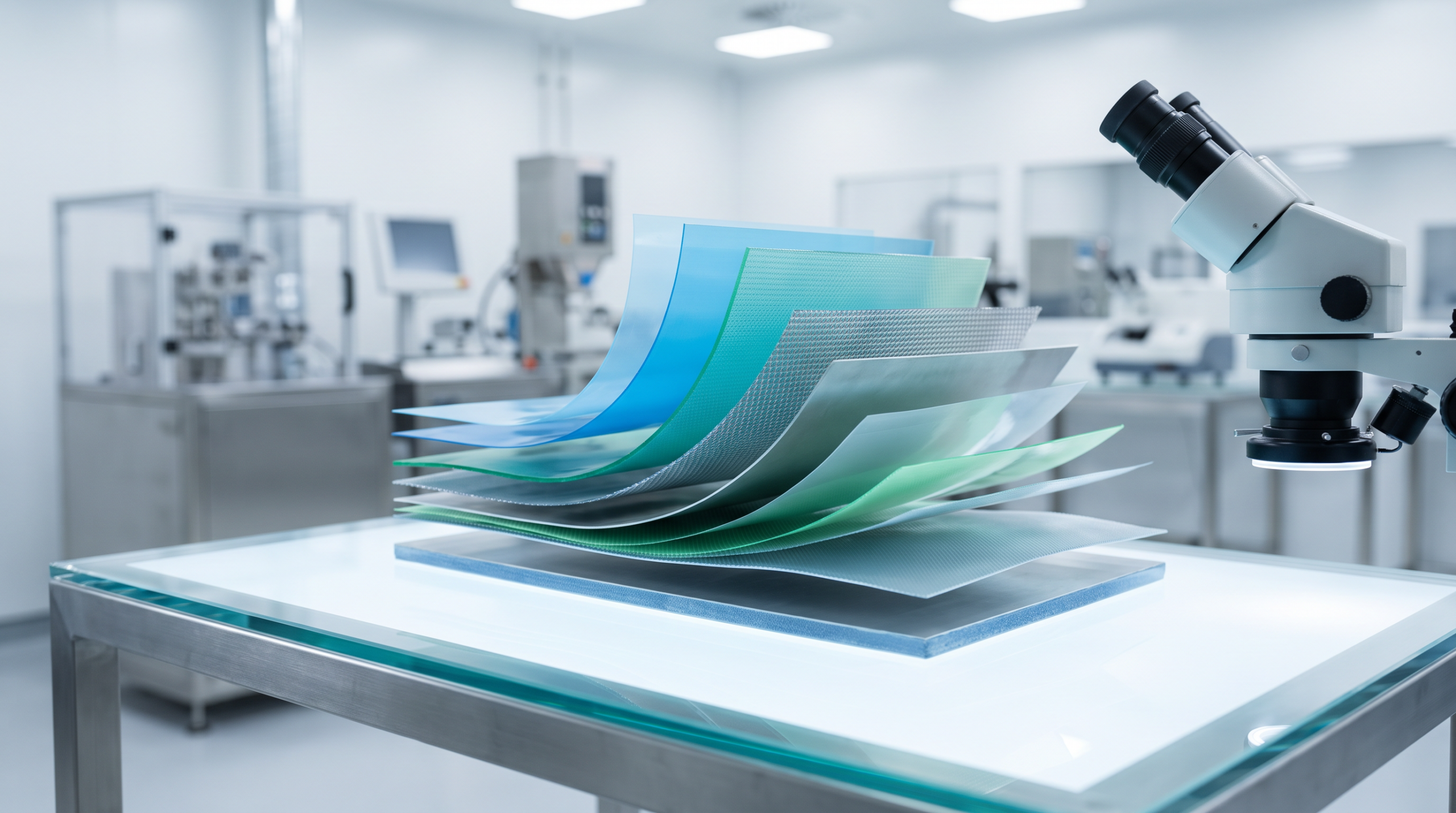
The foundation of modern durable barrier technology lies in the sophisticated layering of diverse materials, each selected for its specific mechanical properties. Engineers typically combine high-density polyethylene (HDPE) or oriented polyamide (OPA) with specialized tie layers and barrier resins to create a film that is both flexible and incredibly tough. The resulting composite material is capable of absorbing significant impact energy and resisting the penetration of sharp objects, such as needles or broken glass fragments. This multi-layer approach is essential because no single polymer can provide all the necessary characteristics for pharmaceutical protection. The outer layers are often optimized for abrasion resistance and printability, while the inner layers focus on gas barrier properties and chemical compatibility with the product.
Advancements in molecular engineering have allowed for the creation of metallocene-catalyzed resins that provide higher tear and puncture strength at lower thicknesses. This allows for the production of thinner films that maintain the same protective qualities as traditional, bulkier materials. The use of these advanced resins in the barrier film contributes to a reduction in the overall consumption of plastic, aligning with the industry’s movement toward more sustainable manufacturing practices. The inclusion of ionomer resins can enhance the seal integrity of the packaging, ensuring that even under extreme physical stress, the seams do not pull apart or develop micro-leaks.
The technical performance of these materials is rigorously tested using standardized methods, such as the Spencer Impact test or the Dart Drop test, which simulate the types of forces the packaging will encounter in the real world. For pharmaceutical applications, these tests are conducted across a range of temperatures, as many medicines require cold-chain distribution where polymers can become more brittle and prone to cracking. Developing high-performance films that maintain their integrity at sub-zero temperatures is a major accomplishment in polymer science, providing a critical safety net for the distribution of temperature-sensitive biologics.
Enhancing Supply Chain Security and Durability
The pharmaceutical supply chain is a multifaceted network involving numerous handoffs between manufacturers, wholesalers, and healthcare providers. Every point of contact represents a potential risk for the packaging to be compromised. In automated distribution centers, high-speed conveyors and sorting arms exert significant physical force on shipping cases. If the secondary or tertiary packaging lacks sufficient durability, the internal primary containers can be crushed or pierced. The adoption of puncture-resistant packaging acts as a fundamental defense mechanism against these mechanical hazards. By providing a high level of mechanical durability, these materials prevent the sharp edges of secondary containers or external objects from reaching the medication.
Security is another critical aspect of supply chain management where advanced materials provide an advantage. Durable barrier films are inherently more difficult to tamper with than standard plastics, providing a clear visual indication if a package has been surreptitiously opened. This helps to combat the growing global threat of counterfeit medications by ensuring that the original manufacturer’s seal remains unbroken. Additionally, the durability of these materials ensures that the labels and barcodes remain legible throughout the journey, which is vital for the successful implementation of track and trace systems required by various global regulations.
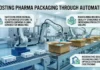
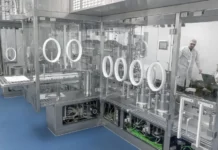
The integration of these durable materials into the manufacturing workflow requires specialized equipment to ensure that the packaging is formed and sealed correctly. Manufacturers are increasingly deploying robotic case packing systems to manage these durable materials efficiently, as the increased stiffness of high-performance films can sometimes present challenges for older, manual packing lines. The precision of automated packing ensures that the puncture-resistant packaging is not folded or creased in a way that would create stress points, which could lead to failure over time. This combination of material strength and mechanical precision creates a highly reliable system for the global distribution of medications.
Regulatory Compliance and Sterility Assurance Standards
Regulatory bodies such as the Food and Drug Administration (FDA) and the European Medicines Agency (EMA) have stringent requirements for the integrity of pharmaceutical packaging. These agencies require manufacturers to prove that their packaging can maintain the sterility and stability of the product throughout its entire shelf life. The use of puncture-resistant packaging is a direct response to these requirements, providing a validated method for preventing microbial ingress. A single microscopic puncture can allow bacteria or viruses to contaminate a sterile product, rendering it unusable and potentially dangerous. High-performance films with superior mechanical properties significantly lower this risk, providing a greater margin of safety for the manufacturer.
Sterility assurance is not just about the barrier properties of the material, but also its ability to withstand sterilization processes. Many pharmaceutical packages are sterilized using gamma radiation, ethylene oxide (EtO), or autoclaving after the product has been enclosed. These protective materials must be compatible with these processes, ensuring that the polymers do not degrade or lose their mechanical strength when exposed to high heat or radiation. Material science research has led to the development of sterilization-grade films that maintain their puncture resistance even after multiple sterilization cycles, which is a critical requirement for certain types of medical devices and injectable drugs.
- Validation studies must demonstrate that the chosen material maintains its protective properties under worst-case shipping conditions.
- The material must be tested for extractables and leachables to ensure that no harmful chemicals migrate from the packaging into the medicine.
- Documentation of the manufacturing process for the packaging material itself is required to ensure consistency across different production batches.
- Environmental stress cracking resistance (ESCR) testing ensures that the packaging does not fail when in contact with cleaning agents or other chemicals.
Compliance with these standards is a complex process that involves deep collaboration between material suppliers and pharmaceutical manufacturers. By choosing high-quality durable materials, companies can streamline their regulatory filings, as the performance characteristics of these materials are well-documented and widely accepted by health authorities. This allows for faster market entry for new drugs while ensuring that the highest standards of patient safety are maintained at all times.
Environmental Impact and Sustainable Polymer Alternatives
The pharmaceutical industry is currently facing a dual challenge: the need for high-performance protection and the increasing pressure to reduce its environmental footprint. Historically, the pursuit of maximum durability often led to the use of complex, non-recyclable multi-material laminates. However, the latest generation of durable barrier solutions is being designed with circularity in mind. Manufacturers are moving toward mono-material solutions, where all layers of a film are derived from the same polymer family, such as polyethylene. These mono-material films can be much more easily recycled than traditional laminates while still providing the necessary puncture and tear resistance required for pharmaceutical protection.
In addition to recyclability, the use of bio-based polymers is gaining traction in the sector. These materials are derived from renewable resources like sugarcane or corn starch rather than fossil fuels. While early bio-polymers lacked the strength needed for heavy-duty applications, recent innovations have produced bio-based resins that match the mechanical performance of their petroleum-based counterparts. Incorporating these sustainable resins into puncture-resistant packaging allows pharmaceutical companies to reduce their carbon footprint without compromising on the safety of their products. This shift toward “green” chemistry is essential for the long-term viability of the industry as global plastic regulations become more restrictive.
The reduction of material volume through “downgauging” is another strategy for improving sustainability. By using higher-strength polymers, manufacturers can achieve the necessary level of barrier protection with a thinner film. This reduces the total amount of plastic used per package and also decreases the weight of the shipment, leading to lower fuel consumption and carbon emissions during transport. The economic benefits of using less material often offset the higher cost of advanced resins, making it a viable strategy for both large and small pharmaceutical producers. As the industry continues to innovate, the focus will remain on balancing the non-negotiable requirement for product protection with the ethical necessity of environmental stewardship. The development of high-performance, sustainable durable barrier packaging is a testament to the ingenuity of the scientific community in meeting these critical global needs.