














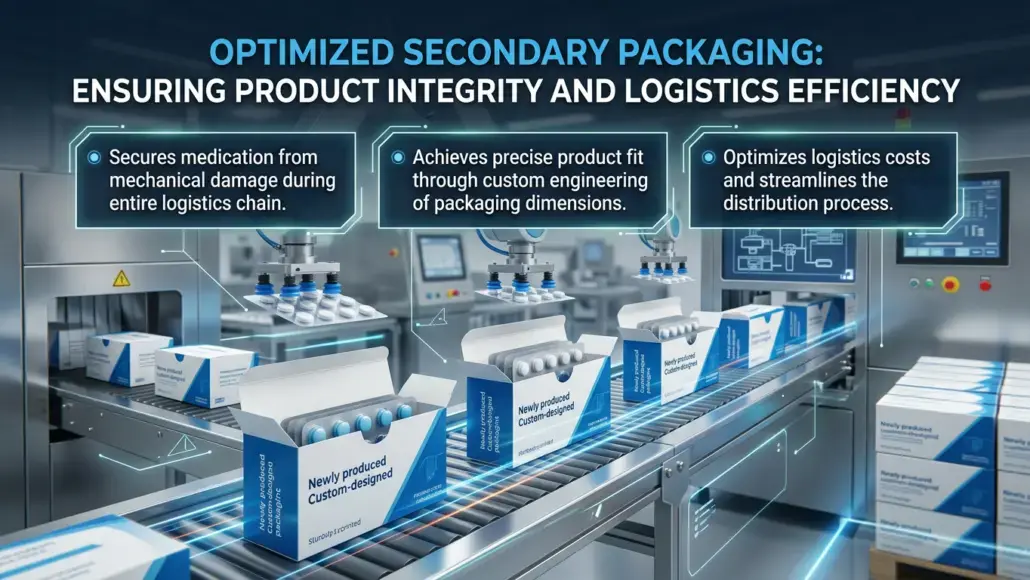
In the highly regulated world of pharmaceutical manufacturing, the physical protection of the product is as critical as its chemical stability. While primary packaging handles the immediate contact with the medication, the design of secondary packaging is what ensures the product reaches the end user without mechanical damage. Achieving a precise product fit through custom packaging dimensions is a fundamental engineering task that impacts everything from patient safety to logistics costs. When a package is perfectly sized for its contents, it minimizes the internal movement that can lead to vial breakage, blister crushed cells, or the abrasion of printed labeling, all of which are essential for maintaining the integrity of the medical supply chain.
Engineering Precision in Secondary Packaging Dimensions
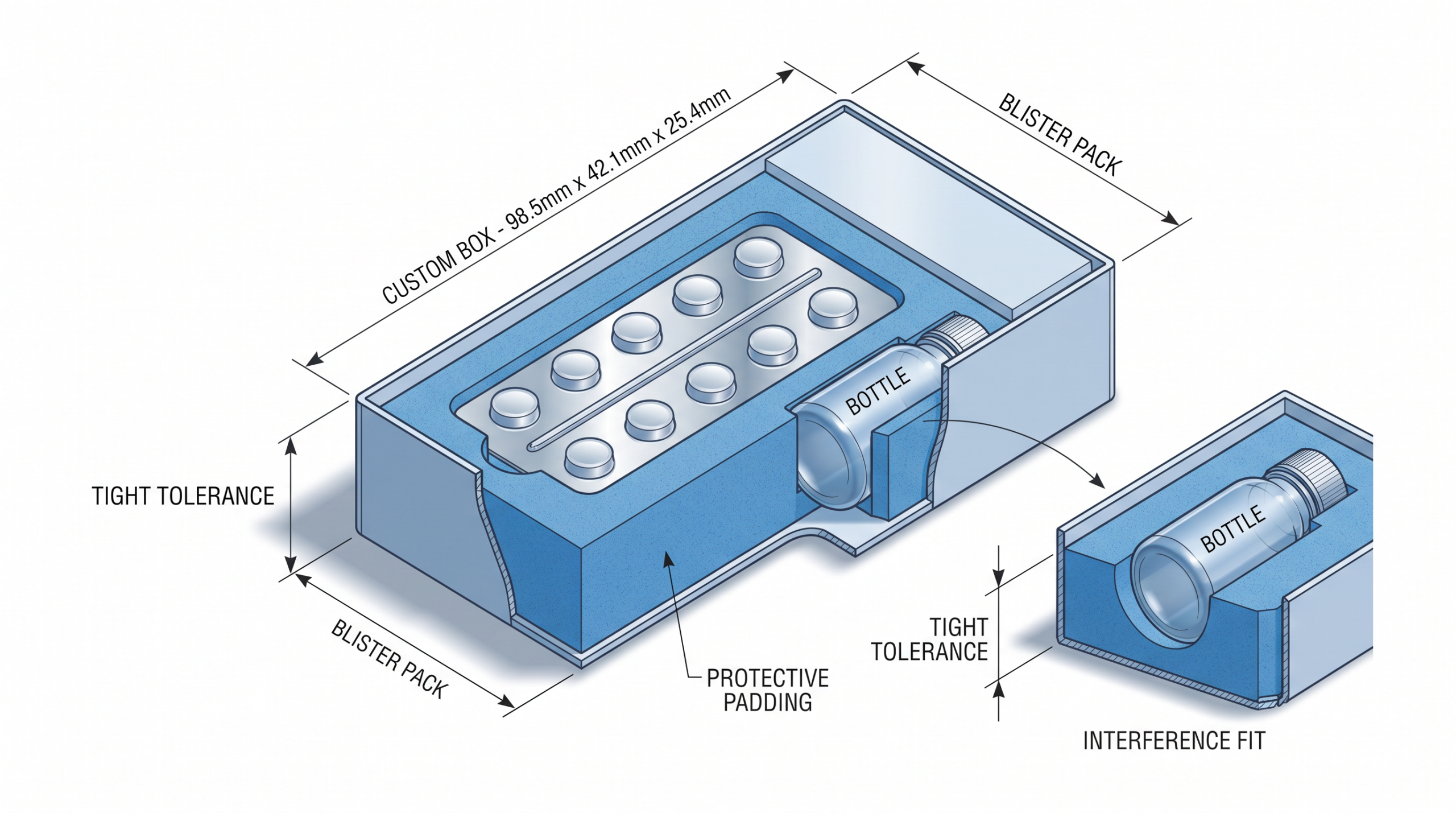
The design process for secondary packaging begins with an exacting analysis of the primary container’s geometry. Whether it is a pre-filled syringe, a glass vial, or a complex multi-component kit, the secondary carton must be engineered to provide a snug and secure environment. This level of product fit is achieved by using sophisticated CAD software that allows designers to create internal partitions, inserts, and structural supports that lock the product in place. By eliminating “rattle” or excessive headspace, the packaging acts as a shock absorber, distributing the energy of impacts across the structural ribs of the carton rather than the fragile contents themselves.
For glass containers, which are notoriously sensitive to point-loading and vibration, the importance of a tight fit cannot be overstated. High-speed distribution systems and rough handling during international shipping can subject packages to significant G-forces. If the product fit is loose, the resulting momentum can cause catastrophic failure upon impact with the carton wall. Custom-dimensioned inserts, often made from micro-flute corrugated board or molded fiber, provide the necessary friction and structural support to keep vials upright and isolated from one another. This “nesting” approach is a hallmark of premium pharmaceutical engineering, ensuring that even the most delicate biologics remain safe during their journey.
Beyond physical protection, a precise fit also plays a role in the thermal stability of cold-chain products. Excessive air gaps within a package can act as insulation or heat sinks, depending on the environment, potentially creating localized temperature variances. By optimizing the internal volume to match the product and the necessary gel packs or phase-change materials, engineers can create a more predictable thermal profile. This level of precision is increasingly important as the industry moves toward more expensive and temperature-sensitive specialty medications that require flawless execution from the factory to the clinic.
Logistics Efficiency and Volumetric Optimization
The benefits of custom packaging dimensions extend far beyond the protective qualities of the carton. In the modern global economy, shipping costs are increasingly driven by dimensional weight rather than actual weight. By improving the product fit and reducing the overall footprint of each unit, pharmaceutical companies can significantly increase the number of units per pallet. This volumetric optimization leads to a direct reduction in shipping costs and carbon emissions, making the supply chain more efficient and sustainable. A reduction of just a few millimeters in each dimension can result in thousands of dollars in savings over a high-volume product’s lifecycle.
Furthermore, optimized dimensions facilitate the use of automated secondary packaging equipment. When cartons are designed with consistent and precise tolerances, they are less likely to jam or misfeed in the high-speed cartoning machines. This reliability is a key component of operational efficiency, allowing for higher throughput and lower downtime. The integration of custom dimensions into the early stages of package design ensures that the production line can run at peak performance, which is essential for meeting the demands of global product launches.
- Reduced Material Waste: Tailoring the box size to the product eliminates the need for excessive “void fill” materials like plastic air pillows or foam peanuts.
- Pallet Density Improvement: Smaller, more uniform cartons allow for better stacking patterns and higher utilization of container space.
- Automated Handling Compatibility: Precise dimensions ensure that vacuum grippers and robotic arms can consistently pick and place packages without errors.
- Retail and Pharmacy Space Optimization: Compact packaging is preferred by pharmacists and hospital storage facilities where shelf space is at a premium.
The move toward more compact packaging is also aligned with the industry’s broader sustainability goals. By using less paperboard and eliminating unnecessary plastic fillers, companies can reduce their environmental footprint while also lowering material costs. This “right-sizing” of the package is a visible commitment to responsible manufacturing that resonates with healthcare providers and patients alike. In an era where corporate social responsibility is a key differentiator, the efficiency gained through better product fit is a win-product for both the business and the planet.
Structural Integrity and Material Performance
The success of custom-dimensioned packaging is heavily dependent on the choice of materials and their structural properties. Paperboard used for pharmaceutical cartons must have the correct stiffness and puncture resistance to maintain its shape throughout the distribution cycle. If the board is too thin, the carton may bulge or collapse under the weight of stacked pallets, compromising the product fit and potentially damaging the contents. Conversely, over-engineering with excessively heavy board leads to unnecessary costs and environmental impact.
Designers use compression testing and burst strength analysis to determine the ideal material specifications for a given package size and weight. These tests ensure that the carton can withstand the stacking loads encountered in warehouses and during transit. For products that require moisture resistance, specialized coatings or laminations can be applied to the paperboard. These treatments must be carefully balanced to ensure they do not affect the foldability or the precision of the dimensions, as even a small amount of warping can interfere with the fit of the internal components.
The transition from a conceptual design to a physical package requires rigorous testing, often involving the use of packaging validation protocols. These studies verify that the chosen dimensions and materials perform as expected under real-world conditions. Vibration tables and drop testers are used to simulate the rigors of the supply chain, providing data that can be used to further refine the design. This iterative process ensures that the final package provides the maximum possible protection for the medication, fulfilling the core mission of pharmaceutical packaging.
Human Factors and User Experience in Packaging Design
While the technical aspects of product fit are paramount, the human element must also be considered. Pharmaceutical packaging must be easy to open for patients, many of whom may have limited dexterity or visual impairments. A precise fit ensures that the product is presented in a consistent orientation every time the package is opened, making it easier for the user to access the medication safely. This predictability is especially important for emergency medications or those with complex administration instructions.
Custom dimensions also allow for the integration of instructional inserts or professional labeling in a way that does not interfere with the product. When the layout is well-organized, it reduces the risk of user error and improves compliance with the prescribed treatment regimen. For example, some cartons are designed with “smart” features like integrated calendars or dosing reminders that are built directly into the structure of the packaging. These features require a high degree of dimensional accuracy to ensure they function correctly and remain legible.
Furthermore, the aesthetic appeal of a well-fitted package should not be underestimated. A professional and high-quality appearance instills confidence in the patient regarding the quality of the medication. Crisp corners, clean printing, and a secure feel all contribute to the overall perception of the brand. By investing in custom dimensions and superior product fit, pharmaceutical companies are signaling their commitment to quality at every level, from the laboratory to the patient’s hand. This holistic approach to design is what sets leading manufacturers apart in a competitive marketplace.
Future Innovations in Tailored Packaging Solutions
The future of pharmaceutical packaging is likely to be shaped by the rise of personalized medicine and small-batch production. As treatments become more tailored to individual patients, the need for flexible and custom-dimensioned packaging will grow. Digital printing and on-demand cutting technologies are already making it more economical to produce smaller runs of custom cartons, allowing manufacturers to react more quickly to market needs. This agility is essential for the rapid distribution of new therapies and for addressing the requirements of niche patient populations.
Another exciting development is the integration of smart sensors and active packaging components. These technologies can monitor the condition of the product in real-time and provide data on its temperature, integrity, and even its usage. Incorporating these features requires a high level of dimensional precision to ensure the sensors are correctly positioned and protected within the packaging structure. As these tools become more common, the role of custom dimensions in ensuring their functionality will become even more critical.
The integration of sustainable, biodegradable materials into custom packaging designs is also a major area of research. Finding materials that offer the same level of structural integrity and dimensional stability as traditional paperboard is a challenge, but progress is being made. By combining these new materials with optimized product fit, the industry can achieve a new level of environmental performance without compromising on safety. The ongoing evolution of packaging science ensures that the protection of pharmaceutical products will continue to improve, providing a safer and more efficient healthcare system for everyone.