












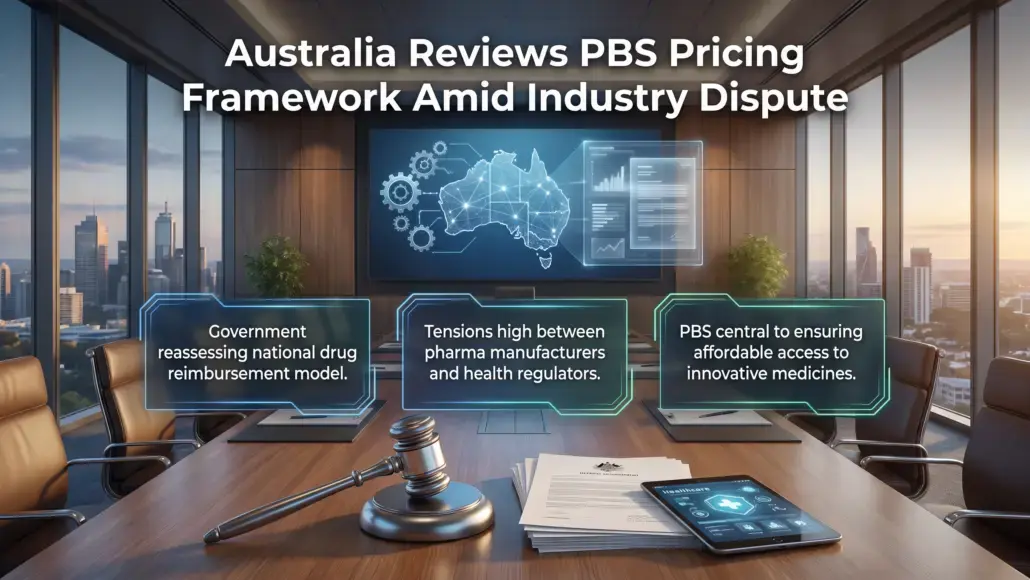
The Australian government is currently navigating a significant period of reassessment regarding its national drug reimbursement model, as tensions between global pharmaceutical manufacturers and health regulators reach a critical juncture. At the center of this dispute is the Pharmaceutical Benefits Scheme (PBS), a system that has long served as the primary mechanism for ensuring affordable access to innovative medicines in the country. In a decisive move intended to mitigate immediate market uncertainty, the Health Minister, Mark Butler, has confirmed that key high-value therapies—specifically Ocrevus, Kesimpta, and Lemtrada—will remain subsidized on the PBS. This decision follows a period of intense negotiation during which manufacturers signaled potential withdrawals of their products if price reductions were enforced. However, the decision to maintain the status quo is temporary; the Pharmaceutical Benefits Advisory Committee (PBAC) has simultaneously called for a “rapid review” of the current PBS pricing framework for these therapy classes, with a final determination expected by the end of the year.
This rapid review is expected to address the fundamental mechanics of how Australia assesses the value of innovative medicines against lower-cost alternatives. The current dispute was triggered by the introduction of a new, lower-cost competitor, Briumvi, which established a new pricing benchmark within the PBS. Under Australia’s long-standing policy of reference pricing, the government informed existing manufacturers that it would reduce the wholesale price it pays for their therapies to match this new, lower benchmark. This move highlights a growing rift between the government’s cost-containment goals and the industry’s demand for pricing that reflects the unique value and innovative nature of their products. As the health department works with companies on future supply arrangements, the outcome of the year-end review will serve as a bellwether for the future of pharmaceutical market access in Australia.
The Mechanics of Reference Pricing and Benchmarking
The Australian PBS pricing framework relies heavily on the principle of reference pricing to maintain a sustainable national health budget. This system operates on the premise that if multiple safe and effective drugs exist to treat the same condition, the government will benchmark its subsidy against the lowest-cost option. When a cheaper treatment enters the market and is added to the PBS, the government notifies all other manufacturers in that category that it will reduce the price it pays for their products. If a company refuses to accept this lower benchmark, the government has the authority to remove that specific drug from the scheme, potentially leaving only the lower-cost options available to the public.
In the most recent dispute, the entry of Briumvi in late 2025 created a new, lower pricing floor for the therapy class. The subsequent government requirement for Novartis and Roche to lower their prices to match this benchmark reportedly threatened a price reduction of up to 50%. This creates a significant dilemma for manufacturers who maintain that their drugs are not interchangeable with lower-cost alternatives. While the PBS system traditionally accepts that a range of treatment options is necessary, manufacturers have often struggled to provide the specific evidence required by the PBAC to justify a higher price point compared to older or cheaper medicines. This lack of evidentiary clarity remains a primary obstacle in the current reimbursement negotiations.
International Influence and the Transatlantic Pricing Gap
The tensions within the Australian market are not isolated but are part of a broader global conflict over pharmaceutical value and pricing. A significant factor influencing these local negotiations is the United States’ “Most Favoured Nation” (MFN) drug pricing policy. The MFN model requires U.S. domestic prices to align with the lowest prices paid in other developed nations. For global pharmaceutical firms, this creates a high-stakes scenario: a deep price cut in a smaller market like Australia could inadvertently trigger a mandatory price reduction in the much larger and more profitable U.S. market.
Industry critics argue that pharmaceutical companies are leveraging this international policy to push for higher prices across the board. The concern is that if companies are forced to choose between compromising their U.S. profits and maintaining a presence in smaller markets, they will choose to pull their products from countries like Australia. This international pressure was explicitly acknowledged by Minister Butler, who described the influence of U.S. pricing policy as a “significant concern” for the future of the PBS. The standoff highlights a critical vulnerability in global supply chains, where the domestic cost-containment measures of one nation can be disrupted by the pricing mandates of another.
Towards HTA Reform and a Fit-for-Purpose System
Recognizing the escalating pressure on the PBS pricing framework, the Australian government has been actively exploring comprehensive reforms through its Health Technology Assessment (HTA) Review. The findings of this review, published in 2024, suggest that the way the government assesses health technologies—including drugs—may no longer be entirely fit for purpose in an era of rapid innovation. One of the central findings was that while the PBS acknowledges the need for multiple therapy options, there is a distinct lack of clarity regarding the type of evidence manufacturers must present to secure a higher price for an “innovative” therapy.
Minister Butler has conceded that the PBS requires structural reform to ensure that innovative therapies are not unfairly held back by assessments against older, much cheaper medicines. The upcoming rapid review of therapy classes by December is a critical step in this modernization process. It will involve a consultation on how therapies are currently utilized and whether the pricing benchmarks reflect contemporary evidence. For the industry, the goal is a more transparent and flexible HTA framework that recognizes the heterogeneity of diseases and the value of unique therapeutic mechanisms. For the government, the challenge is to balance this recognition of innovation with the fiscal necessity of a taxpayer-funded subsidy system in an increasingly volatile global pharmaceutical market.