







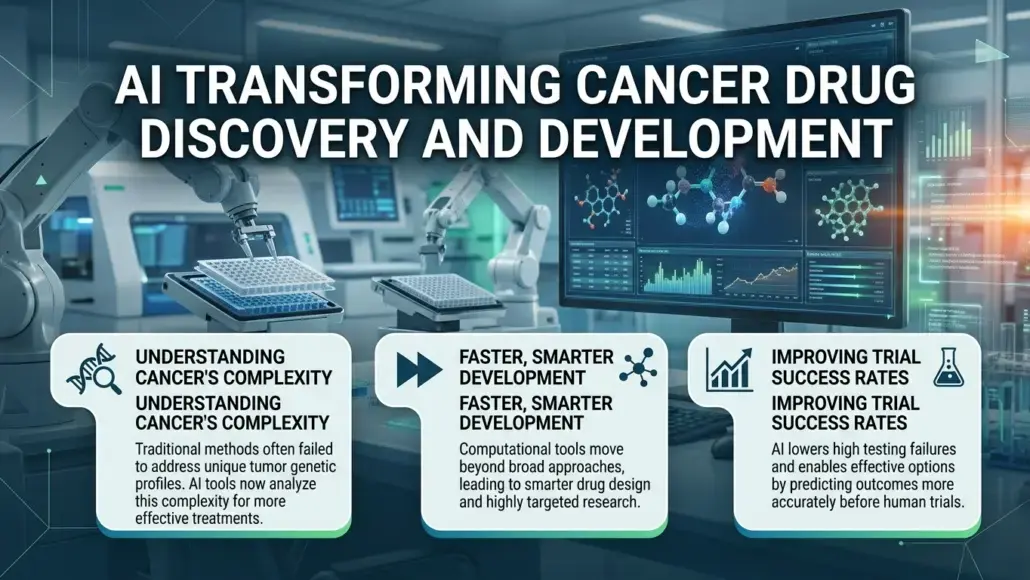
The global oncology sector is currently undergoing a significant shift as the complexity of the disease continues to outpace traditional research methods. For decades, the search for effective treatments was defined by a broad approach that often failed to account for the unique genetic profile of individual tumors. This reality resulted in high failure rates during clinical testing and a lack of effective options for many patients. However, the introduction of advanced computational tools is fundamentally changing this environment. The implementation of AI transforming cancer drug discovery and development is providing researchers with the analytical depth required to navigate the intricate molecular structures of malignant cells, leading to a more targeted and effective therapeutic approach.
Pharmaceutical research in the oncology field now relies heavily on the ability to process massive amounts of biological data. From genomic sequencing to proteomic analysis, the volume of information available is immense. Artificial intelligence systems can identify subtle patterns within these datasets that indicate how a specific type of cancer will respond to a particular treatment. This capability is essential for precision medicine, as it allows clinicians to tailor therapies to the genetic makeup of the individual patient. By reducing the reliance on a one-size-fits-all model, the industry is improving the success rates of new treatments and ensuring that patients receive the most effective care as quickly as possible.
Precision Medicine and the Identification of Novel Biomarkers
The identification of reliable biomarkers is one of the most critical aspects of modern oncology research. These biological indicators allow researchers to predict which patients are most likely to benefit from a specific drug, thereby increasing the efficiency of clinical trials. Traditional methods of biomarker discovery were often slow and labor-intensive, but modern analytical platforms have accelerated this process significantly. By utilizing machine learning to analyze the genetic and molecular characteristics of thousands of tumor samples, AI can highlight specific markers that were previously hidden. This technical precision is what allows for the development of highly targeted therapies that can attack cancer cells while sparing healthy tissue.
Furthermore, the integration of these markers into the early stages of discovery ensures that the resulting drug pipelines are focused on the most promising candidates. Pharmaceutical firms are now using these data-driven insights to prioritize their research efforts, focusing on the molecular pathways that are most likely to yield a therapeutic benefit. This strategic focus is vital for maintaining the economic viability of oncology R&D, as it reduces the capital wasted on candidates that are destined to fail in the clinic. The ability to provide a clear biological justification for every new project is a fundamental requirement for earning the trust of investors and regulatory bodies in the current environment.
Streamlining Oncology Clinical Trials and Patient Recruitment
One of the primary bottlenecks in the development of new cancer treatments is the duration and complexity of clinical trials. Finding the right patients for a specific study, particularly in the era of precision medicine, is an immense challenge. Artificial intelligence is now being used to scan electronic health records and genetic registries to identify suitable participants in a fraction of the time. By matching patients with trials based on their unique biomarkers, these systems ensure that the study population is as homogeneous as possible, which is essential for producing clear and statistically significant results. This acceleration of the recruitment process is a vital component of the effort to shorten the time-to-market for new therapies.
Beyond recruitment, AI is also improving the design and the management of the trials themselves. Predictive analytics can be used to model different trial scenarios and identify potential risks before the first patient is even enrolled. This allows for the optimization of dosing schedules and the selection of more accurate endpoints, which are critical for the success of the study. During the trial, real-time monitoring of patient data allows for the early detection of safety signals or a lack of efficacy, enabling researchers to make adjustments quickly. This proactive approach to trial management is a hallmark of the modern pharmaceutical sector, ensuring that the research is conducted as efficiently and safely as possible.
Optimizing Complex Immunotherapies and Combination Treatments
The emergence of immunotherapies has been a significant advancement in the treatment of cancer, but these therapies are often complex and difficult to manage. Many patients do not respond to immunotherapy alone, leading to an increased focus on combination treatments. Artificial intelligence is playing a pivotal role here by modeling the interactions between the immune system and the tumor microenvironment. These simulations can identify the most effective combinations of drugs, such as pairing a checkpoint inhibitor with a targeted small molecule or a specific vaccine. The ability to predict these synergies in silico before moving to clinical testing is a major technical advantage that is accelerating the development of the next generation of cancer treatments.
Furthermore, these analytical tools are helping to address the problem of resistance, which is a common challenge in oncology. By analyzing how tumors evolve in response to treatment, AI can predict when resistance will occur and identify the molecular changes that drive it. This foresight allows researchers to design treatments that can overcome or prevent resistance, extending the duration of the therapeutic benefit for the patient. The focus remains on creating a dynamic and responsive research environment that can keep pace with the rapidly changing nature of the disease. This commitment to technical excellence is what will define the leaders of the pharmaceutical industry in the decades to come.
The Evolving Strategic Landscape of Cancer Research
As the oncology sector continues to advance, the role of data-intensive research will only grow in importance. The successful implementation of AI transforming cancer drug discovery and development requires a fundamental shift in the culture and the operations of pharmaceutical organizations. This involves the integration of data scientists into the heart of the research team and the investment in the necessary infrastructure to handle massive datasets securely. The focus is no longer just on the biology of the cell, but on the ability to turn that biological information into actionable therapeutic insights.
Looking ahead, the coordination of global research efforts through shared data platforms will be essential for addressing the most difficult forms of cancer. By breaking down the silos that have traditionally separated research institutions, the industry can leverage a much larger pool of data to identify new targets and develop more effective treatments. The commitment to transparency and professional collaboration is a key factor in the long-term success of the oncology field. The ultimate goal is the creation of a global research ecosystem that can deliver on the promise of precision medicine for every patient, regardless of the type or the location of their disease.