











Close
Novotech
Jabsco PureFlo 21 Single Use

Creating your Secondary Packaging Strategy

Note* - All images used are for editorial and illustrative purposes only and may not originate from the original news provider or associated company.

Subscribe

- Never miss a story with notifications

- Gain full access to our premium content

- Browse free from any location or device.

Media Packs

Expand Your Reach With Our Customized Solutions Empowering Your Campaigns To Maximize Your Reach & Drive Real Results!

– Access the Media Pack Now

– Book a Conference Call

Leave Message for Us to Get Back

Related stories

The Evolution of Field Execution in Specialty Pharma: From Coverage to Engagement

Why Field Execution Must Evolve Field execution — how pharma...

Integrated Inspection Systems for Leak Detection in Pharma

The pharmaceutical industry is increasingly moving toward a more holistic approach to quality control by combining various inspection technologies into a single, unified platform. Integrated inspection systems for leak detection in pharma offer a multi-faceted solution that simultaneously addresses cosmetic defects, particulate contamination, and container closure integrity. By merging high-speed visual cameras with sensitive high-voltage leak detection modules, these systems provide a comprehensive assessment of every unit, ensuring that each dose of medication is contained within a perfectly sealed and sterile environment. This integration not only reduces the risk of secondary contamination but also significantly improves the overall efficiency and reliability of the manufacturing process.
- Advertisement -

When to Start Creating Your Secondary Packaging Strategy

Pharmaceutical and biotechnology companies with a drug product in clinical development are usually focused on a quick commercial launch. Secondary packaging aspects are often less considered. Correlations with secondary packaging (in this context, secondary packaging also includes device assembly and serialization) that are not considered in this phase can have a negative effect on:

  • further processability
  • options in the product lifecycle management
  • cost and time-to-market

Therefore, starting early to discuss the secondary packaging strategy can have a positive long-term impact.

The impact of primary packaging

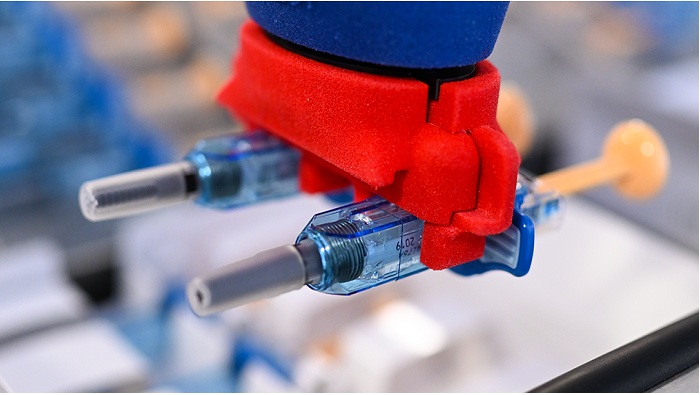
The best starting point is usually when discussing the primary packaging because it has a strong impact on downstream secondary packaging. Consider, for example, the combining of a syringe with an autoinjector. The format and dimensions of the syringe as well as the barrel flange need to fit to the respective system.

Specific indication and market requirements

Planning for the best possible secondary packaging solution requires a focus on the administration use case.

„Consider for example the handling of ophthalmic syringes utilized in a professional setting. Intra-ocular administration is an action that needs fine motor skills and differs significantly from syringes used for self-administration.“

Ingo Schraut, Product and Service Manager for Secondary Packaging

Differing country/market specifics can demand extra time that needs to be considered. For example, internal artwork approval or technical implementation of local reimbursement numbers. Also, the reimbursement landscape in general can have an impact on your secondary packaging strategy as reimbursements of pharmaceutical products vary from country to country.
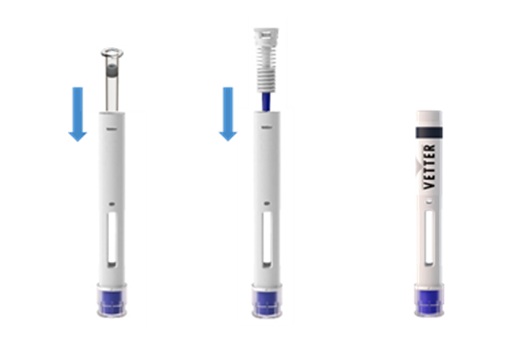
Challenges for a dependable supply chain

Batch sizes for secondary packaging expand significantly from clinical to commercial. Expect that the production unit is experienced and flexible enough to handle your needs from small-scale to large-scale production with stringent quality.

On the other hand, a big batch size in filling often melts down into much smaller secondary packaging production orders due to different country and packaging variants. For global supply, you can easily end up with 50 to 100 stock keeping units (SKUs) that need to be reliably handled.

Market differentiation

Secondary Packaging gives you the chance to differentiate your product against competition. When solving user specific needs, e.g. for home-use or easy to open packaging, your product’s marketing opportunities increase. Enhanced functionality and higher convenience often support a product’s safety. Even adherence can be positively affected when administration is more convenient, less painful or simply done quicker.

Future Trends

Authority’s demands for pharmaceutical products are continuously increasing. Depending on the region, pay for performance is becoming more popular, especially for expensive treatments. Digital enabled technologies like smart labels and connected devices can support pay for performance and adherence.

Ever since the matter of sustainability became a megatrend, it is gaining traction within the pharmaceutical industry. This is reflected in the CSR (Corporate Social Responsibility) strategy of big pharma companies. Thus, the market demand for sustainable secondary packaging, e.g. all-paper packaging, is likely to rise in the future.

In conclusion

Starting early to discuss secondary packaging aspects can help improve your time-to-market and flexibility for the further product life cycle management. A holistic view supports your goal for the best possible interaction between primary packaging, secondary packaging and production. With outsourced products, your partner should be able to offer this from a single source.

Company: Vetter


Headquartered in Ravensburg, Germany, Vetter is a family-owned, global leading contract development and manufacturing organization (CDMO) with production facilities in Germany, Austria and the United States. Currently employing more than 5,700 individuals worldwide, the company has long-term experience in supporting biotechnology and pharmaceutical customers both large and small. Vetter services range from early stage development support including clinical manufacturing, to commercial supply and numerous packaging solutions for vials, syringes and cartridges. As a leading solution provider, Vetter appreciates its responsibility to support the needs of its customers by developing devices that contribute to increased patient safety, convenience, and enhanced compliance. Great importance is also given to social responsibility including environmental protection and sustainability. Learn more about Vetter at www.vetter-pharma.com.

Send Enquiry for this story

By submitting this form you agree to allow www.worldpharmatoday.com to contact you regarding your enquiry.
See our Privacy Policy to learn more.

Latest stories

Related stories

The Evolution of Field Execution in Specialty Pharma: From Coverage to Engagement

Why Field Execution Must Evolve Field execution — how pharma...

Integrated Inspection Systems for Leak Detection in Pharma

The pharmaceutical industry is increasingly moving toward a more holistic approach to quality control by combining various inspection technologies into a single, unified platform. Integrated inspection systems for leak detection in pharma offer a multi-faceted solution that simultaneously addresses cosmetic defects, particulate contamination, and container closure integrity. By merging high-speed visual cameras with sensitive high-voltage leak detection modules, these systems provide a comprehensive assessment of every unit, ensuring that each dose of medication is contained within a perfectly sealed and sterile environment. This integration not only reduces the risk of secondary contamination but also significantly improves the overall efficiency and reliability of the manufacturing process.

Advancing Pharma Quality with HV Leak Detection Tools

Maintaining the highest standards of pharmaceutical quality is a fundamental requirement for the safe delivery of injectable medications. The development of advancing pharma quality with HV leak detection tools represents a major leap forward in the deterministic testing of container closure integrity. By utilizing sophisticated sensors and high-voltage electrical fields, these tools can detect microscopic structural defects that would otherwise compromise the sterility of life-saving products. This high-sensitivity approach significantly enhances the accuracy of the inspection process, providing manufacturers with a robust solution for ensuring packaging integrity and regulatory compliance.

Subscribe

- Never miss a story with notifications

- Gain full access to our premium content

- Browse free from any location or device.

Media Packs

Expand Your Reach With Our Customized Solutions Empowering Your Campaigns To Maximize Your Reach & Drive Real Results!

– Access theMedia Pack Now

– Book a Conference Call

Leave Message for Us to Get Back

Translate »