



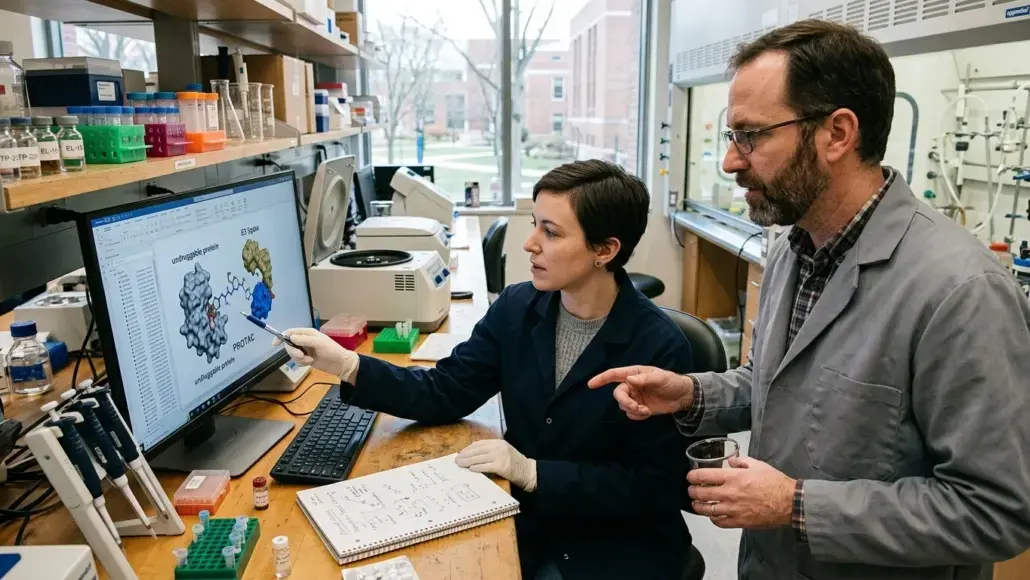

The pharmaceutical industry has historically focused on a narrow subset of the human proteome. For decades, the majority of small molecule drugs were designed to bind to the active sites of enzymes or receptors, effectively inhibiting their function. While this approach has been successful for many conditions, it is estimated that nearly eighty percent of the proteins associated with human disease lack these accessible binding pockets. These so-called undruggable proteins, which include many transcription factors and scaffolding proteins, have long been out of reach for traditional medicinal chemistry. However, a new paradigm known as proximity-induced pharmacology is providing a way to access these targets, and in doing so, researchers are starting to access new druggable frontiers.
This shift involves a move away from simple occupancy based inhibition and toward an approach where a drug molecule brings a target protein into close physical contact with the cell’s natural machinery for degradation or modification. By hijacking existing cellular processes, researchers can eliminate disease causing proteins entirely rather than just trying to block their activity. This fundamental change in drug design is not just an incremental improvement; it represents a new category of medicine that could address some of the most difficult challenges in oncology, neurology, and autoimmune disease.
The Mechanistic Breakthrough of Targeted Protein Degradation
The most prominent application of this new approach is targeted protein degradation, which utilizes the ubiquitin proteasome system. This is the natural recycling plant of the cell, responsible for identifying and destroying damaged or unneeded proteins. The core innovation of this field is the development of bifunctional molecules, often referred to as proteolysis targeting chimeras or PROTACs. These molecules have two distinct binding heads: one that attaches to the disease causing protein and another that binds to an E3 ubiquitin ligase.
By bringing these two entities together, the PROTAC induces the “tagging” of the target protein with ubiquitin, signaling the proteasome to degrade it. This catalytic process allows a single drug molecule to destroy multiple copies of a target protein, leading to higher potency and a more durable therapeutic effect compared to traditional inhibitors. The success of PROTAC drug discovery has triggered a wave of investment across the R&D pipeline, as companies rush to apply this technology to a wide variety of previously inaccessible targets.
Molecular Glues and the Search for Simplified Proximity
While PROTACs are effective, they are often large and complex molecules that can be difficult to optimize for oral delivery and tissue penetration. This has led to an increased interest in molecular glues, which are smaller, more compact molecules that stabilize the interaction between a target protein and a ligase. Unlike PROTACs, which act as a tether, molecular glues change the surface of the ligase to make it “sticky” for a specific protein that it would not normally interact with.
Molecular glues offer the advantage of better pharmacological properties and easier manufacturing compared to larger bifunctional agents. However, they are also more difficult to design rationally, as they rely on subtle changes in protein-protein interactions rather than direct binding to a pocket. Many of the most successful molecular glues were discovered by accident, but the industry is now developing sophisticated screening platforms to identify these molecules systematically. The ability to design glues that can target specific undruggable proteins is a major priority for drug modality innovation, offering a more streamlined path toward the clinic.
Expanding Beyond Degradation into New Functional Modalities
The concept of proximity-induced pharmacology is not limited to destroying proteins. Researchers are now exploring how the same principles can be used to modify proteins in other ways, such as through phosphorylation, deacetylation, or localized signaling. By bringing a target protein into proximity with a specific enzyme, it is possible to “turn on” or “turn off” its function without removing it from the cell.
This expansion of the proximity toolbox is leading to the development of a wide range of bispecific therapeutics. For example, some researchers are working on molecules that bring phosphatases into contact with kinases to reverse overactive signaling pathways in cancer cells. Others are developing agents that bring specific enzymes to the cell membrane to alter the glycosylation patterns of surface proteins, potentially making tumors more visible to the immune system. This versatility ensures that the field will continue to grow as we identify new ways to manipulate the cellular environment for therapeutic benefit.
Strategic Implications for the Oncology and Neurology Pipeline
The impact of these new modalities is most visible in the oncology sector, where the ability to eliminate drivers of tumor growth like MYC or KRAS has long been a goal. These proteins were previously considered undruggable because they lack traditional binding pockets, but they are now being successfully targeted by degradation platforms. Early clinical data for several protein degraders has been encouraging, showing that these drugs can be safe and effective in patients who have failed other therapies.
In addition to cancer, proximity therapeutics hold great promise for the treatment of neurodegenerative diseases such as Alzheimer’s and Parkinson’s. These conditions are characterized by the accumulation of misfolded proteins that are toxic to neurons. By designing molecules that can specifically target and degrade these aggregates, researchers hope to slow or even reverse the progression of these devastating diseases. The challenge in neurology is ensuring that these large or complex molecules can cross the blood brain barrier in sufficient concentrations, an area of research that is receiving significant attention from both academic and industry labs.
Navigating the Challenges of Drug Design and Development
Despite the immense potential of this field, the development of proximity based drugs is far from straightforward. The design of these molecules requires a deep understanding of the structural biology of both the target and the cellular machinery being hijacked. Researchers must ensure that the drug induces a productive ternary complex that leads to the desired modification without causing unintended off target effects.
Additionally, the pharmacology of these agents is different from traditional drugs. Because they act catalytically, the relationship between dose, exposure, and effect can be non linear, making it more difficult to determine the optimal dosing schedule. There is also the potential for “hook effects,” where high concentrations of the drug actually inhibit the formation of the required complex. Overcoming these technical hurdles requires a highly multidisciplinary approach, combining computational modeling, structural biology, and sophisticated medicinal chemistry.
The Role of Computational Tools in Accelerating Discovery
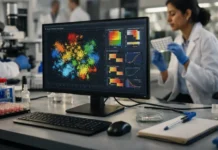
To manage the complexity of proximity-induced pharmacology, the industry is increasingly relying on advanced computational tools. Machine learning and molecular dynamics simulations are being used to predict how different molecules will influence protein-protein interactions and to identify the best candidates for synthesis. These tools allow researchers to screen millions of virtual compounds before ever entering the lab, significantly reducing the time and cost of the discovery process.
By building digital models of the ternary complexes, scientists can gain insights into the orientation and stability of the interaction, allowing for more rational design of both PROTACs and molecular glues. This data driven approach is essential for identifying the most viable drug leads and for optimizing their properties for clinical use. As these computational methods continue to improve, they will play an even larger role in our ability to access new druggable frontiers and to bring these innovative therapies to patients more quickly.
Economic and Competitive Environment of the Sector
The rapid progress in proximity therapeutics has led to a highly competitive environment, with many large pharmaceutical companies establishing their own internal programs or entering into significant partnerships with specialized biotech firms. We have seen multi billion dollar deals as firms seek to secure access to the most promising degradation and modification platforms. This level of investment is a clear indication that the industry views proximity based medicine as a foundational pillar of its future growth.
For biotech startups, the ability to demonstrate a unique platform or a novel target is a key factor in attracting funding and potential partners. The sector is characterized by a high degree of specialization, with some companies focusing on specific ligases, while others specialize in particular disease areas or delivery technologies. This diversity of approaches is a healthy sign for the industry, as it increases the chances that multiple successful therapies will emerge from the current pipeline of innovation.
Final Perspectives on the Proximity Revolution
To conclude this analysis, the emergence of proximity-induced pharmacology represents one of the most exciting developments in the history of drug discovery. By moving beyond the limitations of occupancy based inhibition, we are gaining the ability to manipulate the proteome with a level of precision that was once thought impossible. The progress we have seen in targeted protein degradation is just the beginning of a broader movement toward a more sophisticated and functional approach to medicine.
As we continue to refine these technologies and to expand our understanding of cellular signaling, the number of druggable targets will continue to grow. This will provide new hope for patients with diseases that have long been considered untreatable. The journey to access new druggable frontiers is a collaborative effort that requires the best of science, technology, and strategic investment. With continued dedication and innovation, the proximity revolution will fundamentally change the way we treat human disease, offering a future of more effective, personalized, and durable healthcare solutions.