


Contract research, development, and manufacturing organization (CRDMO) Aragen has announced the successful production of the first commercial-scale GMP batches of Daretabart (hu1418K322A), the lead therapeutic candidate of UK-based Renaissance Pharma Limited. The milestone marks a key step forward in the development of a treatment targeting high-risk neuroblastoma (HRNB), an aggressive and rare form of pediatric cancer that affects the sympathetic nervous system.
Daretabart was developed by Renaissance Pharma in collaboration with St. Jude Children’s Research Hospital. This rare disease therapy is a humanized monoclonal antibody (mAb) designed to target GD2, a marker associated with high-risk neuroblastoma. In April 2026, the US Food and Drug Administration (FDA) granted the drug Fast Track Designation, recognizing it as addressing a significant unmet medical need in pediatric oncology.
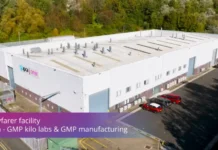
Aragen GMP manufacturing for Daretabart began with cell line development and initial process work at its Morgan Hill facility in California. The manufacturing was subsequently transitioned to Aragen’s commercial biologics facility in Bengaluru, India, where production is now being carried out at commercial scale. The technology transfer was described as seamless, underpinned by digital systems that support data collection and process continuity across both sites.
Subodh Deshmukh, CEO of Biologics at Aragen, highlighted the company’s operational strengths across its dual locations. “At both [sites], we have very capable people and very carefully designed systems,” Deshmukh said, noting the role of digital infrastructure in facilitating the transfer process. In a press release, he further stated, “Aragen’s dual-hub model – R&D innovation in California and GMP scale in India – enables seamless gene-to-GMP pathways with industry-leading COGS [cost of goods sold] and quality. We’re proud to support Renaissance in scaling Daretabart efficiently and reliably to support their BLA and launch.”
Aragen’s integrated Bengaluru facility is currently undergoing a significant expansion. The site is set to add multiple 2-kL bioreactors to support both scale-up and scale-out capabilities. Alongside this capacity growth, Deshmukh confirmed that the company is also “building out a drug product fill−finish facility, which will be up and running in early 2027.”
Simon Ball, director of Renaissance Pharma, acknowledged Aragen’s role in the program’s progress. “Our partnership with Aragen exemplifies the power of integrated CDMO expertise,” Ball said. “The Morgan Hill-to-Bengaluru handoff delivered exceptional results that enabled us to meet key clinical development milestones within 9 months.” The rare disease therapy program now moves forward with commercial-scale supply secured, positioning Renaissance Pharma for its Biologics License Application (BLA) submission and eventual product launch.