













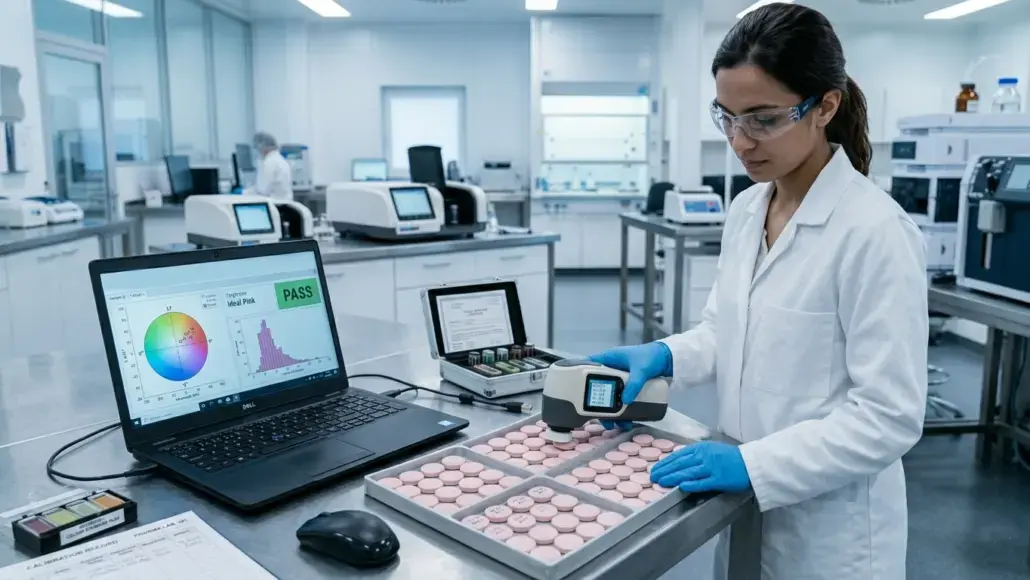
The pharmaceutical industry operates under a unique mandate where the concept of “good enough” does not exist. Every single dose of medication, whether it is an over-the-counter pain reliever or a life-saving oncology drug, must be a perfect replica of the validated standard. Among the various physical parameters that quality control professionals must monitor, color serves as a critical indicator of chemical purity, stability, and therapeutic integrity. The adoption of digital colorimeters pharma testing has revolutionized how manufacturers maintain this uncompromising standard of batch-to-batch consistency. By converting the subjective and often unreliable human perception of color into precise numerical data, these instruments provide a universal language for quality assurance that ensures every product, regardless of when or where it was made, meets the exact same rigorous specifications.
The Practical Advantages of Colorimetry in a High-Volume Environment
While more complex analytical tools like spectrophotometers provide a comprehensive spectral curve for research and deep-dive analysis, colorimeters are often the preferred choice for routine colorimeters pharma testing due to their exceptional speed, durability, and ease of use. These instruments work by utilizing specialized filters to measure light in the three primary colors red, green, and blue mimicking the human eye’s perception but with a level of accuracy and repeatability that no human can match. In a fast-paced production setting where hundreds of samples must be processed daily, the ability to obtain an objective color reading in seconds is a significant operational advantage. This rapid feedback loop allows for the immediate identification of batch deviations, enabling production teams to intervene early in the manufacturing process and significantly reducing the risk of costly material waste and batch failures.
Streamlining the Qualification and Monitoring of Raw Materials
The journey toward a high-quality finished product begins at the loading dock, where the identity and purity of every raw material must be verified. The use of colorimeters pharma testing during the intake of excipients, binders, and active pharmaceutical ingredients (APIs) provides an essential and non-destructive first line of defense. Many chemical substances have very specific color profiles that serve as indicators of their current state. For instance, a slight yellowing in a normally white crystalline powder could indicate the presence of an impurity from the synthesis process or the onset of oxidative degradation due to improper storage. By establishing a digital, quantified baseline for every ingredient, laboratories can set strict tolerance levels that are independent of any individual analyst’s judgment. Any shipment that falls outside these parameters is immediately flagged for further analysis, ensuring that only the highest quality materials enter the production cycle.
Building and Maintaining Consumer Trust Through Aesthetic Uniformity
In the mind of the patient, the appearance of a medication is a direct reflection of the quality and safety of the product. Patients who rely on chronic medications for their health and well-being are often extremely sensitive to any changes in the look, color, or texture of their pills. A slight color variation between different batches or different prescriptions can cause unnecessary alarm, leading to confusion, anxiety, and a measurable decrease in treatment adherence. Through the disciplined application of colorimeters pharma testing, manufacturers can ensure that every tablet, capsule, or liquid dose perfectly matches the established master standard. This focus on aesthetic consistency is not merely a marketing strategy; it is a vital component of the patient-provider relationship. Consistency builds trust, and in the pharmaceutical world, that trust is a critical factor in ensuring successful healthcare outcomes and long-term brand loyalty.
Integrating Modern Colorimetry into a GMP-Compliant Workflow
The regulatory framework of the pharmaceutical industry requires that all analytical tools be maintained and operated in a state of absolute control. When implementing colorimeters pharma testing, laboratories must strictly adhere to the principles of Good Manufacturing Practices (GMP). This includes a documented program of instrument qualification encompassing Installation Qualification (IQ), Operational Qualification (OQ), and Performance Qualification (PQ) to prove that the device is fit for its intended use. Furthermore, regular calibration against certified color standards is mandatory to ensure the ongoing accuracy of the measurements. Because these instruments are often used by a wide range of personnel across different shifts, having clear and detailed Standard Operating Procedures (SOPs) is essential. These procedures must outline every step of the testing process, from sample preparation to data entry, ensuring that the results are consistent and reproducible regardless of who is performing the test.
Comparing Colorimetry and Spectrophotometry for Targeted Lab Applications
Selecting the appropriate tool for color analysis is a critical decision for any laboratory manager, and it depends entirely on the goals of the analysis. While both instruments are essential components of a modern colorimeters pharma testing strategy, they serve different but complementary roles. Spectrophotometers provide a deep, high-resolution view of a sample’s spectral signature, making them ideal for method development, impurity identification, and stability studies where every nanometer counts. In contrast, colorimeters are designed for the rapid, high-volume assessment of color in a production or routine quality control environment. They are typically more robust, more portable, and require less intensive training to operate effectively. By using these two types of instruments in a coordinated manner spectrophotometers for the initial definition of the quality standard and colorimeters for the daily monitoring of production companies can achieve a perfect balance between scientific depth and operational throughput.
Overcoming the Challenges of Consistent Sample Preparation
The accuracy and reliability of colorimeters pharma testing are often heavily dependent on how a sample is prepared and presented to the instrument. Whether the sample is a clear liquid, a viscous gel, a fine powder, or a solid tablet, the environment in which the measurement is taken must be perfectly standardized. Factors such as the path length of a liquid cuvette, the packing density of a granular powder, or the surface curvature and texture of a tablet can all influence how light is reflected or transmitted. Modern colorimeters are often paired with specialized accessories such as sample holders, compression devices, and non-contact sensors designed to minimize these variables. By automating and standardizing the sample preparation process, laboratories can significantly reduce the risk of human error and ensure that every reading is a true and accurate representation of the product’s physical quality.
The Role of Centralized Data Management in Global Quality Assurance
In the era of the digital laboratory, the data generated during colorimeters pharma testing is becoming increasingly integrated into enterprise-wide quality management systems. Modern instruments are often equipped with advanced connectivity options, allowing them to feed data directly into a centralized Laboratory Information Management System (LIMS). This connectivity enables quality directors to monitor the performance of production lines across multiple global manufacturing sites from a single location. If a particular site begins to show a trend toward the edge of the established color tolerance range, proactive measures can be taken to investigate the cause and prevent a batch failure before it occurs. This transition from reactive testing to proactive, data-driven process improvement is a key pillar of Pharma 4.0 and represents a significant step forward in the industry’s ability to deliver consistent quality on a global scale.
Ensuring Regulatory Readiness Through Secure and Traceable Results
Regulatory inspections from agencies such as the FDA, EMA, or MHRA are a constant reality for pharmaceutical manufacturers. These inspections focus heavily on the traceability and reliability of the data used to release products to the market. For colorimeters pharma testing, this means being able to show a clear and unalterable link between every final reading and the standards used for the last instrument calibration. Digital colorimeters excel in this area by automatically recording the identity of the operator, the exact time of the measurement, and the specific instrument settings used. When this data is managed through software that is fully compliant with 21 CFR Part 11, it provides a secure and auditable record that is easily defended during a regulatory audit. This department acts as the final arbiter of quality, holding the power to halt production or delay a shipment if the analytical data including the color profiles of a batch does not meet the pre-defined acceptance criteria. By maintaining this separation of duties between those who perform the testing and those who approve the results, the pharmaceutical manufacturer creates a robust system of checks and balances that is the hallmark of modern regulatory excellence and patient safety.
Furthermore, the QA team is instrumental in identifying systemic issues through trend analysis of color data, allowing for the continuous improvement of manufacturing processes across the entire organization. This level of technical and procedural oversight not only ensures a successful inspection but also reinforces the organization’s reputation for integrity and excellence in pharmaceutical manufacturing. The long-term impact of integrating colorimetry into the quality workflow is a more resilient supply chain and a higher standard of care for patients who rely on these medications every day. As the industry moves toward more complex and sensitive biological products, the importance of these objective, digital measurements will only continue to grow, making the colorimeter an indispensable tool in the pursuit of pharmaceutical perfection.