













In the highly regulated world of pharmaceutical manufacturing, the concept of quality is not merely an aspiration but a fundamental requirement that dictates every aspect of the production lifecycle. Among the diverse array of physical and chemical parameters that laboratory professionals must monitor, color remains one of the most critical and telling indicators of a product’s integrity. Whether it is the subtle hue of a liquid syrup, the brightness of a tablet coating, or the clarity of an injectable solution, color provides immediate and actionable insights into the chemical stability, purity, and concentration of active pharmaceutical ingredients. Historically, the evaluation of these attributes was a manual process, susceptible to the inherent variability of human perception and environmental lighting. However, the modern era has ushered in a new standard of excellence where color measurement pharma QC has become a digitally-driven cornerstone of the analytical workflow. This transition to objective, instrument-based analysis ensures that every medication reaching the market is safe, effective, and visually consistent for the patient.
The Scientific Foundation of Spectral Evaluation in Pharmaceutical Labs
To appreciate the value of modern color measurement pharma QC, one must delve into the complex physics of how light interacts with pharmaceutical matrices. When electromagnetic radiation in the visible spectrum encounters a substance, it is either absorbed, reflected, or transmitted based on the molecular structure of the material. By capturing this interaction with high-precision sensors, laboratories can generate a spectral curve that acts as a unique chemical and physical signature. Unlike the human eye, which can only distinguish between broad shades, an advanced spectrophotometer can detect nanometer-level shifts in light intensity. This capability allows for the detection of trace degradation products that might not yet be visible to the eye but could significantly impact the drug’s shelf-life or therapeutic efficacy. By quantifying these shifts through the CIELAB color space a standard that defines color along L, a, and b* axes the laboratory can establish a mathematical baseline for quality that is independent of subjective interpretation and environmental bias.
Instrumental Precision and the Dominance of High-End Spectrophotometry
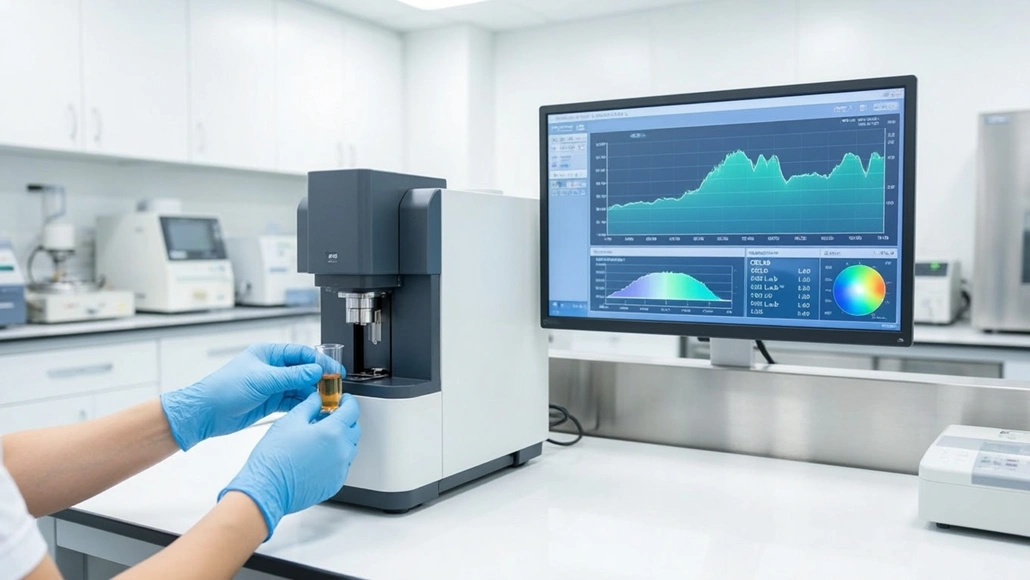
The quest for absolute accuracy in the laboratory is largely fulfilled by the deployment of research-grade spectrophotometers designed specifically for the pharmaceutical sector. These instruments provide a comprehensive view of a sample’s appearance by measuring its reflectance or transmittance across the entire visible spectrum and into the ultraviolet range. In the specific context of color measurement pharma QC, these devices are utilized to verify the identity and purity of complex active ingredients before they are ever used in the manufacturing process. For instance, a slight shift in the spectral curve of an API could indicate the presence of a synthesis byproduct or a heavy metal contaminant that would otherwise go unnoticed. Furthermore, spectrophotometry is essential for monitoring the consistency of sophisticated film coatings on solid dosage forms. These coatings are often designed not just for aesthetics but for controlled-release profiles, and even a minor variation in color or thickness can alter how the drug is absorbed by the patient. By maintaining a tight control over these parameters, manufacturers ensure that their products perform exactly as intended.
The Critical Infrastructure of Standardized Calibration and Traceability
The reliability of any analytical conclusion is inextricably linked to the state of the instrument used to generate the data. In a pharmaceutical setting, maintaining the peak performance of color measurement pharma QC equipment requires a disciplined and documented approach to instrument maintenance and calibration. Regular calibration using certified reference materials that are traceable to national or international standards, such as those provided by NIST, is mandatory. This process ensures that the instrument’s sensors are accurately interpreting the physical world and that the data generated is comparable across different time periods and geographical locations. A robust calibration program involves not just the initial setup but ongoing daily or weekly verification checks to monitor for any drift in lamp intensity or detector sensitivity. This level of technical oversight is a core component of maintaining the absolute integrity of the testing process, providing a solid foundation of data that can withstand the scrutiny of regulatory inspectors and internal quality audits.
Navigating the Global Regulatory Landscape and GMP Compliance
For any pharmaceutical organization, adherence to Good Manufacturing Practices (GMP) is the non-negotiable price of entry into the market. Regulatory bodies like the FDA and EMA have established clear guidelines emphasizing that physical attributes, including color, must be controlled and documented with the same level of rigor as chemical potency. Within the realm of color measurement pharma QC, this means laboratories must align their testing protocols with specific pharmacopeial chapters, such as USP <631> for Color and Achromicity. These standards outline the validated methods and instrumental configurations that must be used to ensure that a drug product is physically identical to the version that was originally approved for clinical use. Consistency in appearance is also vital for patient safety and treatment adherence; a patient who notices a color difference in their medication may suspect it is a counterfeit or that it has degraded, leading them to stop their treatment prematurely. By ensuring physical uniformity, manufacturers reinforce the message of quality and reliability that is central to the patient-provider relationship.
Data Integrity and the Shift Toward Integrated Digital Documentation
In the current global regulatory environment, the security and reliability of analytical data are under unprecedented levels of scrutiny. The transition to integrated, digital color measurement pharma QC systems provides a significant advantage in meeting the requirements for data integrity. Modern instruments generate electronic records that are inherently more secure and auditable than traditional paper-based systems. These digital records, when managed through software that complies with 21 CFR Part 11, include a comprehensive audit trail that logs every action taken by every user. This includes the timestamp of the measurement, the calibration state of the instrument at the time of the test, and any modifications made to the data files. By eliminating the risks associated with manual data entry and transcription errors, pharmaceutical companies can provide regulators with the robust, verifiable proof of quality they demand. This transparency is essential for building a culture of quality that prioritizes accuracy over convenience and ensures that every release decision is based on a foundation of solid evidence.
Protecting Patient Safety Through Proactive Stability Monitoring
The ultimate goal of every quality control measure is the absolute protection of the end-user. Color measurement pharma QC serves as a vital early-warning system that can detect stability issues long before they manifest as a failure in chemical potency. For many pharmaceutical formulations, a change in color is the first physical sign of degradation caused by exposure to light, heat, or humidity. By including quantitative color measurements in long-term stability studies, manufacturers can more accurately predict a product’s shelf-life and determine the optimal storage conditions. This proactive approach prevents the distribution of sub-potent or potentially harmful medications to the public. In a world where supply chains are increasingly complex and drugs are often transported through varying climates, the ability to quickly and accurately verify a product’s physical state through color analysis is an essential safeguard that protects both public health and the manufacturer’s global brand reputation.
Future Trends in Pharmaceutical Color Analysis and PAT Integration
As the pharmaceutical industry continues to evolve toward the principles of Pharma 4.0, the methods used for color measurement pharma QC are becoming increasingly automated and integrated directly into the manufacturing process. The implementation of Process Analytical Technology (PAT) allows for the continuous, real-time monitoring of color during high-speed production. Instead of waiting for a batch to be completed before taking a sample to the lab, inline sensors can monitor the color of a tablet coating as it is being applied, allowing the machinery to make sub-second adjustments to maintain the perfect hue. This real-time control significantly reduces the risk of batch failures and improves overall operational efficiency. Furthermore, the integration of artificial intelligence and advanced machine learning algorithms is allowing manufacturers to move from reactive testing to predictive quality control. By analyzing vast datasets of spectral information, these systems can identify patterns that precede a quality deviation, allowing for intervention before a problem ever occurs. This transition represents the next frontier in pharmaceutical excellence, where data-driven insights lead to unprecedented levels of safety, efficiency, and consistency.
The Role of Advanced Software in Global Lab Harmonization
In a globalized industry, ensuring that quality standards are identical across multiple manufacturing sites is a significant challenge. Advanced software solutions are now bridging this gap by allowing for the centralized management of color measurement pharma QC protocols. A quality director at a corporate headquarters can push standardized testing methods and color tolerance limits to labs located on different continents with a single click. This ensures that a product manufactured in Europe meets the exact same physical specifications as one manufactured in South America. The ability to aggregate and compare spectral data from different sites also allows for the identification of global trends in raw material quality or instrument performance. This high level of harmonization is essential for maintaining a seamless global supply chain and ensuring that patients receive a consistent product regardless of where it was produced.
Sustainability and the Drive Toward Green Analytical Chemistry
The modern pharmaceutical laboratory is also increasingly focused on improving its environmental footprint. Advanced color measurement pharma QC techniques are inherently “greener” than many traditional analytical methods because they are non-destructive and require no chemical reagents or hazardous solvents for sample preparation. By replacing labor-intensive titration or chromatography-based identity tests with rapid, reagent-free spectral analysis, laboratories can significantly reduce their chemical waste and energy consumption. This shift toward more sustainable practices is not only better for the environment but also improves the bottom line by lowering the costs associated with reagent procurement and waste disposal. As environmental regulations continue to tighten, the move toward these clean, efficient analytical technologies will become a core component of every forward-thinking pharmaceutical organization’s sustainability strategy.