








The global landscape of pharmaceutical distribution is undergoing a profound and necessary transformation, driven by the critical necessity to maintain the absolute integrity of temperature-sensitive products. As the complexity of biological drugs, vaccines, and advanced cell therapies increases, the traditional methods of logistics are no longer sufficient to guarantee safety. Cold chain intelligence has emerged as the cornerstone of modern pharmaceutical supply chains, bridging the gap between basic refrigeration and high-fidelity, data-driven oversight. This sophisticated integration of technology and logistics ensures that every touchpoint in the journey of a medication is scrutinized, analyzed, and optimized to prevent excursions that could render life-saving treatments ineffective.
In the past, cold chain management was largely reactive, relying on passive cooling elements and manual temperature checks at various intervals. However, the rise of cold chain intelligence has shifted the paradigm toward a proactive model. By leveraging advanced sensors, telematics, and data analytics, logistics providers can now achieve a level of transparency that was previously unimaginable. This intelligence is not merely about tracking temperature; it encompasses a holistic view of the environment, including humidity, light exposure, and physical shock, all of which can impact the stability of high-value pharmaceutical assets. The industry is moving toward a future where “dumb” containers are replaced by sentient logistics assets capable of self-reporting their status to a global network.
The Evolution of Predictive Monitoring in Pharma Logistics
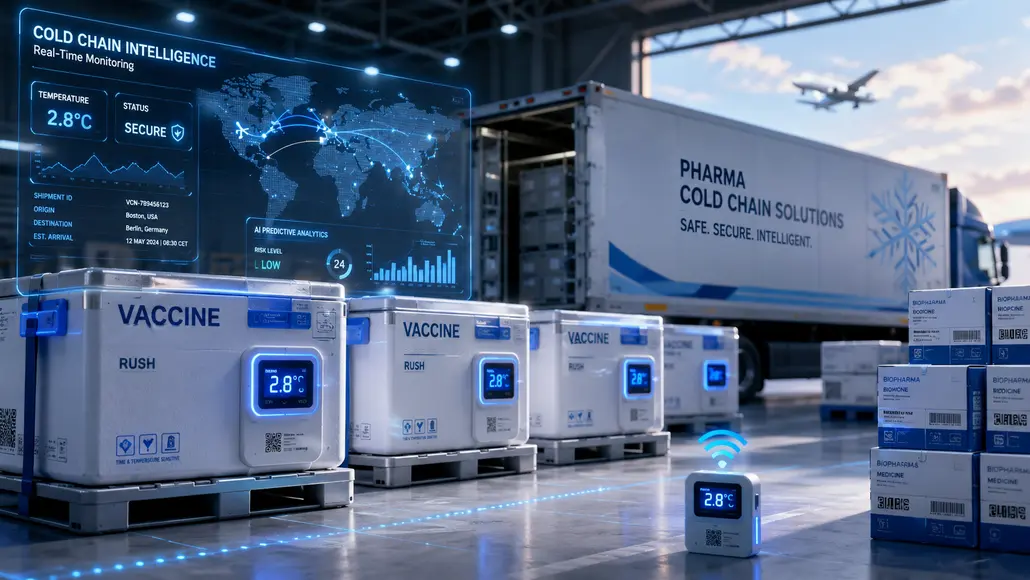
Predictive monitoring stands as one of the most significant advancements within the realm of cold chain intelligence. Unlike traditional data loggers that provide a retrospective look at environmental conditions after a shipment has arrived often when it is too late to save the product predictive systems use real-time data to forecast potential issues before they occur. This capability is vital for pharma logistics, where even a minor delay or a slight fluctuation in temperature can lead to the loss of an entire batch of vaccines or biologics. By analyzing historical data and current transit conditions, intelligent systems can alert operators to impending risks, such as a failing cooling unit or an unexpected delay at a customs border, allowing for immediate intervention.
The implementation of predictive monitoring requires a robust infrastructure of connected devices and cloud-based platforms. These systems collect vast amounts of data from thousands of shipments simultaneously, using machine learning algorithms to identify patterns that precede temperature excursions. For instance, if a specific route consistently experiences delays during summer months that strain thermal packaging beyond its rated duration, the intelligence system can recommend alternative paths or more robust insulation before the shipment even leaves the warehouse. This level of foresight not only secures the pharma supply chain but also optimizes operational efficiency by reducing waste and ensuring that products are delivered within their required specifications.
Furthermore, predictive monitoring extends into the realm of maintenance. Intelligent cold chain assets can monitor their own “health,” detecting early signs of compressor failure or battery degradation in active cooling systems. By identifying these issues before they manifest as a failure in transit, logistics providers can perform preventative maintenance, significantly increasing the reliability of the entire fleet. This shift from reactive repair to predictive maintenance is a key driver in lowering the total cost of ownership for specialized pharma transport equipment while simultaneously increasing the safety margins for the medications being carried.
Thermal Assurance and the Role of Advanced Packaging Science
Thermal assurance is the technical foundation upon which cold chain intelligence is built. It refers to the suite of technologies and processes used to maintain a stable environment for pharmaceutical products throughout the entire distribution cycle. While active cooling systems like refrigerated trucks and containers are essential, the intelligence layer adds a level of certainty by verifying that these systems are functioning correctly in real-time. Thermal assurance also involves the use of advanced phase change materials (PCMs) and vacuum-insulated panels (VIPs) that can maintain specific temperature ranges for extended periods without external power.
Integrating intelligence directly into thermal packaging has revolutionized how we approach vaccine transport and the delivery of other sensitive medications. Smart containers equipped with internal sensors provide continuous feedback to a centralized control tower. This feedback loop ensures that any deviation from the prescribed thermal profile is met with an automated response or a human-led corrective action. In the context of global health, where vaccines must often be transported to remote areas with limited infrastructure, these intelligent thermal assurance systems are the difference between a successful immunization campaign and a catastrophic loss of resources. The science of thermal assurance is constantly evolving, with new materials being developed that can provide even greater stability with less weight, a critical factor in reducing the carbon footprint of air-shipped pharmaceuticals.
Moreover, the intelligence gathered by these systems allows for a more nuanced understanding of “stability budgets.” Rather than a binary pass/fail based on a single temperature reading, cold chain intelligence can calculate the cumulative impact of thermal exposure on a product’s efficacy. This data is invaluable for quality assurance teams, who can use this detailed environmental history to make scientifically sound decisions about the release of a product, rather than discarding batches based on overly conservative manual checks. This precision is a major step forward in ensuring that patients have access to the medicine they need without unnecessary delays or waste.
Connected Supply Chain Operations and Global Connectivity
The true power of cold chain intelligence is realized when it is applied across the entire pharma supply chain, creating a seamless flow of information between manufacturers, logistics providers, and healthcare facilities. Connected supply chain operations allow for end-to-end visibility, ensuring that every stakeholder has access to the same “single source of truth.” This connectivity is particularly crucial in a globalized market, where a single pharmaceutical product may cross multiple international borders and be handled by various carriers before reaching the end patient. In such a fragmented landscape, the ability to maintain a digital thread of information is the only way to ensure accountability and safety.
Global connectivity within cold chain intelligence facilitates better compliance with international regulatory standards, such as Good Distribution Practices (GDP) and the European Medicines Agency (EMA) guidelines. Regulatory bodies increasingly demand detailed documentation of the conditions under which pharmaceuticals are transported. Intelligent systems automate this documentation process, providing a digital audit trail that is both accurate and tamper-proof. Furthermore, the ability to track shipments in real-time across different continents enables logistics managers to navigate geopolitical shifts, extreme weather events, and other disruptions that could jeopardize the delivery of critical medicines.
The integration of global connectivity also enables more effective collaboration between disparate partners in the supply chain. When a manufacturer can see the real-time status of their inventory in transit across three different continents, they can make better production and distribution decisions. Likewise, when a hospital in a developing nation knows exactly when a shipment of temperature-sensitive vaccines will arrive, they can prepare their storage facilities and clinical teams accordingly. This level of synchronization reduces the “last-mile” friction that so often plagues healthcare delivery in underserved regions, ultimately improving health outcomes on a global scale.
Navigating the Challenges of Vaccine Transport and Stability
Vaccine transport represents one of the most demanding applications of cold chain intelligence. Many modern vaccines, particularly those based on mRNA technology, require ultra-cold storage temperatures that must be maintained with zero margin for error. Cold chain intelligence provides the specialized monitoring tools necessary to manage these extreme requirements. This includes the use of cryogenic sensors and specialized logistics protocols that prioritize speed and thermal stability above all else. The intelligence gathered during these high-stakes shipments also helps in refining future protocols, ensuring that the global response to public health crises is as efficient as possible.
Beyond vaccines, the stability of chronic care medications and specialty drugs also depends heavily on intelligent logistics. For patients who rely on these treatments, any compromise in the cold chain can result in a loss of therapeutic efficacy, potentially leading to adverse health outcomes. By prioritizing cold chain intelligence, pharmaceutical companies demonstrate a commitment to patient safety that extends beyond the laboratory and into the final stages of delivery. This focus on the “last mile” is where intelligence often has the most direct impact on human lives, ensuring that a patient in a rural clinic receives a drug that is just as effective as one delivered in a major metropolitan medical center.
The challenges of vaccine transport are not limited to temperature alone. Vibration, light, and pressure changes during air transport can all affect the stability of sensitive biologics. Intelligent cold chain systems are now incorporating multi-modal sensors that monitor all these variables. By correlating this environmental data with the known stability profile of the vaccine, manufacturers can ensure that the “stress history” of the product remains within safe limits. This comprehensive approach to stability is a testament to how far cold chain intelligence has come, moving from simple temperature logging to a multifaceted discipline that protects the molecular integrity of the world’s most vital medications.
Regulatory Compliance and the Evolution of Global Standards
As cold chain intelligence becomes more sophisticated, regulatory frameworks are evolving to keep pace. Authorities like the FDA and EMA are increasingly looking for evidence of proactive risk management in pharma logistics. Cold chain intelligence provides the necessary data to demonstrate that a company has not only monitored its shipments but has also designed its supply chain to be inherently resilient. This shift toward “Quality by Design” in logistics requires a deep integration of data and process, something that is only possible with a truly intelligent supply chain.
Compliance is no longer just about showing a temperature graph at the end of a shipment; it is about proving that the entire system is under control. Intelligent systems provide real-time alerts for any deviations, which are then logged along with the corrective actions taken. This creates a real-time audit trail that is much more robust than traditional retrospective reporting. For pharmaceutical companies, this means less time spent on manual compliance tasks and a lower risk of regulatory citations or product recalls. It also provides the transparency needed to build trust with both regulators and the public, which is essential for maintaining the license to operate in the highly scrutinized healthcare sector.
Furthermore, the globalization of the pharmaceutical industry means that companies must comply with a patchwork of different regulations across various countries. Cold chain intelligence platforms can help navigate this complexity by automatically applying the relevant regulatory rules to each shipment based on its origin and destination. This automated compliance ensures that every shipment meets the highest local and international standards, reducing the risk of administrative delays at borders and ensuring that medications reach patients without unnecessary legal hurdles.
Enhancing Resilience Through Data Driven Insights and Strategic Planning
The resilience of the pharmaceutical supply chain is directly proportional to the quality of the data it utilizes. Cold chain intelligence generates deep insights that go beyond immediate logistics management to inform long-term strategy. By analyzing the performance of different carriers, packaging types, and transit routes over time, pharma companies can make data-driven decisions that enhance the overall robustness of their networks. This long-term perspective is essential for building a supply chain that can withstand the pressures of increasing global demand and the growing complexity of the pharmaceutical portfolio.
In addition to operational resilience, these insights drive financial efficiency. By identifying where product losses are most likely to occur, companies can target their investments in better packaging or more reliable transport modes where they will have the greatest impact. Cold chain intelligence also helps in optimizing inventory levels; with greater certainty about the timing and condition of arrivals, companies can move away from excessive safety stocks and toward a more agile, “just-in-time” delivery model. This not only reduces the cost of holding inventory but also ensures that products on the shelf are as fresh as possible, further enhancing patient safety.
Ultimately, the goal of cold chain intelligence is to create a supply chain that is not just a pipe for moving products, but an intelligent, adaptive ecosystem. As technology continues to advance, we can expect to see even more integration between logistics data and clinical outcomes. Imagine a future where the specific environmental history of a medication is used to personalize its administration to a patient, ensuring the absolute best possible therapeutic result. While this may seem far off, the foundations are being laid today through the continued advancement and implementation of cold chain intelligence.
In conclusion, the integration of cold chain intelligence into pharma logistics is not just a technological upgrade; it is a fundamental shift in how we protect the health of global populations. Through predictive monitoring, thermal assurance, and connected operations, the industry is creating a safer, more reliable pathway for the delivery of essential medicines. As we look to the future, the continued advancement of these intelligent systems will remain the primary defense against the logistical challenges of an ever-evolving healthcare landscape, ensuring that the promise of modern medicine is fulfilled for every patient, everywhere.