
















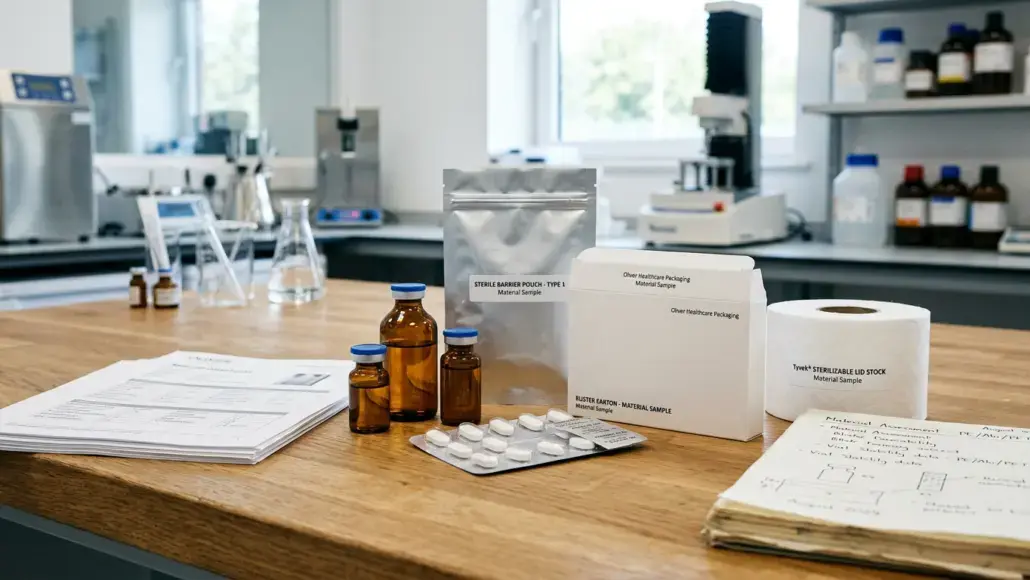
Pharmaceutical packaging plays a critical role in protecting medicines from external factors, maintaining product stability and supporting patient safety throughout storage and transportation. Selecting suitable materials depends on the characteristics of the drug, its storage requirements and the conditions it may encounter before reaching the end user.
Oliver Healthcare Packaging explores these considerations in its PackTalk article, What Materials Are Used in Pharmaceutical Packaging?. The article examines commonly used pharmaceutical packaging materials, including aluminium foil, plastic and polymer-based materials, and glass containers, along with their properties and potential interactions with medicines.
Aluminium foil is used as a lidding material for blister packs containing tablets and capsules, as well as for some aerosol products. Its barrier properties help protect pharmaceutical products from oxygen, moisture, light and microorganisms. Plastic and polymer-based materials are used in formats such as sachets, polybags, prefillable syringes and blister packs, while glass containers are commonly used for liquid and dry-powder medicines. Desiccant layers may also be incorporated into packaging to help control moisture and reduce the risk of drug degradation.
Material selection involves several performance considerations, including chemical resistance, barrier properties, sterilisation compatibility, durability and transparency. Packaging must be compatible with the medicine it contains and help maintain its stability and efficacy throughout its shelf life. Protection against moisture, oxygen and light is particularly important for products sensitive to environmental exposure.
Packaging design also depends on how a medicine is administered. In its article on drug delivery systems, Oliver discusses the packaging considerations associated with different administration methods, including material compatibility, sterility, contamination control, dosage accuracy and regulatory compliance. Packaging for patient-administered therapies may also need to support ease of use, while products administered by healthcare professionals can require specialised materials and strict sterility controls.
Single-use packaging presents additional considerations for pharmaceutical and healthcare applications. Oliver’s article on the benefits and drawbacks of single-use healthcare packaging examines its role in reducing contamination risks and simplifying use, alongside challenges involving waste generation, recycling, cost and supply-chain constraints.
Oliver Healthcare Packaging shares further information on its pharmaceutical packaging solutions. Additional articles on healthcare packaging materials, design and industry developments are available through the company’s PackTalk resource hub.
Connect with Oliver Healthcare Packaging for further information about its products, services and packaging expertise.