









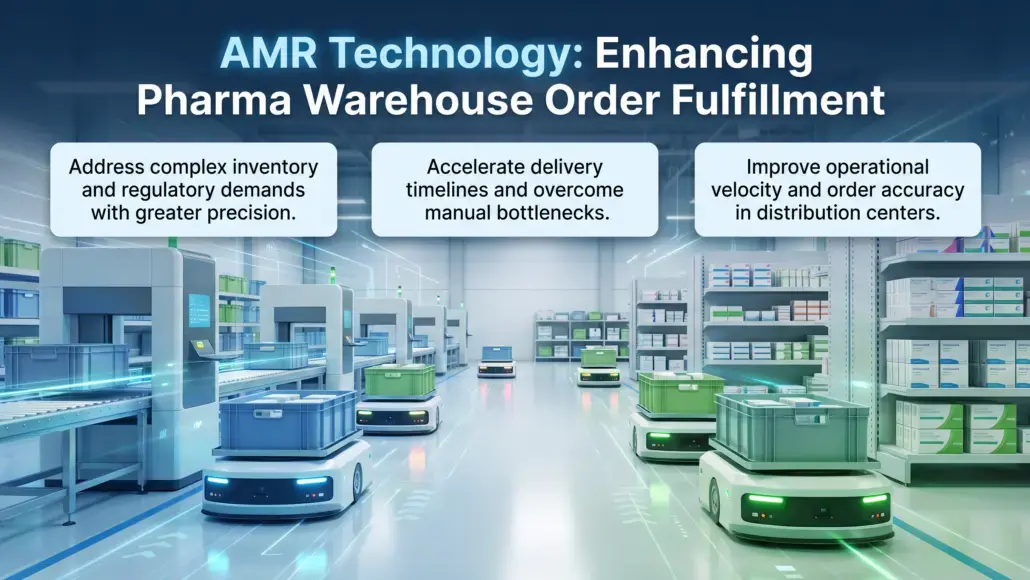
The pharmaceutical sector faces unprecedented pressure to manage complex inventory while meeting stringent regulatory requirements and accelerating delivery timelines. Traditional manual workflows often struggle to maintain the required velocity and precision, leading to bottlenecks in distribution centers. One significant advancement addressing these challenges is the adoption of autonomous mobile robots. By integrating amr technology improving pharmaceutical warehouse order fulfillment, organizations can automate the transit of materials without the need for fixed infrastructure. These systems use sophisticated sensors and mapping software to move through facility aisles, avoiding obstacles and collaborating with human operators. This flexibility is vital in pharmaceutical environments where product mixes change frequently and facility layouts must remain adaptable. Unlike fixed conveyors, these mobile units can be redeployed as demand fluctuates, providing a scalable solution for varying volumes of medication shipments. The ability to integrate these systems into existing facilities without major structural modifications allows for a faster implementation timeline, which is crucial for companies needing to respond quickly to market shifts or public health requirements.
The implementation of these robotic systems directly addresses the labor shortages and ergonomic concerns prevalent in high-volume warehouses. Manual picking processes require workers to walk several miles per shift, which induces fatigue and increases the likelihood of errors. By deploying amr technology improving pharmaceutical warehouse order fulfillment, companies can shift the burden of long-distance travel to machines. This allows human staff to focus on high-value tasks such as quality control, verification, and packing. The precision offered by autonomous units ensures that sensitive medications are moved with care, maintaining the integrity of packaging and reducing the risk of product damage. Additionally, these systems provide real-time tracking of every movement, which enhances visibility across the supply chain. This transparency is critical for compliance with global serialization and tracking regulations, ensuring that every batch is accounted for from the moment it enters the fulfillment cycle until it departs for its final destination. The reduction in manual handling also decreases the risk of contamination, a factor of paramount importance when dealing with sterile or high-purity pharmaceutical products.
Optimizing Order Accuracy and Compliance Through Intelligent Pathfinding
Accuracy is not merely a performance metric in the pharmaceutical industry; it is a fundamental safety requirement. Errors in order fulfillment can lead to incorrect medication delivery, which carries severe health risks and legal implications. Intelligent robotic systems use advanced algorithms to determine the most efficient paths through a warehouse, ensuring that items are retrieved and transported in the correct sequence. The use of amr technology improving pharmaceutical warehouse order fulfillment minimizes the human touchpoints involved in material movement, which naturally reduces the opportunity for manual mistakes. These robots can be integrated with warehouse management systems to receive direct instructions, ensuring that picking missions are executed with absolute fidelity to the digital manifest. This digital integration eliminates the need for paper-based systems, which are often prone to loss or misinterpretation. By maintaining a constant digital link between the physical inventory and the management software, facilities can achieve near-perfect inventory accuracy, reducing the need for time-consuming manual audits.
Beyond simple movement, these robots contribute to a safer working environment by performing tasks that are repetitive or physically demanding. In a pharmaceutical context, this might include moving heavy pallets of raw materials or transporting large batches of finished goods to the shipping dock. The sensors embedded in these units provide a level of spatial awareness that exceeds human capability in crowded or low-visibility areas. They can detect the presence of other vehicles or staff members from significant distances, adjusting their speed and trajectory to prevent collisions. This proactive safety stance is essential for maintaining operational continuity, as accidents can lead to significant downtime and loss of inventory. The ability to operate consistently across multiple shifts without degradation in performance allows pharmaceutical providers to maintain high throughput even during peak periods or sudden surges in demand for critical healthcare products. This consistency is particularly valuable during night shifts or weekends when staffing levels may be lower, ensuring that the flow of essential medicines remains constant.
Enhancing Throughput Velocity in High-Volume Distribution Centers
The speed at which a pharmaceutical facility can process orders directly impacts patient outcomes, particularly for life-saving medications or vaccines that require rapid deployment. Speed, however, cannot come at the cost of accuracy or safety. The deployment of amr technology improving pharmaceutical warehouse order fulfillment enables a hybrid approach where machines and humans work in parallel to maximize efficiency. For instance, robots can handle the staging of orders, moving completed bins to the packing stations while pickers remain in designated zones. This zonal picking strategy reduces travel time and allows for a more focused workflow. The result is a significant reduction in the time elapsed between order receipt and dispatch. In a global marketplace where next-day or even same-day delivery is becoming the standard, such efficiency gains are a prerequisite for maintaining competitive advantage. The reduction in cycle time also allows for later order cut-off times, providing greater flexibility to pharmacies and hospitals that rely on just-in-time inventory replenishment.
Scalability is another critical advantage of mobile robotic solutions. Pharmaceutical manufacturers often experience seasonal spikes in demand, such as during flu season or the launch of a new therapeutic agent. Scaling a manual workforce to meet these peaks involves significant costs related to recruitment, training, and management. In contrast, adding more mobile units to an existing fleet is a relatively straightforward process. These units can be leased or purchased and integrated into the software ecosystem with minimal disruption. This elastic capacity ensures that the facility can handle high volumes without overextending human resources or compromising on quality standards. The data generated by these systems also provides valuable insights into warehouse performance, allowing managers to identify bottlenecks and refine workflows based on empirical evidence rather than anecdotal observation. This data-driven approach to facility management enables continuous improvement, ensuring that the logistics infrastructure evolves alongside the changing needs of the pharmaceutical market.
Technological Synergy and Future Directions in Pharmaceutical Material Handling
The current state of automation is just the beginning of a broader shift toward fully intelligent pharmaceutical supply chains. As sensor technology and artificial intelligence continue to advance, the capabilities of mobile robots will expand further. Future iterations may include enhanced manipulative capabilities, allowing robots to not only transport items but also pick them directly from shelves using advanced vision systems and soft-robotic grippers. This would represent a further evolution in how amr technology improving pharmaceutical warehouse order fulfillment functions, potentially automating the entire fulfillment process from end to end. Integration with Internet of Things devices will also allow for even tighter control over environmental conditions during transit, such as monitoring temperature and humidity levels for cold-chain products in real-time. This level of environmental oversight is critical for biologics and other sensitive compounds that can be rendered ineffective by even minor deviations from prescribed storage conditions.
The financial justification for these systems is becoming clearer as the cost of hardware decreases and the sophistication of software increases. Organizations that adopt these technologies early are finding that the return on investment comes not just from labor savings, but from increased accuracy, reduced inventory loss, and higher customer satisfaction. The ability to provide a reliable and rapid fulfillment service is a powerful differentiator in a crowded market. As the regulatory environment becomes more complex, the digital trail provided by automated systems will become an indispensable tool for audits and reporting. The transition toward autonomous material handling is an essential step for any pharmaceutical enterprise looking to modernize its operations and build a resilient supply chain capable of meeting the healthcare challenges of the future. By prioritizing precision and efficiency, these organizations ensure that they can continue to deliver essential medications to those who need them most without compromise. The long-term viability of pharmaceutical distribution depends on the ability to embrace these technological shifts while maintaining the highest standards of safety and efficacy.
Resilience and Data Integration in Modern Pharmaceutical Warehousing
Building a resilient supply chain requires more than just efficient hardware; it demands a deep integration of data across all levels of the operation. Mobile robotic fleets serve as mobile data points, constantly feeding information back into the central management system. This data includes everything from battery health and unit location to picking rates and aisle congestion. By analyzing this information, pharmaceutical logistics managers can make informed decisions about inventory placement and labor allocation. For example, high-velocity items can be moved to locations that are more accessible to the robotic fleet, further reducing travel times. This continuous optimization cycle ensures that the warehouse remains at peak efficiency regardless of changes in the product catalog or order profiles. The ability to simulate different scenarios using this real-world data also allows for better contingency planning, ensuring that the facility can adapt to unexpected disruptions with minimal impact on service levels.
The security of the supply chain is also enhanced through automation. Pharmaceutical products are high-value targets for theft and diversion. Automated systems restrict access to inventory and provide a detailed log of every movement, making it much harder for unauthorized activities to go unnoticed. This level of control is particularly important for controlled substances or high-cost specialty drugs. The reliability of these systems also contributes to business continuity planning. In the event of labor disruptions or public health crises that limit human interaction, a highly automated facility can continue to function at a high level. This stability is a key component of a modern pharmaceutical strategy, ensuring that the flow of medicine remains uninterrupted even in the face of external shocks. The investment in these technologies is therefore a strategic move toward a more secure, efficient, and responsive distribution network. Ultimately, the integration of autonomous systems represents a commitment to operational excellence that benefits manufacturers, healthcare providers, and patients alike.