













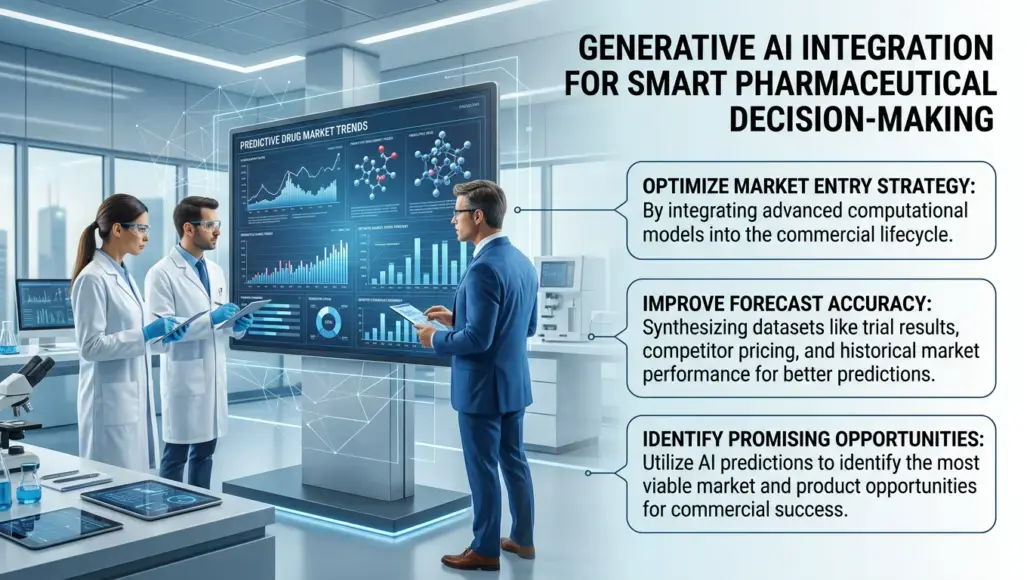
The integration of advanced computational models into the commercial lifecycle of a drug product has fundamentally changed how pharmaceutical organizations approach market entry. Generative AI allows for the synthesis of vast datasets, including clinical trial results, competitor pricing, and historical market performance, to create highly accurate predictions of future success. This capability is essential for informed commercial decision making, as it enables leaders to identify the most promising opportunities and allocate resources more effectively. By simulating various market scenarios, companies can understand the potential impact of different launch strategies and make adjustments in real time to maximize the reach of new therapies.
Predictive modeling also facilitates a deeper understanding of the patient journey, identifying key moments where intervention can lead to better health outcomes. This patient-centric approach allows for the development of more targeted marketing campaigns and support programs that address the specific needs of different populations. The ability to process and analyze unstructured data, such as physician notes and patient forum discussions, provides a level of insight that was previously unattainable. This comprehensive view of the market enables pharmaceutical firms to develop more nuanced and effective commercial strategies that are grounded in a deep understanding of the real-world environment.
Strategic planning for new product launches is particularly benefited by these analytical tools. Companies can model the impact of regulatory changes, payer policies, and changing clinical guidelines on the adoption of a new medication. This foresight allows for the development of contingency plans and the ability to pivot quickly in response to unexpected market shifts. The result is a more resilient and agile commercial organization that is better equipped to handle the complexities of the global pharmaceutical market. Investing in these technologies is no longer optional for firms that wish to remain competitive in an increasingly data-driven industry.
Precision Commercialization and Personalized Patient Engagement
The move towards precision medicine requires a corresponding shift towards precision commercialization. Generative AI enables the creation of highly personalized content and engagement strategies that resonate with individual patients and healthcare providers. By analyzing individual preferences and behaviors, pharmaceutical companies can deliver the right message at the right time through the most effective channels. This level of personalization improves the efficiency of commercial operations and enhances the overall experience for patients. Effective commercial decision making in this context involves balancing the need for broad market reach with the requirement for targeted and meaningful engagement.
Personalized engagement strategies are particularly effective in improving medication adherence and patient outcomes. By providing patients with tailored education and support, companies can help them manage their conditions more effectively and stay on track with their treatment plans. This proactive approach to patient care also builds trust and loyalty, which are essential for long-term success in a competitive market. Generative AI can automate the creation of these personalized materials, allowing for a much larger scale of engagement than was previously possible. This scalability is a key advantage for pharmaceutical firms looking to expand their reach and impact.
- Utilization of large language models to generate tailored educational content for diverse patient demographics.
- Deployment of virtual assistants to provide real-time support and answer patient queries about complex therapies.
- Analysis of patient feedback loops to continuously refine and improve engagement strategies.
- Integration of omnichannel communication platforms to ensure a consistent and personalized experience across all touchpoints.
Healthcare providers also benefit from these personalized approaches, as they receive information that is most relevant to their clinical practice and patient population. This targeted communication improves the quality of interactions between pharmaceutical representatives and physicians, leading to more productive and informative discussions. By providing doctors with the data and insights they need to make the best decisions for their patients, companies can establish themselves as valuable partners in the healthcare ecosystem. This focus on value-based engagement is a critical component of modern commercial strategy.

Dynamic Pricing Architectures and Revenue Management
Pricing strategies in the pharmaceutical industry are becoming increasingly complex, driven by the rise of value-based care and the growing pressure from payers to demonstrate cost-effectiveness. Generative AI provides the tools needed to develop dynamic pricing architectures that can adapt to changing market conditions and regulatory environments. By analyzing data on competitor pricing, payer policies, and clinical outcomes, companies can determine the optimal price point for their products. This sophisticated approach to revenue management is essential for protecting the financial health of the organization while ensuring that patients have access to life-saving treatments.
Supply chain resilience planning improving pharmaceutical operational continuity in a commercial sense involves maintaining a steady stream of revenue to fund ongoing research and development efforts. Dynamic pricing allows companies to respond quickly to changes in the market, such as the entry of a new competitor or a shift in government policy. This flexibility is critical for maintaining market share and protecting the long-term viability of the business. Commercial decision making must also consider the social and ethical implications of pricing, ensuring that treatments remain affordable and accessible to those who need them. The balance between profitability and accessibility is a central challenge for pharmaceutical leaders.
Revenue management also involves optimizing the allocation of promotional resources to ensure the greatest return on investment. By analyzing the effectiveness of different marketing channels and sales tactics, companies can identify the most efficient ways to reach their target audience. This data-driven approach to resource allocation improves the overall efficiency of the commercial organization and allows for more strategic investment in growth opportunities. The continuous monitoring and analysis of commercial performance provide a feedback loop that can be used to refine and improve strategies over time.
Data Governance and Ethical Frameworks in Commercial Artificial Intelligence
The use of artificial intelligence in commercial operations brings with it significant responsibilities regarding data privacy and ethics. Pharmaceutical companies must establish clear governance frameworks to ensure that patient data is handled with the highest level of security and transparency. Compliance with regulations such as the General Data Protection Regulation (GDPR) and the Health Insurance Portability and Accountability Act (HIPAA) is essential for maintaining the trust of patients and healthcare providers. Ethical considerations should be integrated into every stage of the AI lifecycle, from data collection to model deployment.
Transparency is a key component of ethical AI. Companies should be open about how their models are developed and the data that is used to train them. This transparency helps to build trust and allows for more effective oversight and accountability. Commercial decision making must also consider the potential for bias in AI models, which can lead to unfair or inaccurate outcomes. Regular audits and performance reviews are necessary to identify and address any issues that may arise. By prioritizing ethics and governance, pharmaceutical firms can ensure that their use of AI is both responsible and effective.
Collaboration with regulatory bodies and industry partners is also essential for developing best practices and standards for the use of AI in the pharmaceutical industry. By sharing knowledge and experiences, organizations can work together to address the challenges and opportunities presented by these new technologies. This collaborative approach fosters a culture of responsibility and innovation, ensuring that the benefits of AI are realized in a way that is ethical and sustainable. The development of clear and consistent guidelines for the use of AI will provide a stable environment for further investment and growth.
Collaborative Synergy Between Sales and Marketing Functions
The traditional silos between sales and marketing functions are being broken down by the integration of data-driven technologies. Generative AI facilitates a more collaborative and integrated approach to commercial operations, ensuring that both functions are aligned with the overall goals of the organization. By sharing data and insights, sales and marketing teams can develop more effective strategies and provide a more consistent experience for patients and healthcare providers. This synergy is essential for successful commercial decision making, as it allows for a more holistic view of the market and the patient journey.
Marketing teams can provide sales representatives with the tools and information they need to have more productive and informative discussions with physicians. Conversely, sales representatives can provide marketing teams with valuable real-world feedback on the effectiveness of different strategies and materials. This continuous feedback loop allows for the ongoing refinement and improvement of commercial operations. The result is a more agile and responsive organization that is better equipped to handle the challenges of a competitive market.
Investing in tools that facilitate collaboration and communication is essential for building a successful commercial organization. Cloud-based platforms and integrated CRM systems allow for the seamless sharing of data and insights across different functions. By fostering a culture of collaboration and transparency, pharmaceutical companies can ensure that all employees are working together towards a common goal. This integrated approach to commercial operations is a key driver of long-term success in the pharmaceutical industry. The ongoing evolution of these technologies will continue to offer new opportunities for improving collaboration and driving growth.