







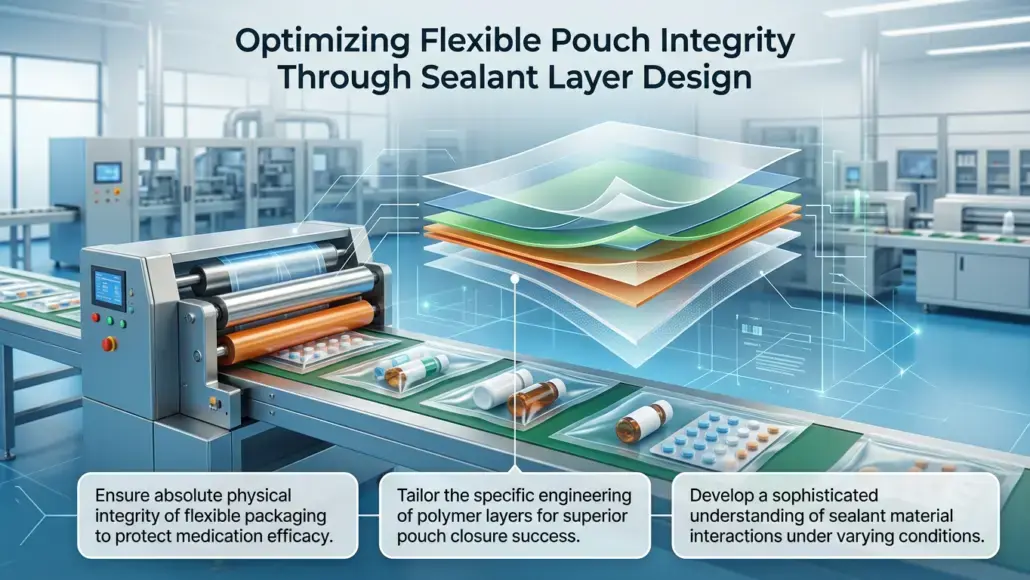
The pharmaceutical industry relies heavily on the physical integrity of flexible packaging to maintain the efficacy and safety of life-saving medications. At the heart of this integrity lies the complex engineering of polymer films, where the specific arrangement of layers dictates the success of the final seal. Achieving superior pouch closure performance is not merely a matter of applying heat and pressure but involves a sophisticated understanding of how sealant materials interact under varying thermal and mechanical conditions. As drug formulations become more sensitive to environmental factors, the role of the sealant layer has moved from a simple adhesive component to a critical functional barrier that ensures a hermetic environment for the product.
Material Selection and Thermal Properties in Sealant Engineering
The selection of polymers for the sealant layer is the primary determinant of how a package will behave during the high-speed filling and sealing process. Most pharmaceutical pouches utilize polyethylene (PE) or polypropylene (PP) based sealants due to their excellent heat-sealing characteristics and compatibility with sterilization processes. However, within these broad categories, engineers must choose between low-density polyethylene (LDPE), linear low-density polyethylene (LLDPE), or metallocene-catalyzed resins to fine-tune the seal initiation temperature and hot tack strength. Hot tack, the strength of the seal while still in a molten state, is vital for maintaining pouch closure performance during the immediate moments after the sealing bars release, especially in vertical form-fill-seal (VFFS) operations where the weight of the product puts immediate stress on the bottom seal.
Metallocene resins have gained prominence in recent years because they provide a narrower molecular weight distribution, resulting in a more consistent melting point and improved puncture resistance. This consistency is essential when dealing with powders or granular medications that might contaminate the seal area. A robust sealant layer must be capable of “sealing through” minor levels of product dust or liquid residue to ensure that the hermetic barrier remains unbroken. By optimizing the polymer blend, manufacturers can achieve a broader sealing window, which allows for greater flexibility in machine settings without compromising the pouch closure performance.
Furthermore, the thermal conductivity of the sealant layer must be balanced with the outer layers of the pouch laminate. If the heat takes too long to reach the sealant interface, production speeds are limited; if the heat is too intense, the outer layers may scorch or shrink. Advanced co-extrusion techniques allow for the creation of multi-layer sealant structures where the innermost layer has a lower melting point than the adjacent support layers, facilitating a rapid and secure bond. This structural hierarchy is a fundamental aspect of modern packaging design, ensuring that the critical internal seal remains intact even when subjected to the rigors of distribution and long-term storage.
Enhancing Seal Integrity and Barrier Integration
While the primary function of the sealant layer is to create a physical bond, it also serves as the final line of defense in a high-barrier laminate structure. In many applications, this layer must work in tandem with high-barrier foil pouches to provide absolute protection against moisture and oxygen ingress. The transition from the metallic barrier to the polymer sealant is a common point of failure, requiring specialized tie layers or primers to ensure that delamination does not occur. When delamination happens, the path for gas transmission is shortened, and the overall pouch closure performance is significantly degraded, potentially leading to the degradation of the pharmaceutical product.
The thickness of the sealant layer is another variable that directly impacts the reliability of the closure. A thicker layer can accommodate more significant variations in the sealing surface, such as wrinkles or pleats, by flowing into these irregularities to create a continuous bond. However, excessive thickness can lead to increased material costs and may interfere with the “peelability” of the package if a user-friendly opening is required. Engineering the ideal thickness requires a data-driven approach, balancing the need for a “caulking” effect in the seal area with the desire for a lightweight and sustainable packaging solution.
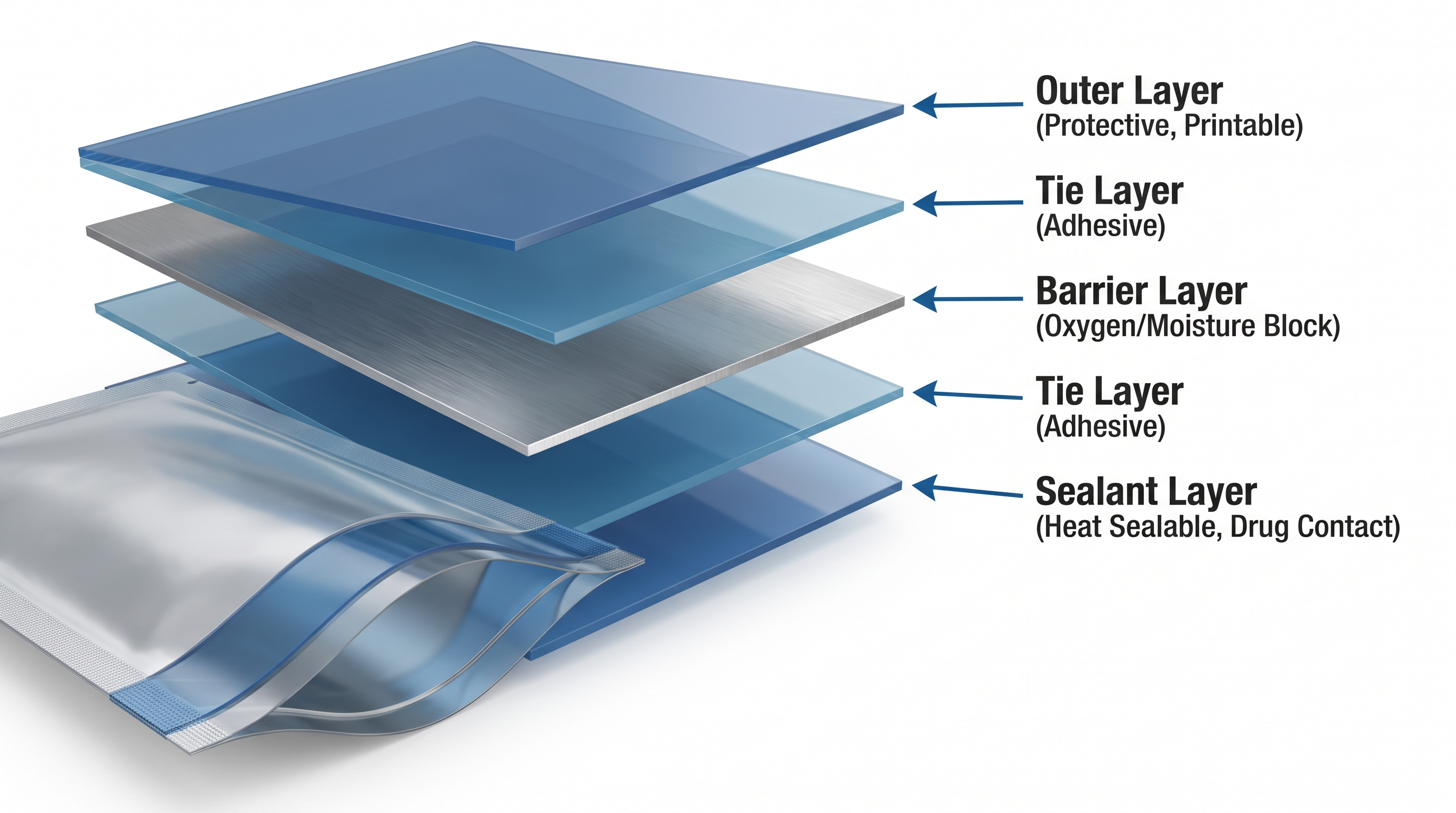
In addition to physical thickness, the chemical composition of the sealant must be inert to the medication it contains. Migration of plasticizers or unreacted monomers from the packaging into the drug product is a major concern for regulatory compliance and patient safety. Therefore, sealant layer design involves rigorous extractable and leachable (E&L) testing to ensure that the material does not interact with the pharmaceutical formulation. This level of scrutiny ensures that the pouch closure performance is maintained throughout the entire shelf life of the product, providing peace of mind for both manufacturers and healthcare providers.
Optimization of Sealing Parameters for Process Consistency
The translation of a successful sealant layer design into a production environment requires precise control over the sealing parameters: temperature, pressure, and dwell time. These three variables form the “sealing triangle,” and any deviation in one can compromise the pouch closure performance. For instance, if the temperature is too low, the polymer chains do not achieve sufficient mobility to interdiffuse across the interface, resulting in a weak “tack” seal that may fail during handling. Conversely, excessive heat can cause the polymer to “squeeze out” of the seal area, leaving a thin spot that is susceptible to pinholes or mechanical failure.
- Temperature Control: Precise monitoring of the seal bars ensures that the heat applied remains within the validated range for the specific polymer blend.
- Pressure Calibration: Even distribution of pressure across the entire width of the seal bar prevents “weak spots” that could serve as points of entry for contaminants.
- Dwell Time Optimization: The duration of contact must be long enough to allow for complete heat transfer but short enough to maintain high production throughput.
- Cooling Phase Management: Rapid cooling after the seal is formed helps to set the polymer structure and lock in the mechanical strength of the bond.
Modern pharmaceutical packaging equipment often includes sensors for real-time monitoring of these parameters, providing a feedback loop that can adjust the machine settings on the fly. This level of automation is crucial for maintaining high pouch closure performance in large-scale manufacturing operations. By reducing the reliance on manual adjustments, manufacturers can achieve a higher level of seal process consistency, which is a key requirement for regulatory validation. The integration of digital monitoring tools also allows for the collection of vast amounts of data, which can be used to identify trends and proactively address potential issues before they result in a batch failure.
Addressing Mechanical Stress and Environmental Factors
Pharmaceutical pouches are subjected to various mechanical stresses during their lifecycle, from the internal pressure changes during air transport to the physical handling by patients and clinicians. The sealant layer must be engineered to withstand these stresses without developing micro-leaks or complete failures. Tensile strength and elongation at break are critical metrics used to evaluate the mechanical performance of the seal. A high-quality sealant will exhibit a failure mode where the film itself breaks before the seal separates, indicating that the bond strength exceeds the material strength. This characteristic is a hallmark of excellent pouch closure performance and is essential for maintaining a sterile barrier.
Environmental factors, such as extreme temperatures and humidity during global shipping, can also affect the stability of the sealant material. In tropical regions, high humidity can potentially affect the adhesion between the sealant and the barrier layers if the materials are not properly matched. Similarly, cold chain logistics require sealants that remain flexible at sub-zero temperatures, preventing the material from becoming brittle and cracking. The development of specialized resins for these extreme conditions has been a significant area of research in pharmaceutical packaging science, leading to more resilient solutions for global drug distribution.
The long-term stability of the seal is often tested through accelerated aging studies, where packages are exposed to high heat and humidity to simulate several years of storage. During these tests, the pouch closure performance is periodically evaluated through vacuum leak testing or dye penetration analysis. These rigorous testing protocols ensure that the sealant layer design is capable of protecting the medication for its intended shelf life, even under less-than-ideal storage conditions. By prioritizing the durability of the seal, pharmaceutical companies can minimize the risk of product recalls and ensure that patients receive effective treatments every time.
Future Perspectives on Sealant Innovation and Sustainability
As the pharmaceutical industry moves toward more sustainable packaging options, the challenge of maintaining pouch closure performance while using recyclable or bio-based materials has come to the forefront. Traditionally, high-performance laminates have relied on multi-material structures that are difficult to recycle. However, new developments in mono-material PE and PP structures are showing promise. These innovations involve using different grades of the same polymer family to create a functional laminate that provides both barrier and sealing properties. While achieving the same level of protection as traditional structures is difficult, ongoing research into polymer orientation and coating technologies is bridging the gap.
Digital printing and smart packaging features are also being integrated into the sealant layer design process. For example, some manufacturers are experimenting with incorporating invisible markers or RFID tags within the laminate structure to enhance traceability and combat counterfeiting. These additions must be carefully engineered to ensure they do not interfere with the sealing process or the overall pouch closure performance. The ability to monitor the integrity of the seal throughout the supply chain using integrated sensors is another exciting prospect that could redefine how pharmaceutical packaging is managed in the future.
The pursuit of excellence in pharmaceutical packaging is a continuous process of refinement and innovation. The sealant layer, though often overlooked, is the critical component that brings all other elements of the package together. By focusing on advanced polymer science, precise process control, and rigorous testing, manufacturers can achieve the high levels of pouch closure performance required to protect the health and safety of patients worldwide. As technology continues to evolve, the integration of new materials and digital tools will further enhance the reliability and functionality of pharmaceutical pouches, ensuring that they remain a cornerstone of modern healthcare delivery.