










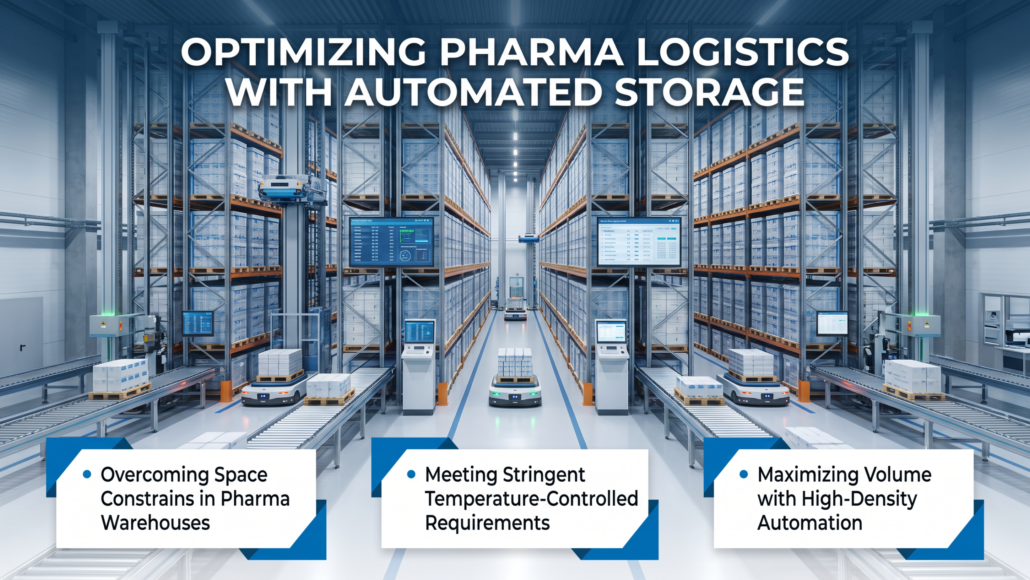
The pharmaceutical industry is facing a critical challenge in managing the physical footprint of its logistics operations. As the variety of specialized medications grows and the requirements for temperature-controlled storage become more stringent, the demand for efficient space management has never been higher. Traditional warehouse designs often rely on wide aisles and standard racking, which can leave a significant portion of the building’s volume unused. By implementing high-density automated storage, facilities can reclaim this lost space and significantly increase their storage capacity within the same footprint. These systems, such as automated storage and retrieval systems or vertical lift modules, utilize the full height of the facility and minimize the space required for access aisles. This allows for a much higher concentration of inventory, which is particularly valuable for facilities located in urban areas where land costs are high or physical expansion is constrained.
The benefits of high-density storage extend beyond simple space savings. In a pharmaceutical context, a more compact storage area is much easier and more cost-effective to maintain at the required environmental conditions. For products requiring cold chain management or specific humidity levels, reducing the volume of the conditioned space leads to substantial energy savings and a smaller carbon footprint. The enclosed nature of many high-density systems also provides better insulation and protection against external temperature fluctuations, ensuring that sensitive medications remain within their prescribed storage range at all times. By focusing on high-density automated storage improving pharmaceutical warehouse utilization, organizations can build a more sustainable and resilient logistics infrastructure that is capable of protecting high-value inventory while minimizing operational costs. This strategic approach to space management is an essential component of a modern pharmaceutical supply chain that prioritizes both efficiency and quality.
Enhancing Inventory Traceability and Control
Traceability is a fundamental requirement in the pharmaceutical sector, driven by the need to ensure patient safety and comply with global regulations such as the Drug Supply Chain Security Act. High-density automated systems provide a level of inventory control that is far superior to manual methods. Every item placed into the system is logged with its precise location, lot number, and expiration date. When an item is needed, the automated machinery retrieves it with absolute accuracy, eliminating the possibility of picking the wrong product or a batch that has expired. This level of granular control is essential for managing the complex inventory profiles found in modern pharmaceutical distribution centers. By integrating high-density automated storage improving pharmaceutical warehouse utilization, companies can achieve near-perfect inventory accuracy, reducing the need for time-consuming manual counts and audits.
The software that controls these systems also enables advanced inventory management strategies such as first-in-first-out or first-expired-first-out rotation. This ensures that products are always used in the correct order, minimizing the risk of inventory loss due to expiration. In the event of a product recall, the system can quickly identify the exact location of all affected units, allowing for rapid and precise removal from the supply chain. This speed and accuracy are vital for protecting public health and maintaining the reputation of the pharmaceutical provider. The digital record of every movement also provides a detailed audit trail that is invaluable for regulatory reporting and internal quality checks. This combination of physical security and digital transparency makes high-density automated storage an indispensable tool for any organization handling sensitive healthcare products.
Improving Operational Efficiency and Safety Through Automation
The transition to high-density automated storage also brings significant improvements to the efficiency and safety of warehouse operations. In a traditional warehouse, workers spend a large portion of their time traveling to and from storage locations, often navigating long aisles and using heavy equipment such as forklifts. High-density systems bring the inventory directly to the worker at an ergonomic station, eliminating the need for travel and reducing the physical demands of the job. This not only increases picking and put-away speeds but also creates a safer working environment by minimizing the interaction between people and moving vehicles. The reduction in manual handling also decreases the risk of product damage and packaging integrity issues, which are critical concerns when dealing with delicate pharmaceutical containers.
The ergonomic design of automated workstations further protects the health of the workforce by presenting items at a comfortable height and reducing the need for awkward movements. This focus on ergonomics leads to a more focused and productive workforce, which is essential for maintaining the high standards of accuracy required in the pharmaceutical industry. By deploying high-density automated storage improving pharmaceutical warehouse utilization, organizations can also improve their responsiveness to customer orders. The speed and reliability of the automated machinery ensure that orders are processed quickly and accurately, even during peak periods or sudden surges in demand. This agility is a key competitive advantage in a market where delivery speed and reliability are paramount. The ability to handle high volumes of inventory with a smaller and more focused team also helps to mitigate the impact of labor shortages and rising labor costs. Additionally, the reduction in manual processes leads to a more consistent output, as the system does not experience the same level of performance degradation as human operators during long shifts or periods of high stress. This consistency is a critical asset for maintaining the high levels of service expected by healthcare providers and pharmacies who rely on timely deliveries to maintain patient care. The move toward automation also provides a more scalable path for future growth, as additional storage capacity can be added with minimal disruption to ongoing operations. By focusing on these efficiency gains, pharmaceutical distributors can ensure they are maximizing the value of their physical assets while delivering superior service to their customers. Overall, the integration of these systems leads to a more reliable and responsive supply chain.
Integrating High-Density Storage into the Broader Supply Chain
The success of a high-density storage system depends on its integration with the broader warehouse ecosystem and the central management software. Warehouse management systems must work in concert with the automated machinery to optimize inventory placement and retrieval paths. This integration allows for a seamless flow of information and products throughout the facility, from receiving to shipping. In a pharmaceutical setting, this also includes the integration of environmental monitoring systems and quality control workflows. The data generated by the automated storage system provides valuable insights into warehouse performance, allowing managers to identify bottlenecks and refine processes based on real-time information. This data-driven approach to facility management enables continuous improvement and ensures that the logistics infrastructure evolves alongside the changing needs of the business.
Future developments in high-density storage technology are set to further enhance these capabilities. The integration of artificial intelligence and machine learning will allow systems to predict demand and optimize inventory placement proactively. For example, high-velocity items can be automatically moved to the most accessible locations within the storage structure during periods of low activity. Additionally, the development of more flexible and modular storage designs will allow facilities to adapt their capacity more easily in response to market shifts. By embracing high-density automated storage improving pharmaceutical warehouse utilization, organizations can build a foundation for long-term innovation and growth. The ability to manage large and complex inventories with high efficiency and precision will be a critical requirement for success in the increasingly competitive pharmaceutical market.
Strategic Investment for Long-Term Growth and Resilience
The financial case for high-density automated storage is compelling, particularly when considering the long-term benefits of improved space utilization, reduced energy costs, and increased operational efficiency. While the initial capital investment can be significant, the return on investment is driven by multiple factors, including labor savings, reduced inventory loss, and improved customer service levels. Additionally, the ability to operate within a smaller footprint can lead to significant savings in real estate costs or allow for the repurposing of existing space for other high-value activities such as manufacturing or research. For pharmaceutical companies, the improvements in inventory security and regulatory compliance provide additional value that is equally important in a highly regulated sector.
As the industry continues to move toward more specialized and personalized healthcare solutions, the need for efficient and reliable storage will only grow. The ability to handle diverse and sensitive product ranges with high precision will be a key differentiator. By prioritizing high-density automated storage improving pharmaceutical warehouse utilization, organizations can ensure they have the infrastructure in place to meet these challenges and deliver high-quality healthcare products to patients with absolute reliability. The commitment to advanced storage technology is a commitment to a more efficient, secure, and responsive pharmaceutical supply chain that is ready for the challenges of the future. This strategic investment not only improves current operations but also provides a clear path toward a more sustainable and high-performing logistics model. Ultimately, the adoption of these systems represents a proactive step toward maintaining a competitive edge in a rapidly evolving global marketplace while ensuring the highest standards of patient care and product integrity.