











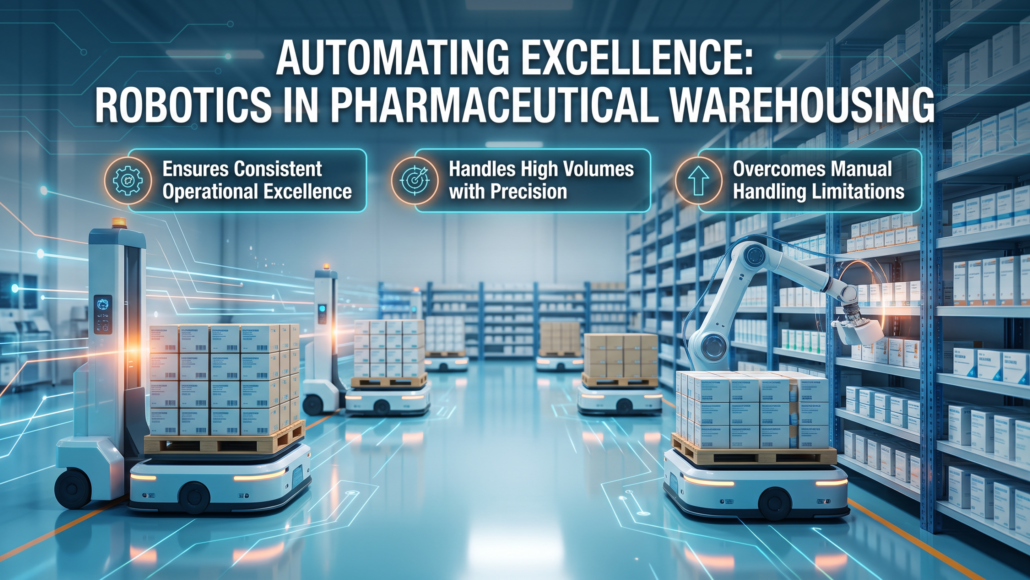
In the modern pharmaceutical warehouse, the integration of specialized robotic systems is no longer a futuristic concept but a practical necessity for maintaining operational excellence. As manufacturers and distributors face increasing pressure to handle higher volumes with greater precision, the limitations of traditional manual material handling become more apparent. By implementing robotic material handling improving pharmaceutical warehouse productivity, facilities can automate the most repetitive and physically demanding tasks across the distribution chain. These systems, ranging from high-speed pick-and-place robots to heavy-duty palletizing cells, offer a level of consistency and speed that human operators cannot match over a full shift. The ability to maintain a constant pace of operation, regardless of the time of day or complexity of the task, is a fundamental driver of increased output in high-stakes pharmaceutical environments.
The precision of robotic arms is particularly valuable in secondary packaging and kitting operations, where medications must be handled with extreme care to maintain the integrity of their primary containers. Modern robots equipped with sophisticated vision systems and specialized end-of-arm tooling can identify, orient, and pack products with sub-millimeter accuracy. This reduces the risk of product damage and ensures that packaging is always consistent, which is critical for maintaining brand standards and meeting regulatory requirements. By deploying robotic material handling improving pharmaceutical warehouse productivity, companies can also minimize the risk of contamination, as the need for human contact with product containers is significantly reduced. This is a vital consideration for maintaining the sterile conditions required for many injectable medications and high-purity compounds. The automation of these processes also allows for more detailed inspection at every stage, with vision systems checking for correct labeling, cap integrity, and package condition in real-time.
Enhancing Operational Reliability and Workforce Safety
Safety is a paramount concern in any industrial setting, but the pharmaceutical industry presents unique challenges due to the high value and sensitive nature of its products. Manual material handling involving heavy lifting, reaching, and repetitive motions is a primary cause of workplace injuries, which can lead to significant downtime and increased costs. Robotic systems are designed to take on these hazardous tasks, creating a safer environment for human workers. For example, robotic palletizers can handle the heavy loads associated with shipping containers, while high-speed sorters manage the rapid movement of individual unit doses. This shift in labor focus allows human employees to move into roles that require higher levels of cognitive skill, such as system monitoring, maintenance, and quality oversight. The result is not only a safer workplace but also a more engaged and higher-skilled workforce.
The reliability of robotic systems also contributes to more predictable warehouse performance. Unlike manual processes that can vary in speed and accuracy depending on staffing levels or individual performance, automated systems provide a consistent baseline for production. This predictability is essential for accurate scheduling and capacity planning, allowing managers to commit to tighter delivery windows with confidence. By prioritizing robotic material handling improving pharmaceutical warehouse productivity, facilities can achieve higher uptime and reduced cycle times. These systems are also capable of operating in environmental conditions that are challenging for humans, such as high-density cold storage or low-light areas. This capability ensures that critical pharmaceutical products are moved efficiently regardless of the physical constraints of the storage environment, further enhancing the overall resilience of the supply chain.
Strategic Scalability and Adaptability in Material Handling
The pharmaceutical market is characterized by rapid shifts in demand, driven by factors such as seasonal illnesses, new clinical findings, or changes in healthcare policy. This volatility requires a logistics infrastructure that is both scalable and adaptable. Modern robotic systems are increasingly designed with modularity in mind, allowing for quick reconfiguration or expansion as needs change. For instance, a robotic picking cell can be updated with new end-of-arm tools or reprogrammed to handle different package sizes with minimal disruption to the overall workflow. This flexibility is a significant advantage over fixed automation systems that may require extensive mechanical changes to accommodate new products. By investing in robotic material handling improving pharmaceutical warehouse productivity, organizations can build a facility that is ready to respond to the challenges of the future.
The integration of artificial intelligence and machine learning is further enhancing the adaptability of these systems. Advanced software allows robots to learn from their environment and optimize their movements over time, leading to even greater efficiency gains. In a pharmaceutical context, this could involve a robot learning to handle a particularly delicate new vial design or optimizing its picking path based on real-time inventory data. The ability to integrate these systems with broader warehouse execution software ensures that the physical movement of goods is always aligned with the digital requirements of the order fulfillment process. This technological synergy allows for a truly responsive supply chain where physical and digital workflows are perfectly synchronized. The resulting agility is a key competitive differentiator, allowing pharmaceutical companies to bring new products to market faster and respond more effectively to patient needs.
Data-Driven Optimization and Predictive Maintenance
One of the most significant benefits of modern robotic systems is the wealth of data they generate during their operation. Every movement, cycle time, and error log is captured and can be analyzed to identify opportunities for further improvement. By leveraging this data, pharmaceutical logistics managers can gain deep insights into the performance of their material handling processes. This information can be used to identify bottlenecks, optimize throughput, and refine workflows based on empirical evidence. For example, analysis might show that a specific robotic cell is underperforming during certain shifts, leading to a targeted investigation and resolution. This level of granular visibility is essential for maintaining the high standards of quality and efficiency required in the pharmaceutical industry. The use of robotic material handling improving pharmaceutical warehouse productivity ensures that decisions are based on data rather than intuition, leading to more effective and sustainable improvements.
Predictive maintenance is another area where data from robotic systems provides a significant advantage. Sensors embedded in the robots can monitor factors such as motor temperature, vibration levels, and power consumption to identify early signs of wear or impending failure. This allows maintenance teams to perform repairs before a breakdown occurs, minimizing unplanned downtime and ensuring operational continuity. In a pharmaceutical setting, where the interruption of a critical shipment can have serious consequences, this reliability is of the utmost importance. The transition from reactive to proactive maintenance is a key step in building a more resilient and efficient warehouse. The long-term cost savings associated with reduced downtime and extended equipment life provide a strong financial justification for the initial investment in robotic technology.
Future Directions in Pharmaceutical Robotic Automation
The evolution of robotic technology continues to open new possibilities for pharmaceutical material handling. Collaborative robots, or cobots, are becoming increasingly common, allowing for a closer and safer interaction between humans and machines. These systems can work alongside human operators on tasks that require both mechanical precision and human judgment, such as complex kitting or final quality checks. This hybrid approach combines the best of both worlds, leading to higher levels of productivity and quality. Additionally, the development of mobile manipulation systems, which combine robotic arms with autonomous mobile bases, is set to further revolutionize how materials are moved within the warehouse. These systems can travel to different locations to perform picking or packing tasks, providing a level of flexibility that was previously unattainable.
As the pharmaceutical industry continues to move toward more personalized and specialized medicine, the need for highly flexible and precise material handling will only grow. The ability to handle small batches and diverse product types with high efficiency will be a critical requirement for future success. By embracing robotic material handling improving pharmaceutical warehouse productivity, organizations can ensure they have the infrastructure in place to meet these challenges. The investment in robotics is not just about improving current operations; it is about building a foundation for long-term innovation and growth. The organizations that lead the way in adopting these technologies will be best positioned to deliver the next generation of healthcare solutions to patients around the world. The commitment to automation is a commitment to a more efficient, reliable, and responsive pharmaceutical supply chain that prioritizes patient safety and operational excellence above all else. This strategic focus ensures that facilities can maintain high levels of productivity even as the complexity of the global medicine market continues to increase. By investing in these intelligent systems today, pharmaceutical providers are securing their ability to meet the healthcare needs of tomorrow with absolute precision and unmatched speed. The transition toward a more robotic-centric model represents a significant milestone in the ongoing effort to modernize the life sciences supply chain for the benefit of all stakeholders. Overall, the integration of these systems provides a path to a more sustainable and high-performing future for pharmaceutical logistics.