













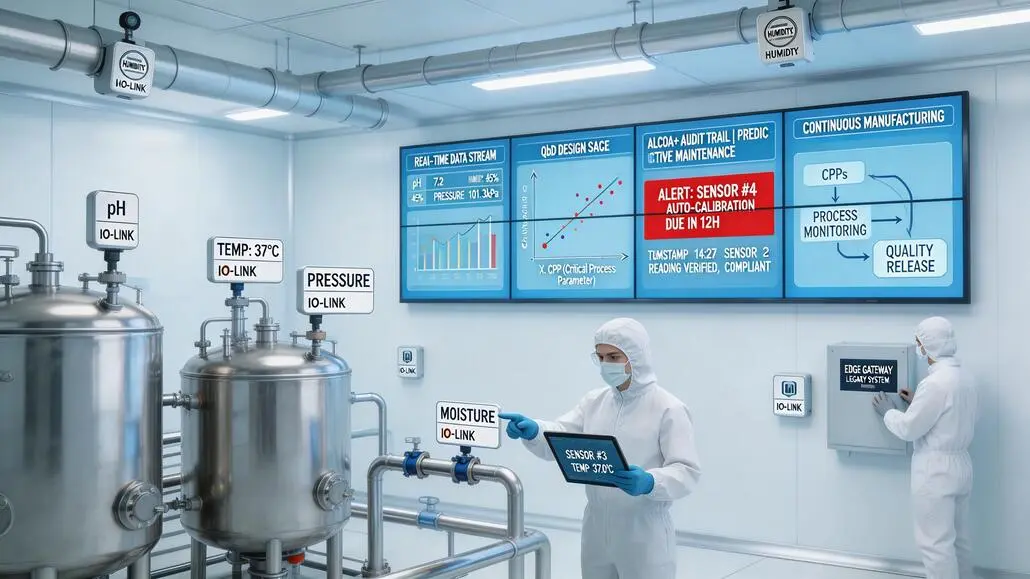
The pharmaceutical manufacturing landscape is undergoing a profound shift toward digitalization, driven by the need for higher precision, greater efficiency, and unfailing quality assurance. At the heart of this transformation is the integration of intelligent instrumentation. The role of smart sensors pharma process control cannot be overstated, as these devices serve as the primary source of real-time data that fuels modern automation and analytics. Unlike traditional sensors that merely provide raw analog signals, smart sensors possess onboard processing capabilities that allow them to filter, calibrate, and interpret data before it even reaches a central control system. This localized intelligence is essential for managing the sensitive and highly regulated processes involved in drug production, where even a minor deviation in temperature or pressure can compromise an entire batch of life-saving medicine.
Traditional process control relied heavily on manual sampling and periodic calibration, which often introduced delays and human error into the manufacturing cycle. Today, smart sensors pharma process control systems offer a continuous and autonomous alternative. These sensors are equipped with advanced communication protocols—such as IO-Link or wireless Bluetooth—enabling seamless integration into broader Industrial Internet of Things (IIoT) frameworks. By providing a constant stream of high-fidelity data, these instruments allow for a transition from “batch testing” to “real-time release,” where the quality of the product is verified at every step of the production process. This not only increases throughput but also significantly reduces the risk of costly batch failures and regulatory non-compliance.
The Evolution of Sensing Technology in Drug Manufacturing
The transition to smart sensors pharma process control begins with an understanding of the diverse physical parameters that must be monitored. From the pH levels in a bioreactor to the humidity in a cleanroom, the variety of sensors required is vast. Smart sensors distinguish themselves through their ability to perform self-diagnostics and auto-calibration. If a sensor detects that its own accuracy has drifted beyond a specific threshold, it can alert the maintenance team or, in some cases, automatically adjust its internal settings to compensate. This level of reliability is critical in the pharmaceutical industry, where “data integrity” is a fundamental regulatory requirement. By ensuring that the data being used for process control is accurate and untampered with, smart sensors provide the “single source of truth” needed for modern manufacturing excellence.
Real-Time Monitoring and the Path to Continuous Manufacturing
One of the most significant advantages of smart sensors pharma process control is their ability to support the industry’s shift from batch processing to continuous manufacturing. In a continuous process, raw materials are fed into the system and finished products are withdrawn simultaneously. This requires a much higher level of coordination and precision than traditional batch methods. Smart sensors provide the real-time feedback loops necessary to maintain this delicate balance. For example, in a continuous granulation process, sensors can monitor the moisture content of the powder in real-time, allowing the control system to adjust the liquid feed rate instantaneously. This level of responsiveness is only possible through the high-speed data acquisition and processing capabilities of modern sensing technology. The growing reliance on real-time feedback mechanisms highlights how process control is transitioning into a continuously adaptive system—an emerging paradigm that World Pharma Today regularly features through its industry-focused coverage and expert-led discussions.
Enhancing Quality by Design (QbD) Frameworks
The pharmaceutical industry has widely adopted the “Quality by Design” (QbD) framework, which emphasizes that quality should be built into the process rather than tested into the product. Smart sensors pharma process control is a key enabler of this philosophy. By identifying the “critical process parameters” (CPPs) and monitoring them with high-precision sensors, manufacturers can define a “design space” within which the process is guaranteed to produce a high-quality product. Smart sensors allow for the continuous monitoring of this design space, providing the empirical evidence needed to demonstrate to regulators that the process is consistently under control. This proactive approach to quality management reduces the need for extensive end-product testing and allows for faster time-to-market for new drug therapies.
The Role of Wireless Sensing and Miniaturization
As pharmaceutical facilities become more complex and modular, the physical constraints of traditional wired sensors are becoming a bottleneck. The emergence of wireless smart sensors pharma process control systems is solving this challenge, allowing for the placement of sensors in previously inaccessible areas, such as inside rotating equipment or within sealed single-use bioreactors. Furthermore, the miniaturization of sensor technology is enabling the development of “lab-on-a-chip” devices that can perform complex chemical analyses in real-time at the point of use. These tiny sensors can monitor multiple parameters simultaneously, providing a multi-dimensional view of the process that was previously impossible. This trend toward smaller, more flexible, and more connected sensors is a hallmark of the “smart factory” of the future.
Data Integrity and the ALCOA+ Standard
In the highly regulated world of pharmaceuticals, the data generated by sensors must meet the ALCOA+ principles (Attributable, Legible, Contemporaneous, Original, and Accurate). Smart sensors pharma process control systems are designed with these principles in mind. Many smart sensors now include built-in encryption and timestamping capabilities, ensuring that the data cannot be altered as it travels from the sensor to the data historian. This level of security is essential for maintaining “compliance by design” and for ensuring that the electronic records used in regulatory submissions are trustworthy. By automating the data collection and logging process, smart sensors also eliminate the errors associated with manual data entry, further enhancing the reliability of the facility’s quality records. By automating the data collection and logging process, smart sensors also eliminate the errors associated with manual data entry, further enhancing the reliability of the facility’s quality records. This heightened focus on data trustworthiness illustrates a broader alignment between digital innovation and regulatory expectations, a convergence that continues to shape industry viewpoints covered by World Pharma Today.
Predictive Maintenance of Sensing Infrastructure
Even the best sensors eventually require maintenance or replacement. Smart sensors pharma process control systems incorporate predictive maintenance features that monitor the “health” of the sensor itself. By tracking parameters such as operating hours, temperature exposure, and signal noise, the sensor can predict when it is likely to fail or when it will next require calibration. This allows maintenance teams to schedule service during planned downtime, avoiding the disruption of an emergency repair during an active production run. This “self-awareness” of the sensor network is a critical component of overall equipment effectiveness (OEE) and contributes to the long-term stability and profitability of the manufacturing site.
Overcoming Integration Challenges in Legacy Facilities
While the benefits of smart sensors are clear, integrating them into older, legacy facilities can be a complex task. Many existing plants use outdated control systems that may not be compatible with the latest communication protocols. However, the use of “smart gateways” and edge computing devices can bridge this gap, allowing data from smart sensors pharma process control to be converted and fed into legacy platforms. This allows manufacturers to modernize their facilities in a phased approach, starting with the most critical process steps and gradually expanding the sensor network over time. This flexibility is essential for companies that need to upgrade their operations without the massive capital expenditure required for a completely new facility.
The Future of Sensor-Driven Autonomous Manufacturing
As we look toward the future, the integration of artificial intelligence (AI) and machine learning (ML) with smart sensors pharma process control will lead to even greater levels of autonomy. We are moving toward a future where the sensors not only provide the data but where the system itself can use that data to self-optimize without human intervention. Imagine a facility where the sensor network can detect a change in the quality of raw materials and automatically adjust the entire production line to compensate, ensuring that the final product always meets specifications. This vision of an autonomous, self-healing factory is only possible through the continued advancement and deployment of smart sensor technology.
The implementation of these systems requires a collaborative effort between process engineers, automation experts, and data scientists. By working together to define the most critical sensing needs and selecting the right instruments for the job, pharmaceutical companies can unlock the full potential of their manufacturing operations. The elevation of pharma process control through smart sensors is more than just a technological trend; it is a fundamental shift in how we approach the manufacturing of medicine, ensuring that the next generation of therapies is produced with the highest possible degree of precision, safety, and efficiency.