



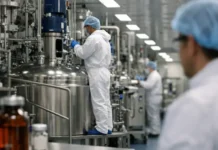
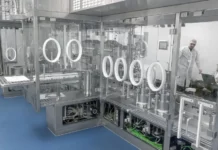






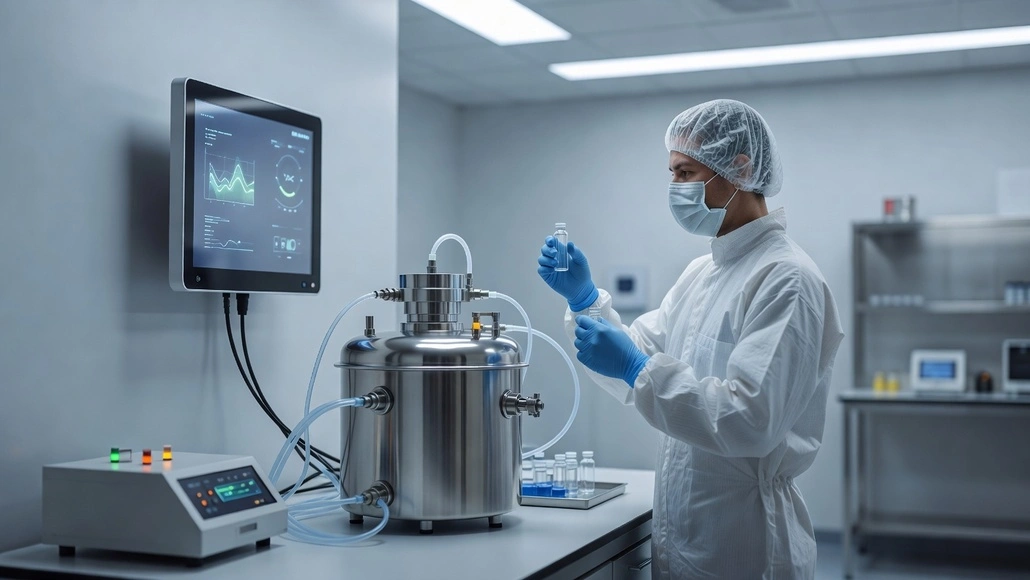
In the high-stakes and technologically demanding world of biopharmaceutical production, the ability to precisely and continuously control the manufacturing environment is the single factor that separates a successful, high-yield therapeutic launch from a costly and time-consuming failure. Bioprocess analytics improving biologics manufacturing has emerged as a truly transformative discipline, providing the sophisticated tools and deep biological insights needed to navigate the inherent and often unpredictable variability of biological systems. Biologics a class of drugs that includes monoclonal antibodies, life-saving vaccines, and complex recombinant proteins are produced by living cells, such as CHO cells or yeast, in complex environments that must be meticulously managed to ensure the final product’s quality, safety, and efficacy.
Traditional manufacturing models often relied on “batch” testing, which involves taking samples and performing analysis only after the production run has been completed. However, this reactive approach is increasingly being replaced by advanced analytics that offer a clear, real-time window into the process as it is actually happening. This profound shift toward proactive, data-driven management is absolutely essential for meeting the rapidly growing global demand for these treatments while simultaneously maintaining the highest possible standards of production efficiency and regulatory compliance. In the modern era, the bioreactor is no longer a “black box” but a highly transparent and controlled environment where every variable is understood and optimized for the best possible outcome.
The Power of Real-Time Monitoring and Data-Driven Insights
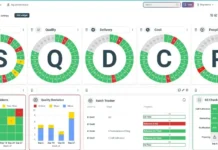
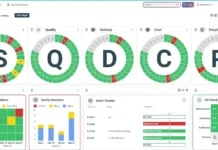
The absolute core of bioprocess analytics improving biologics manufacturing lies in the sophisticated ability to collect, process, and interpret vast quantities of complex data in real-time. Modern, state-of-the-art bioreactors are now equipped with an extensive array of high-precision sensors that continuously monitor critical process parameters (CPPs), such as temperature, pH, dissolved oxygen levels, and nutrient concentrations. However, the true and lasting value of bioprocess analytics goes far beyond the simple monitoring of these variables; it involves the intelligent use of advanced algorithms and pharma analytics to identify hidden patterns, correlate variables, and predict future outcomes before they manifest.
By analyzing the intricate relationship between the fluctuating environmental conditions and the overall health and productivity of the cells, manufacturers can detect even the most subtle deviations from the “golden batch” early in the cycle and make immediate, corrective adjustments. This high level of control is vital for maintaining the Critical Quality Attributes (CQAs) of the biologic, such as its complex glycosylation pattern, its specific folding structure, or its aggregation state, all of which are absolutely essential for its therapeutic efficacy and its safety in humans. The ability to “see” into the molecular state of the product during production is a game-changer, reducing the risk of producing sub-standard batches and ensuring that the final medicine is of the highest possible quality.
Strategies for Process Optimization and Enhanced Efficiency
Every biopharmaceutical manufacturer, from small biotech startups to global pharmaceutical giants, seeks to maximize their therapeutic yield while simultaneously minimizing their operational costs and their time-to-market. Bioprocess analytics improving biologics manufacturing provides the definitive roadmap for achieving these ambitious goals through the science of process optimization. By utilizing years of historical production data and sophisticated machine learning models, engineers can now design highly accurate “digital twins” of their physical manufacturing processes. These virtual models allow them to simulate thousands of different production scenarios and identify the most efficient and robust production conditions without ever having to step into the laboratory.
This proactive and simulated approach drastically reduces the need for expensive, labor-intensive, and time-consuming “trial and error” experiments on the factory floor. Furthermore, the seamless integration of real-time analytics into the manufacturing workflow is enabling the industry-wide transition from traditional batch processing to continuous manufacturing, where the therapeutic product is produced, purified, and monitored in a steady, uninterrupted stream. This fundamental shift can significantly increase overall manufacturing efficiency, reduce the physical footprint of production facilities, and allow for a much more rapid and flexible response to sudden changes in market demand or public health emergencies. The efficiency gained is not just about profit; it’s about the ability to produce more medicine for more people in less time.
Navigating Biologics Scale-Up and GMP Production
The transition from a small-scale, successful pilot project in a research lab to full-scale, commercial GMP production is widely recognized as one of the most challenging and risky phases of drug development. The physical, chemical, and fluid dynamics of a large-scale industrial bioreactor can differ significantly from those of a small benchtop system, often leading to unexpected and undesirable changes in cell behavior, growth rates, and final product quality. Bioprocess analytics improving biologics manufacturing is an indispensable and strategic tool for successfully managing this complex biologics scale up.
By providing a detailed, data-driven understanding of the process dynamics across different scales, analytics allow for far more accurate and reliable technology transfer and scale-up strategies. This ensures that the therapeutic product remains biologically and chemically consistent as production volumes increase from a few liters to thousands of liters, which is an absolute prerequisite for obtaining and maintaining regulatory approval. Moreover, the detailed electronic documentation and the comprehensive audit trails generated by these integrated analytical systems are essential for demonstrating full GMP production compliance. They provide global regulators with the documented assurance that the manufacturing process is robust, fully controlled, and highly reproducible, thereby safeguarding the integrity of the global medicine supply.
Enhancing Quality Control and Reducing Operational Risk
Effective risk management is a fundamental and non-negotiable aspect of biopharmaceutical manufacturing, where the financial and reputational cost of a single contaminated or substandard batch can be measured in millions of dollars and, even more critically, in potential delays to urgent patient care. Bioprocess analytics improving biologics manufacturing acts as a powerful and continuous safeguard by providing unrelenting oversight of the entire production environment. Advanced analytical techniques, such as Raman spectroscopy, Near-Infrared (NIR) spectroscopy, and high-resolution mass spectrometry, are now being used “at-line” or even “in-line” to monitor the quality of the product directly within the process stream.
This allows for the incredibly rapid detection of trace impurities, degradation products, or subtle changes in the concentration of the active ingredient, enabling manufacturers to take immediate, often automated, action to save the batch. By significantly reducing the industry’s historical reliance on end-product testing and moving the entire quality control function into the very heart of the manufacturing process—a concept known as Quality by Design (QbD) companies can drastically reduce the risk of catastrophic batch failures. This ensures that every single dose delivered to a patient, no matter where in the world it was produced, meets the highest possible international quality standards. In an industry where there is zero room for error, these analytics provide the ultimate safety net.
The Future of Pharma Analytics in a Connected Ecosystem
As we look toward the future of the industry, the role of bioprocess analytics improving biologics manufacturing will continue to expand and evolve as part of the broader and visionary “Bioprocessing 4.0” or “Smart Factory” initiative. This vision involves the creation of fully connected, highly automated, and eventually autonomous manufacturing ecosystems where data flows seamlessly and securely between research, development, clinical trials, and commercial production. The widespread integration of the Internet of Things (IoT), advanced edge computing, and cloud-based data platforms will allow for the centralized, real-time monitoring of multiple manufacturing sites located across the globe from a single control center.
This level of connectivity will facilitate the rapid sharing of best practices, the global harmonization of quality standards, and the lightning-fast resolution of technical issues as they arise. Furthermore, the development of even more sophisticated and miniaturized sensors, combined with the power of quantum computing, will provide even deeper, more fundamental insights into the complex and beautiful inner workings of the living cell. This will open up entirely new possibilities for the production of even more complex, multi-functional, and highly personalized therapeutics that are tailored to the specific genetic makeup of the individual patient. This digital and analytical transformation is not just about technology; it is about building a more resilient, responsive, and patient-centric biopharmaceutical industry that can meet the health challenges of the future with confidence.
Conclusion and the Crux of Manufacturing Excellence
The relentless pursuit of excellence in biopharmaceutical production is a continuous journey of discovery and improvement, guided at every step by the profound insights provided by bioprocess analytics improving biologics manufacturing. By moving decisively from a reactive, “test-and-fix” mindset to a proactive, “predict-and-prevent” strategy, manufacturers can achieve unprecedented levels of process control, operational efficiency, and product quality. The deep integration of pharma analytics into the very core of the production process is the absolute crux of modern manufacturing excellence, enabling the reliable and consistent delivery of complex, life-saving biologics to the millions of patients who depend on them.
As we continue to refine these analytical tools, embrace the transformative power of big data, and integrate artificial intelligence into our workflows, we will unlock entirely new potential for innovation and ensure that the biopharmaceutical industry remains at the absolute cutting edge of global medical science. Ultimately, the true success of these analytical efforts is not measured in data points or yield percentages, but in the improved health, the extended lives, and the enhanced well-being of the patients who benefit from the safe and effective therapies made possible by advanced bioprocess engineering. Through analytics, we are turning the complexity of biology into the certainty of medicine.