












How pharmaceutical and life-science R&D teams can qualify high-purity specialty inorganic salts using rubidium chloride and rubidium carbonate to illustrate the importance of impurity profiles, analytical evidence, packaging and supplier consistency.
Qualification at a glance
- Focus: Impurity profile, evidence, consistency and control
- Use cases: Pharma, life science, diagnostics and formulation R&D
- Supply form: Controlled powder or crystalline material
- Decision basis: Reproducible quality, traceability and risk mitigation
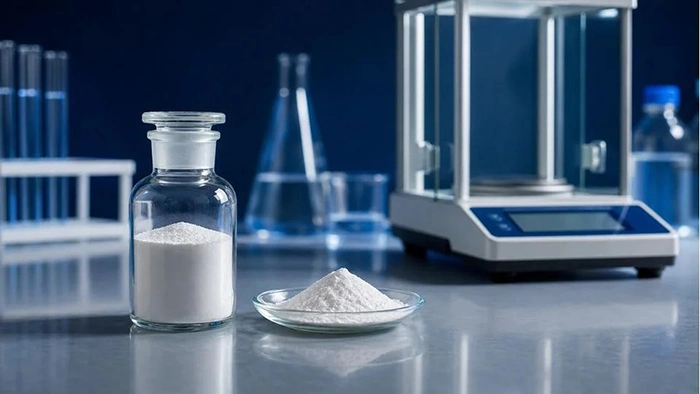
Key point: Regulatory and quality risk is driven less by the headline purity number and more by the impurity profile, analytical evidence and supplier consistency across lots.
01 · QUALITY
A headline assay is not a complete specification
The identity and concentration of the remaining impurities can matter as much as the total purity percentage.
02 · EVIDENCE
Batch data should support the purchasing decision
A lot-specific CoA, suitable analytical methods and traceability provide stronger evidence than a generic product claim.
03 · CONTROL
Packaging and change control belong in qualification
Moisture protection, batch consistency, source changes and continuity of supply can all affect an R&D workflow.
In this article
- Why purity is only the start
- Define the intended use
- Build the specification
- Read the CoA
- Rubidium salt case studies
- Relevant applications
- Qualify the supplier
- Buyer checklist
Qualification package
Use the final checklist to align technical, quality and purchasing teams.
Open buyer checklist ↓
01 · Material quality
Why purity is only the beginning
When buyers compare specialty inorganic salts, the first number they usually see is 99%, 99.5% or 99.9%. That number is useful but it cannot explain how the material will behave in a sensitive research workflow.
A nominally 99.9% pure material may still contain alkali metals, transition metals, moisture, insoluble matter or process residues. Two batches with the same assay can therefore have different impurity patterns and different effects on analytical measurements, solution preparation, chemical synthesis or experimental reproducibility.
For a technical team, the better purchasing question is not simply “How pure is it?” but “Is this batch sufficiently characterized and controlled for our intended use?”
A purity percentage describes how much target compound is present. A qualification package explains whether the material is fit for the proposed workflow.
02 · Intended use
Define the application before selecting the grade
The level of evidence required depends on where the salt enters the development lifecycle. The same material may be acceptable for exploratory experiments yet require additional testing, documentation and regulatory review before use in a controlled or regulated process.
Discovery
Exploratory R&D
Prioritize correct identity, practical purity, solubility, safe handling and sufficient consistency to reproduce early experiments.
Analytical
Method development
Define interfering ions, trace-metal limits, water content and method sensitivity before accepting a generic specification.
Process
Synthesis development
Evaluate stoichiometric accuracy, impurity carryover, reaction performance, packaging and the ability to scale supply.
Regulated
GMP or clinical use
Do not infer pharmaceutical suitability from “high purity.” Application-specific qualification and appropriate regulatory documentation are required.
Regulatory context: ICH Q3D uses a risk-based approach to elemental impurities in finished drug products. It does not turn a high-purity research or industrial chemical into a pharmaceutical-grade material.
03 · Specification design
Build an application-specific material specification
A useful specification connects the chemistry of the material with the risks of the intended process. It should contain enough information for R&D, analytical, quality and procurement teams to reach the same purchasing decision.
Identity
Confirm what the material is
Record the name, formula, CAS number, molecular weight, appearance and a suitable identity method.
Assay
Understand how purity is reported
Confirm the analytical method and whether the result is reported as received, on a dry basis or by another defined calculation.
Impurities
Set limits for relevant ions
For rubidium salts, Li, Na, K and Cs may be important alongside Ca, Mg, Fe, Al, Pb and project-specific metals.
Physical control
Consider moisture and insolubles
Water, flowability, insoluble matter, solution clarity or particle characteristics may affect weighing and use.
| Parameter | Why it matters | Evidence to request |
| Identity | Prevents material mix-ups and confirms chemical form. | Identity result and method reference on the batch CoA. |
| Assay | Supports correct weighing, formulation or stoichiometric calculations. | Actual batch result, test basis and analytical method. |
| Alkali-metal impurities | Related ions may interfere with sensitive studies or enter through separation processes. | Li, Na, K and Cs results at relevant limits. |
| Trace metals | Selected metals may affect catalysis, biological research or analytical signals. | ICP-MS, ICP-OES or AAS results with suitable sensitivity. |
| Moisture | Can change apparent assay, weighing accuracy and handling. | Water or loss-on-drying result plus storage instructions. |
| Packaging | Protects material quality during transport, storage and repeated use. | Container type, seal configuration and package-size options. |
04 · Analytical evidence
Read the Certificate of Analysis as batch evidence
Batch-specific evidence
A generic specification defines what a supplier intends to deliver. A lot-specific Certificate of Analysis shows the test results associated with the material being shipped. Buyers should expect the CoA to identify the product, grade, batch number, test items, limits, results, analytical methods or references, and release authorization.
Trace-element testing may use ICP-MS, ICP-OES or AAS depending on the required limits and sensitivity. Ionic impurities may require ion chromatography or other suitable methods, while water content should be measured using an appropriate moisture method.
“Not detected” is meaningful only when the method’s detection or quantification capability is suitable for the specification. New suppliers may require independent testing of initial batches.

05 · Product case studies
How the qualification approach applies to two rubidium salts
Rubidium chloride and rubidium carbonate illustrate how the same qualification principles lead to different areas of emphasis.
Hygroscopic inorganic salt
Rubidium Carbonate
CAS 584-09-8 · Formula Rb2CO3 · White hygroscopic powder
DQ Pure lists 99.0%, 99.5% and 99.9% grades and publishes an impurity panel covering related alkali metals and selected trace elements. Batch documentation and moisture-resistant packaging are available.
- Confirm assay basis and moisture result.
- Review Li, Na, K, Cs and relevant trace metals.
- Match package size to the expected rate of use.
- Minimize repeated exposure to laboratory air.
View Rubidium Carbonate specifications
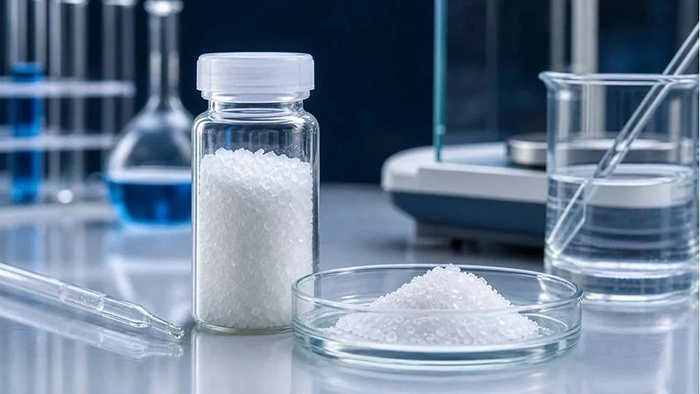
Crystalline rubidium salt
Rubidium Chloride
CAS 7791-11-9 · Formula RbCl · White or colorless crystalline material
DQ Pure lists grades up to 99.9%, with batch CoA documentation, custom impurity specifications, trace-metal analysis options and moisture-resistant packaging for research and industrial procurement.
- Define limits for Na, K, Cs and project-specific metals.
- Review moisture, insolubles and solution clarity.
- Confirm the sensitivity of trace-metal methods.
- Distinguish stable RbCl from radioactive Rb-82 chloride.
View Rubidium Chloride specifications
Stable RbCl is not rubidium Rb-82 chloride
Rubidium Rb-82 chloride is a radioactive diagnostic agent produced through a regulated generator system for myocardial PET imaging. Ordinary research-grade or industrial-grade rubidium chloride is not interchangeable with that drug product.
06 · Application context
Relevant applications highlighted in DQ Pure research content
Application knowledge helps buyers identify which material attributes may become critical. DQ Pure’s application library covers a broad range of rubidium research. The following examples are especially useful for understanding specification design; they do not establish pharmaceutical approval or clinical suitability.
Rubidium carbonate
Optical and electro-optic crystals
Rb2CO3 can serve as a rubidium source in crystal-growth research, including rubidium titanyl phosphate and nonlinear optical material systems. Alkali-metal impurities and batch consistency may influence crystal quality.
Rubidium carbonate
Perovskites and advanced energy materials
Research examples include perovskite interfaces, light-emitting materials, catalyst systems and low-temperature battery materials, where controlled doping and trace impurities can affect performance.
Rubidium chloride
Analytical and biological research
RbCl appears in controlled laboratory, biochemical and preclinical research contexts. Such use requires project-specific review of assay, moisture, insolubles, Na/K background and trace metals.
Rubidium chloride
Photonics and electronic materials
DQ Pure’s research library also covers perovskite films, blue light-emitting layers and luminescent crystal systems, where solution behavior and ionic purity can be important.
Preclinical caution: A research hypothesis, animal study or laboratory protocol is not evidence of an approved therapy. Medical efficacy claims should not be inferred from the supply of high-purity RbCl.
07 · Supplier qualification
Look beyond the final laboratory result
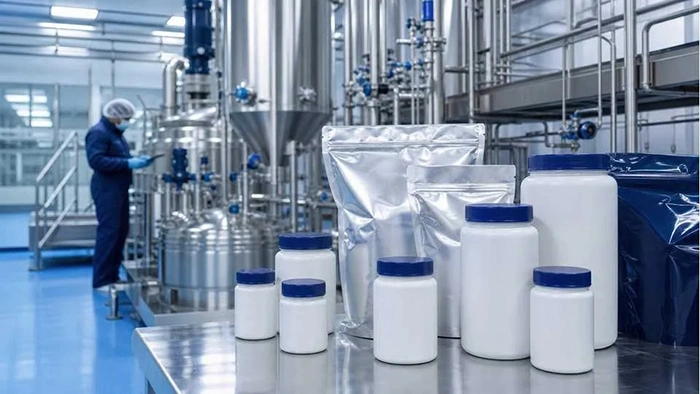
Consistent product quality depends on upstream raw materials, separation chemistry, purification, crystallization, testing, packaging and change control. A technically credible supplier should explain the main sources of impurities and how they are managed.
DQ Pure describes raw-material preparation, roasting, leaching, impurity removal, resin purification, concentration, crystallization and rubidium separation. Buyers can use that process visibility to ask:
- Which steps control Li, Na, K, Cs and selected metals?
- How is cross-contamination prevented?
- Which changes trigger customer notification?
- Can customized limits be maintained as volume increases?
Operational qualification should also cover CoA and SDS availability, batch traceability, retained samples, lead time, export packaging and continuity of supply.
08 · Procurement tool
A practical buyer checklist
Before approving a specialty inorganic salt, R&D, analytical, quality and procurement teams should be able to answer the following questions.
- Is the intended use clearly documented?
- Does the proposed grade match that use?
- Are identity and assay methods specified?
- Does the CoA provide actual lot results?
- Are relevant ionic and elemental impurities included?
- Are method detection capabilities appropriate?
- Are moisture and insolubles controlled where necessary?
- Does the packaging protect the material throughout use?
- Can the supplier provide batch traceability?
- Is there a documented change-notification process?
- Can the specification be maintained at larger volumes?
- Has the team avoided equating “high purity” with “pharmaceutical grade”?
Conclusion
High-purity specialty salts should be treated as controlled technical inputs, not as commodity chemicals selected from a single percentage. An effective qualification process begins with intended use and converts it into measurable requirements for identity, assay, impurities, moisture, documentation and packaging.
Rubidium chloride and rubidium carbonate demonstrate the value of this approach. Their nominal assay matters, but the impurity profile, analytical evidence, protection from moisture and supplier consistency ultimately determine whether a batch is appropriate for a particular R&D workflow.
Disclosure: DQ Pure product, application and manufacturing information was used in preparing this article. The materials discussed are presented in research, advanced-material and industrial procurement contexts. No pharmaceutical, clinical, API or excipient suitability should be inferred without application-specific qualification and the required regulatory documentation.
Technical product information
Review the specification before requesting a batch.
Compare available grades, packaging, documentation and application requirements for DQ Pure rubidium carbonate and rubidium chloride.