












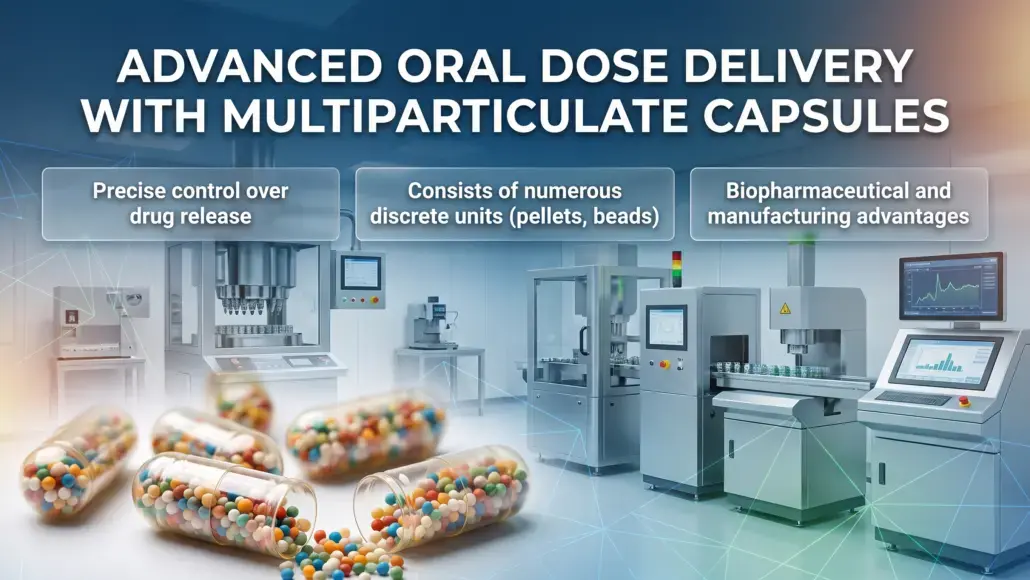
The development of oral solid dosage forms has evolved from simple monolithic tablets to complex systems designed to provide precise control over drug release. Among the most effective of these systems are multiparticulate dosage forms, which consist of numerous small discrete units such as pellets, beads, or granules enclosed within a capsule shell. The utilization of multiparticulate capsules enhancing oral dose delivery offers a range of biopharmaceutical and manufacturing advantages that address the limitations of traditional single-unit dosages. By dividing the total dose into multiple subunits, manufacturers can achieve more predictable gastric emptying, reduced risk of dose dumping, and greater flexibility in tailoring release profiles to meet the specific needs of different patient populations.
The primary technical benefit of a multiparticulate system is its ability to disperse throughout the gastrointestinal tract, ensuring a more uniform absorption of the active pharmaceutical ingredient. Unlike a single large tablet, which may be delayed in the stomach due to the presence of food or individual variations in motility, the small size of the subunits allows them to pass through the pylorus more easily. This characteristic of multiparticulate capsules enhancing oral dose delivery results in a more consistent pharmacokinetic profile, reducing the peak-to-trough fluctuations in plasma concentration that can lead to side effects or sub-therapeutic efficacy. For drugs with a narrow therapeutic index, this level of control is essential for ensuring patient safety and optimal clinical outcomes.
Biopharmaceutical Advantages and Gastric Transit
The physiological behavior of multiparticulates in the digestive system is fundamentally different from that of monolithic tablets. When a patient ingests a multiparticulate capsule, the shell dissolves in the stomach, releasing the individual pellets or beads. These subunits are small enough to be treated as a liquid by the stomach, allowing them to pass into the small intestine even when the pyloric sphincter is closed during the digestive phase. This reduces the residence time in the stomach, which is particularly important for drugs that are prone to acid degradation or those that cause local irritation to the gastric mucosa. By minimizing the time the drug spends in the harsh environment of the stomach, formulators can protect the integrity of the molecule and improve overall bioavailability.
Additionally, the wide distribution of the subunits along the length of the intestine increases the surface area available for absorption. This can be particularly beneficial for poorly soluble drugs, where the rate-limiting step in absorption is the dissolution of the drug substance. The large collective surface area of the pellets ensures that the drug is released in a controlled manner, preventing localized high concentrations that could saturate the absorption mechanisms or cause tissue damage. The strategic application of multiparticulate capsules enhancing oral dose delivery thus provides a more balanced and efficient absorption process, contributing to the overall stability and predictability of the therapy.
Manufacturing Precision and Formulation Flexibility
The production of multiparticulates involves several sophisticated techniques, including extrusion-spheronization, fluid-bed layering, and hot-melt extrusion. Each of these methods allows for precise control over the size, shape, and composition of the individual units. Extrusion-spheronization, for example, is widely used to create dense, spherical pellets with a uniform size distribution, which are ideal for subsequent coating processes. The ability to apply functional coatings,such as enteric, sustained-release, or moisture-barrier films,to each subunit individually provides a level of precision that is difficult to achieve with larger tablets. This ensures that every pellet within the capsule contributes to the intended release profile in a consistent manner.
The flexibility of the multiparticulate approach also extends to the combination of different drug substances within a single capsule. Manufacturers can fill a single shell with multiple types of pellets, each containing a different active ingredient or designed with a different release mechanism. This allows for the creation of fixed-dose combinations that provide both immediate and sustained therapeutic effects. For instance, a capsule could contain a rapid-acting dose for immediate symptom relief and a controlled-release dose to maintain therapeutic levels throughout the day. This capability of multiparticulate capsules enhancing oral dose delivery simplifies complex medication regimens and improves patient adherence by reducing the number of daily doses required.
Overcoming Technical Challenges in Encapsulation
While the benefits of multiparticulate systems are clear, their manufacture and encapsulation present unique challenges that require specialized equipment and expertise. One of the primary concerns is ensuring content uniformity, as even a small variation in the number or weight of the pellets filled into each capsule can lead to significant dosing errors. High-speed encapsulation machines must be equipped with precise dosing discs or vacuum-assisted filling systems that can handle the free-flowing pellets without damaging their functional coatings. The mechanical stress applied during the filling process must be carefully controlled to prevent the cracking or abrasion of the film, which would compromise the controlled-release properties of the dosage form.
Additionally, the physical properties of the pellets, such as their flowability and electrostatic characteristics, can impact the efficiency of the production line. Manufacturers often use lubricants or anti-static agents to ensure that the subunits move smoothly through the filling equipment. The monitoring of these process parameters is essential for maintaining a high yield and minimizing the volume of rejected units. The integration of real-time analytical tools, such as near-infrared spectroscopy, allows for the continuous verification of the fill weight and composition, providing a high level of assurance that every unit meets the required quality standards.
Another critical safety consideration is the prevention of alcohol-induced dose dumping (AIDD). Some sustained-release coatings can be compromised if the patient consumes alcohol, leading to a rapid and potentially dangerous release of the entire dose. Multiparticulate systems are inherently more resistant to this phenomenon because the dose is distributed across thousands of subunits. Even if a small fraction of the pellets is affected, the majority will continue to release the drug as intended. Manufacturers conduct rigorous in vitro testing in various concentrations of ethanol to ensure that the coating integrity is maintained. This extra layer of safety is a major reason why regulatory agencies often prefer multiparticulate capsules for potent medications that require extended-release profiles. The scientific evidence supporting this resistance to dose dumping is a powerful argument for the adoption of these technologies in the development of high-risk therapies.
The ongoing refinement of these manufacturing processes is a key factor in the successful deployment of multiparticulate technologies across the pharmaceutical industry. As new materials and more precise equipment become available, the ability to create highly complex and effective dosage forms will only increase. The integration of digital twins and advanced modeling techniques allows for the simulation of the coating and filling processes, reducing the need for expensive trial-and-error development. This digital approach to pharmaceutical engineering enables faster time-to-market and more consistent product quality, further solidifying the position of multiparticulate systems as a cornerstone of modern drug delivery. The focus on precision and reliability reflects the industry’s commitment to excellence and its recognition of the vital role that advanced manufacturing plays in the delivery of modern healthcare.
Patient-Centric Design and Compliance Improvements
The ultimate goal of any drug delivery system is to improve the patient experience and ensure that the medication is taken as prescribed. Multiparticulate capsules are particularly well-suited for patient populations with specific needs, such as pediatric or geriatric patients who may have difficulty swallowing large tablets. The contents of the capsule can often be sprinkled onto soft food or mixed with liquids, providing an easy-to-swallow alternative that maintains the integrity of the controlled-release mechanism. This flexibility is a significant advantage in clinical settings, where ease of administration can directly impact the success of a treatment plan.
The long-term outlook for multiparticulate systems is one of increasing sophistication and wider application. As the industry continues to move toward more personalized and targeted therapies, the ability to customize the release profile and combine multiple ingredients will become even more valuable. The continued investment in the development of new polymers and coating technologies will further expand the capabilities of these systems, allowing for even more precise control over the timing and location of drug release in the gastrointestinal tract. By focusing on the needs of the patient and utilizing advanced engineering solutions, pharmaceutical companies can ensure that their products provide the highest level of therapeutic benefit.
The role of multiparticulate capsules enhancing oral dose delivery will remain central to the future of oral drug formulation, providing a stable and effective platform for the next generation of life-saving medications. The industry’s ability to innovate in this space is driven by a deep understanding of the intersection between material science, engineering, and pharmacology. As researchers continue to explore the potential of these systems, we can expect to see even more creative solutions to the challenges of drug delivery, such as the use of multiparticulates for the targeted delivery of biologics or the creation of systems that can respond to specific physiological triggers. The dedication to improving patient outcomes through advanced technology is the primary driver of this field, ensuring that the medications of tomorrow are safer, more effective, and more convenient than those of today. This ongoing journey of discovery and improvement is essential for the continued progress of the pharmaceutical sector and the enhancement of global health. Through collaboration and a commitment to scientific rigor, the industry will continue to push the boundaries of what is possible in the field of oral dosage design, delivering new therapies that transform the lives of patients around the world. The strategic application of these technologies represents a significant milestone in the evolution of modern medicine.