













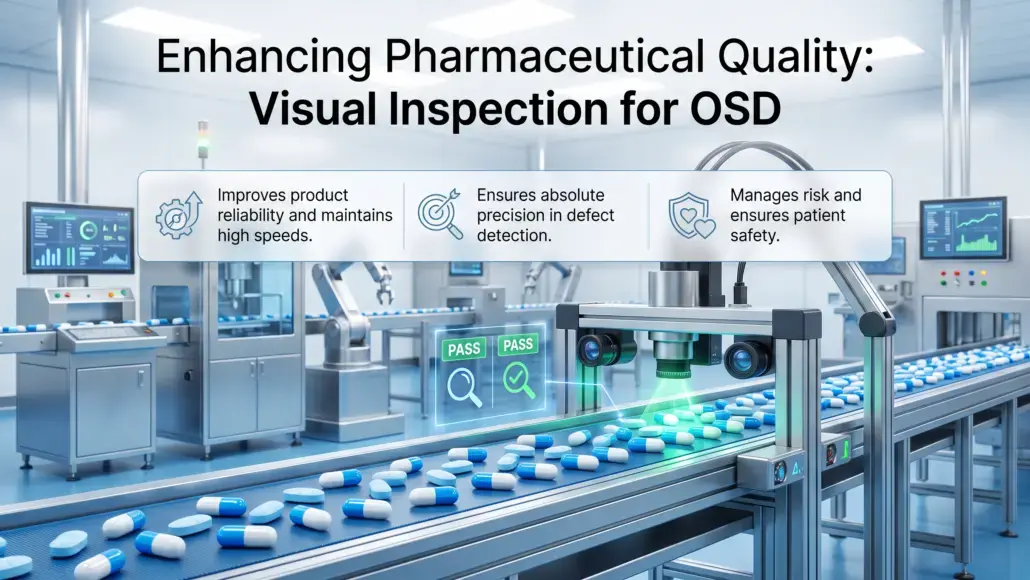
The pharmaceutical manufacturing sector continues to face significant pressure to improve product reliability while maintaining high throughput speeds. Within oral solid dosage production, the necessity of absolute precision in identifying physical defects has led to the adoption of sophisticated monitoring systems. The implementation of visual inspection technologies strengthening OSD quality control represents a critical evolution in how companies manage risk and ensure patient safety across global supply chains. These systems provide a level of consistency that manual inspection protocols simply cannot achieve, particularly when processing millions of units per shift. By utilizing high-resolution optics and advanced image processing software, manufacturers can identify minute cracks, chips, discoloration, and dimensional inconsistencies that might otherwise compromise the therapeutic integrity of the medication.
The integration of these systems into modern production lines has changed the fundamental approach to quality assurance. Instead of relying on end-of-batch sampling, facilities now utilize continuous monitoring to detect deviations in real-time. This shift allows for immediate corrective actions, reducing the volume of waste and preventing entire batches from being quarantined due to isolated mechanical failures. The technical depth of these inspection platforms involves a combination of multi-angle lighting, high-speed cameras, and complex algorithms capable of processing data at millisecond intervals. As regulatory bodies like the FDA and EMA increase their expectations for data integrity and process validation, the role of automated inspection becomes central to meeting these stringent compliance standards.
Manufacturers must also consider the physical constraints of the production environment when deploying these solutions. The vibration of the machinery, the presence of airborne dust, and the rapid movement of the conveyor belts can all interfere with image quality. To mitigate these factors, engineers use specialized enclosures and vacuum systems that keep the optical path clear. Additionally, the selection of the correct lens is critical: telecentric lenses are often preferred because they maintain a constant magnification regardless of the distance between the tablet and the camera. This ensures that dimensional measurements remain accurate even if the tablet is slightly displaced during its transit through the inspection module. The calibration protocols for these lenses are rigorous, requiring periodic verification against traceable standards to ensure that the system remains within its defined tolerances.
Another vital aspect of this technology is the ability to inspect the internal characteristics of the dosage form using non-visible light. While traditional cameras focus on surface defects, advanced systems can incorporate near-infrared or X-ray sensors to detect internal voids or uneven distribution of active ingredients. This multi-modal approach provides a comprehensive view of product quality that transcends simple aesthetics. The data captured by these sensors is then aggregated into a central database, creating a permanent record of the production history for every single unit. This level of traceability is essential in the event of a product recall, as it allows the manufacturer to pinpoint the exact moment when a process deviation occurred and identify which specific containers are affected. This precision reduces the economic impact of quality failures and protects the public from potentially harmful medications.
Technological Foundations of Automated Inspection Systems
The mechanical and optical architecture of modern inspection systems relies on a synchronized interplay of hardware components designed to capture every facet of a tablet or capsule. High-resolution cameras are positioned at strategic points along the conveyor system, often utilizing multiple viewpoints to ensure 360-degree coverage of each individual unit. Lighting plays a crucial role in this process: manufacturers use structured light, strobe lighting, and specific wavelengths to highlight surface irregularities that would be invisible under standard ambient conditions. By adjusting the intensity and angle of illumination, the system can detect subtle variations in texture or reflectivity that indicate a compromised coating or a density issue within the core of the tablet.
Processing these visual inputs requires significant computational power. The software must distinguish between acceptable variations, such as slight differences in natural ingredient coloration, and critical defects like structural fractures. Advanced algorithms are trained on vast datasets of both perfect and defective units, allowing the machine to make split-second decisions about whether to accept or reject a product. This level of visual inspection technologies strengthening OSD quality control ensures that the finished product meets the exact specifications defined during the development phase. The ability to filter out noise and focus on critical quality attributes is what sets these automated systems apart from earlier iterations of machine vision.
Data Analytics and Process Optimization in OSD Production
The primary function of an inspection system is to reject defective products, but the data generated during this process offers far more value for long-term operational efficiency. Every rejection is logged with specific metadata, including the type of defect and the exact time it occurred. By analyzing these trends, quality engineers can identify patterns that point toward specific mechanical issues within the tablet press or encapsulation machine. For example, a sudden increase in edge chipping might indicate that a particular punch is becoming worn or that the compression force requires adjustment. This proactive approach to maintenance minimizes downtime and extends the lifespan of expensive production equipment.
Integrating these data streams into a broader manufacturing execution system enables a holistic view of the production environment. When visual inspection technologies strengthening OSD quality control are linked with other process parameters, such as humidity levels or raw material batch numbers, the facility can perform deep-root cause analysis with unprecedented speed. This connectivity is a cornerstone of the Industry 4.0 movement within the pharmaceutical sector, where data-driven decision-making replaces traditional trial-and-error methods. The transparency provided by these digital logs also simplifies the auditing process, as manufacturers can provide clear evidence of their quality control measures to regulatory inspectors.
Overcoming Challenges in High-Speed Inspection
Maintaining accuracy at extremely high production speeds is one of the most significant hurdles in pharmaceutical engineering. As manufacturers push for higher throughput to meet global demand, the window of time available to inspect each tablet shrinks to a fraction of a second. To counter this, engineers have developed ultra-fast sensory arrays and specialized handling systems that stabilize the product as it passes through the inspection zone. Vibration control and precise orientation are essential: if a tablet is tumbling or misaligned, the cameras may capture a distorted image, leading to a false rejection or, worse, a false acceptance of a defective unit.
The complexity of modern formulations also adds layers of difficulty to the inspection process. Multi-layered tablets, enteric coatings, and embossed logos create complex visual profiles that the system must interpret correctly. False rejections represent a significant cost to the manufacturer, as perfectly good medication is discarded due to algorithmic errors. Therefore, the calibration of these systems must be performed with extreme care, balancing the need for sensitivity with the practical requirements of production efficiency. The ongoing refinement of visual inspection technologies strengthening OSD quality control focuses on reducing these error rates while maintaining the highest possible standards for product purity and structural integrity.
Regulatory Compliance and Future Directions in Quality Assurance
Regulatory frameworks are increasingly emphasizing the importance of process analytical technology and real-time release testing. The shift away from reactive quality control toward a more proactive, design-based approach is supported by the adoption of automated inspection. By providing a continuous stream of validated data, these technologies help manufacturers demonstrate that their processes are under control at all times. This level of oversight is particularly important for high-potency drugs or medications with narrow therapeutic windows, where even a minor dosing error or physical defect could have severe consequences for the patient.
Looking toward the future, the industry is exploring the potential of deep learning and neural networks to further enhance the capabilities of inspection systems. Unlike traditional rule-based algorithms, these AI-driven models can learn from experience, becoming more accurate as they process more data. This evolution will likely lead to systems that can not only detect defects but also predict them before they occur by identifying the subtle precursors of mechanical failure. The continued investment in visual inspection technologies strengthening OSD quality control will remain a priority for pharmaceutical leaders who recognize that quality is not just a regulatory requirement but a fundamental driver of brand reputation and operational success in a competitive market.
The adoption of artificial intelligence in this field also addresses the need for explainable results. When a machine rejects a product, the quality team must understand why that decision was made. Modern software platforms now provide detailed heatmaps and diagnostic reports that highlight the specific areas of the tablet that triggered the rejection. This transparency is crucial for maintaining trust in automated systems and for satisfying the requirements of regulatory auditors. As these systems become more autonomous, the human role in quality control is shifting from manual observation to high-level oversight and system management.
The advancement of these optical systems represents a broader trend toward the digitalization of the pharmaceutical factory. As sensors become more sensitive and software becomes more intelligent, the gap between the physical production process and its digital twin continues to close. This convergence allows for a level of precision that was previously unimaginable, ensuring that every dose delivered to a patient is safe, effective, and manufactured to the highest possible standards. The dedication to improving these technologies reflects the industry’s commitment to continuous improvement and its recognition of the critical role that quality control plays in the modern healthcare ecosystem. The long-term benefits of these investments are clear: reduced costs, higher yields, and a more resilient supply chain that can respond quickly to the needs of patients. By embracing these sophisticated tools, pharmaceutical companies are not only protecting their bottom line but also upholding their core mission of delivering safe and effective therapies. The future of quality control is digital, automated, and deeply integrated into every stage of the pharmaceutical lifecycle.