













Close
CDMO Safety Testing 2026
Novotech

Issues With Accelerated Approval Remain A Problem For FDA

Note* - All images used are for editorial and illustrative purposes only and may not originate from the original news provider or associated company.

Subscribe

- Never miss a story with notifications

- Gain full access to our premium content

- Browse free from any location or device.

Media Packs

Expand Your Reach With Our Customized Solutions Empowering Your Campaigns To Maximize Your Reach & Drive Real Results!

โ€“ Access the Media Pack Now

โ€“ Book a Conference Call

โ€“ Leave Message for Us to Get Back

Related stories

BeOne Signs $2B Trispecific Antibody Deal with Huahui Health

BeOne Medicines has entered into a high-value agreement with...

Quantum Machine Learning in Pharma Research Growth

The convergence of artificial intelligence and quantum processing is opening new avenues for rapid discovery and innovation within the life sciences. By utilizing advanced mathematical models that operate across multi-dimensional datasets, researchers can now identify complex biological patterns and predict molecular behaviors with a speed that surpasses traditional computational methods. This transformation is accelerating the development of novel therapies and providing deeper insights into disease mechanisms, fundamentally altering the trajectory of pharmaceutical research and development.

Quantum Sensors Enabling Advanced Drug Diagnostics

The landscape of medical diagnostics is being reshaped by the introduction of sensing technologies that operate with atomic-level sensitivity. By providing high-fidelity measurements and real-time data, these tools allow for the detection of subtle biological changes and chemical markers that were previously invisible to conventional equipment. This advancement is enhancing the precision of drug testing and clinical monitoring, leading to earlier disease detection and more effective therapeutic interventions across the global healthcare spectrum.
- Advertisement -

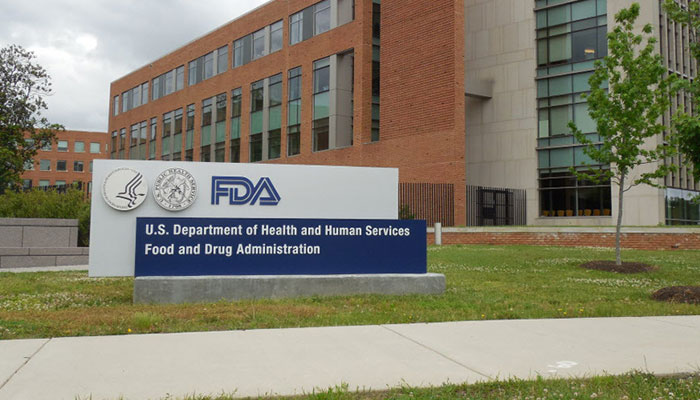
The use of excessively fragile efficacy data and delays in sponsors’ presenting living proof from post-approval trials, as well as the approval of some crucial drugs based on preliminary clinical evidence, continue to be controversial issues. Under the programme, the FDA has approved dozens of beneficial medicines, many of which were able to establish their efficacy through additional clinical research.

However, the controversial approval of Biogen’s Aduhelm by the Center for Drug Evaluation and Research (CDER) in 2021 to treat Alzheimer’s Disease continues to plague the programme, leading to intense criticism of accelerated approvals and a variety of proposed reforms to hasten the completion of confirmatory studies.

At its April 2021 meeting, the FDA’s Oncologic Drugs Advisory Committee (ODAC) added to the discussion by questioning a number of dangling approvals for cancer treatments. This led some manufacturers to revoke prior approvals for certain indications, while others redoubled their efforts to conduct confirmatory studies. A new ODAC meeting has been scheduled for September 22 and 23, 2022, to consider additional medications that raise concerns about efforts to validate indications in subsequent studies.

The multiple myeloma medication from Oncopeptides will be evaluated by the expert panel after a confirmatory trial showed generally lower survival and failed to prove therapeutic benefit, according to an FDA notice. The Secura Bio lymphoma therapy, which has sparked debate over the advantages and disadvantages of general survival data, is also on the agenda.

Legislative change?

A New England Journal of Medicine article recommending legislation to stop abuses of the fast approval programme discussed steps taken by congressional leaders to modify the programme. The requirement that sponsors start validation trials before receiving an early approval is a significant change. Additional changes would make it easier for the FDA to revoke an approval if new study data is not provided in a set amount of time or give the FDA automatic withdrawal authority for medicines that don’t work as intended. The FDA user fee legislation that was just approved by the House includes these and other provisions, but it is unclear how it will fare in the Senate.

The fast approval scheme is crucial for improving patient access to treatments that are anticipated to have significant positive effects, according to the cancer community and various patient illness groups. In order to maintain the program’s credibility, these backers also acknowledge that the FDA needs to have the authority to eliminate any drugs that are either unable or unwilling to prove initial efficacy.

In order to support continuing early access to potential novel medicines, the Project Confirm initiative at the FDA’s Oncology Center of Excellence (OCE) seeks to emphasise the significance of verifying initial research results after approval. OCE listings contain 85 cancer and hematologic malignancy treatments with confirmed clinical benefit, 65 with studies ongoing, and 21 with withdrawn rapid approval. OCE continues to put pressure on sponsors to deliver post-approval data promptly and to remove medicines from the market where confirmatory studies fall short of demonstrating benefit or are not properly carried out.

The faster approval programme will likely be subject to more stringent regulation as long as product costs and advantages are still in the public eye. Researchers from National Public Radio have examined the adverse effects of several medications on patients in cases where early signals were not verified and patients were not informed of the potential risk posed by unresolved issues with such treatments.

In addition, the decision to restrict Aduhelm’s coverage by the Medicare programme is forcing health plans and insurers to examine the costs and use of medications with provisional approval status more carefully. At the same time, people with cancer and other uncommon diseases continue to call for instant access to treatments with questionable efficacy. The FDA will still have to make challenging choices on product approvals and potential withdrawals even after some legislative improvements.

Latest stories

Related stories

BeOne Signs $2B Trispecific Antibody Deal with Huahui Health

BeOne Medicines has entered into a high-value agreement with...

Quantum Machine Learning in Pharma Research Growth

The convergence of artificial intelligence and quantum processing is opening new avenues for rapid discovery and innovation within the life sciences. By utilizing advanced mathematical models that operate across multi-dimensional datasets, researchers can now identify complex biological patterns and predict molecular behaviors with a speed that surpasses traditional computational methods. This transformation is accelerating the development of novel therapies and providing deeper insights into disease mechanisms, fundamentally altering the trajectory of pharmaceutical research and development.

Quantum Sensors Enabling Advanced Drug Diagnostics

The landscape of medical diagnostics is being reshaped by the introduction of sensing technologies that operate with atomic-level sensitivity. By providing high-fidelity measurements and real-time data, these tools allow for the detection of subtle biological changes and chemical markers that were previously invisible to conventional equipment. This advancement is enhancing the precision of drug testing and clinical monitoring, leading to earlier disease detection and more effective therapeutic interventions across the global healthcare spectrum.

Quantum Computing Optimizing Pharma Supply Chains

The global distribution of pharmaceutical products is facing unprecedented challenges that demand a new level of logistical precision and resilience. By utilizing advanced analytical models, companies can now navigate complex international networks with greater efficiency, ensuring that temperature-sensitive medicines and life-saving therapies reach their destinations without delay. This evolution toward a more intelligent and responsive supply chain is critical for maintaining public health and responding effectively to emerging medical needs on a global scale.

Subscribe

- Never miss a story with notifications

- Gain full access to our premium content

- Browse free from any location or device.

Media Packs

Expand Your Reach With Our Customized Solutions Empowering Your Campaigns To Maximize Your Reach & Drive Real Results!

โ€“ Access theMedia Pack Now

โ€“ Book a Conference Call

โ€“ Leave Message for Us to Get Back

Translate ยป