













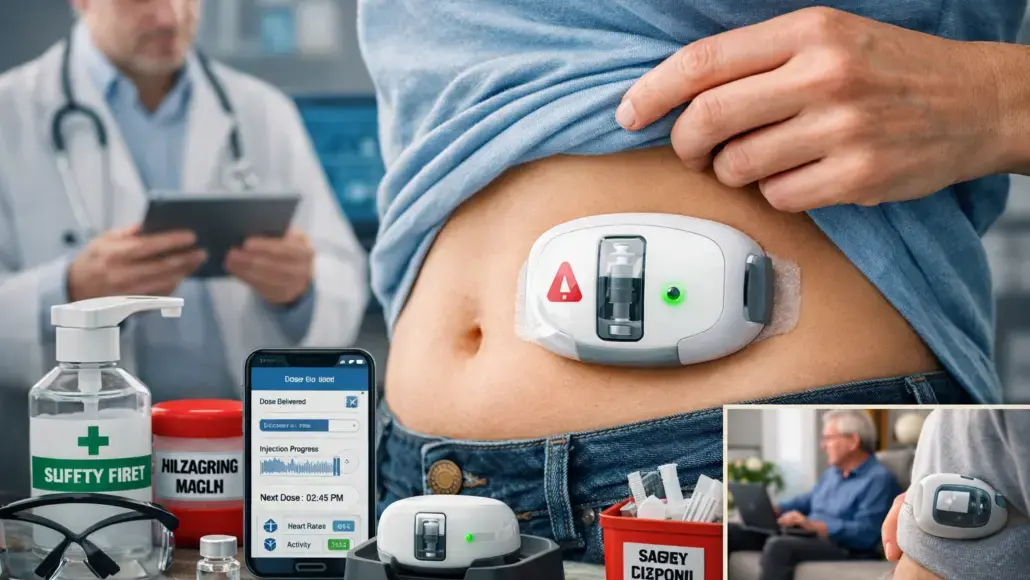
The pharmaceutical industry is continually evolving to improve patient care, treatment outcomes, and convenience. One of the most significant innovations in recent years is the development of wearable injectors, which are transforming the way large-volume medications are administered. These advanced drug delivery systems are helping to overcome many of the challenges associated with traditional injection methods, making treatments more comfortable and accessible for patients managing chronic conditions.
Understanding Wearable Injectors
Wearable injectors are compact, on-body drug delivery devices designed to administer larger volumes of medication over an extended period. Unlike conventional syringes or autoinjectors, which are typically suitable for delivering small doses quickly, wearable injectors can deliver several millilitres of medication slowly and steadily beneath the skin.
The devices are usually attached to the patient’s body using an adhesive patch and programmed to deliver medication automatically. Patients can continue with their daily activities while the treatment is administered, reducing the need for lengthy clinic visits or repeated injections.
The Growing Need for Large-Volume Drug Delivery
Advances in biotechnology have led to the development of complex biologic therapies used to treat conditions such as cancer, autoimmune diseases, rare disorders, and chronic inflammatory illnesses. Many of these therapies require larger doses than traditional injectable medications.
Administering these larger volumes can present challenges. Intravenous (IV) infusions often require hospital or clinic visits, increasing healthcare costs and placing a burden on both patients and providers. Standard subcutaneous injections may not be suitable for delivering larger quantities of medication due to discomfort and tissue limitations.
Wearable injectors provide an effective solution by enabling large-volume subcutaneous delivery in a patient-friendly format. This approach allows patients to receive treatment at home while maintaining therapeutic effectiveness.
Enhancing Patient Convenience and Adherence
One of the primary advantages of wearable injectors is the convenience they offer. Frequent hospital visits can be time-consuming and disruptive, particularly for patients managing long-term conditions. Wearable injectors allow treatments to be administered outside of clinical settings, providing greater flexibility and independence.
Improved convenience often leads to better treatment adherence. Patients are more likely to follow prescribed treatment schedules when administration is simple and minimally disruptive. Consistent adherence is particularly important for chronic diseases, where missed doses can reduce treatment effectiveness and negatively impact health outcomes.
Additionally, wearable injectors can reduce the anxiety some patients experience with traditional injections. Automated delivery systems minimise the need for manual administration, making treatment less intimidating for individuals who may be uncomfortable with needles.
Supporting Healthcare System Efficiency
Healthcare systems around the world are facing increasing pressure from growing patient populations and rising treatment demands. Wearable injectors can help alleviate some of this burden by shifting certain treatments from healthcare facilities to home-based care environments.
By reducing the need for in-clinic infusions and appointments, wearable injectors free up healthcare resources and allow medical professionals to focus on patients requiring more intensive care. This can contribute to lower healthcare costs and improved operational efficiency.
Furthermore, remote monitoring capabilities are being integrated into some wearable injector platforms. These features can provide healthcare providers with valuable treatment data, helping them monitor adherence and identify potential issues without requiring additional clinic visits.
Technological Advancements Driving Innovation
Modern wearable injectors incorporate a variety of advanced technologies to ensure accurate and reliable drug delivery. Features such as programmable dosing schedules, automated insertion mechanisms, audible notifications, and electronic monitoring systems enhance both safety and usability.
The design and manufacture of the drug containment system also play a critical role in device performance. High-quality pharmaceutical cartridges for wearable devices are essential for maintaining drug stability, ensuring accurate dosing, and preserving product integrity throughout storage and administration.
Manufacturers continue to invest in research and development to create more compact, user-friendly devices capable of accommodating a wider range of therapies. As technology advances, wearable injectors are expected to become even more sophisticated and adaptable to individual patient needs.
Expanding Applications Across Therapeutic Areas
The use of wearable injectors is expanding across multiple therapeutic areas. Oncology, immunology, endocrinology, and rare disease treatments are among the fields benefiting from this technology. Many biologic drugs that once required lengthy infusion sessions can now be delivered through wearable systems, offering patients a more convenient treatment experience.
As pharmaceutical companies continue developing high-volume biologic therapies, demand for wearable drug delivery solutions is expected to grow. The ability to safely administer larger doses in non-clinical settings makes wearable injectors an attractive option for both healthcare providers and patients.
The Future of Drug Delivery
Wearable injectors represent a major advancement in patient-centred healthcare. By enabling efficient, comfortable, and convenient large-volume drug delivery, these devices are changing the treatment landscape for many chronic and complex conditions.
As innovations in biologics, digital health, and device engineering continue to progress, wearable injectors will likely play an increasingly important role in modern medicine. Their ability to improve patient experiences, support healthcare efficiency, and facilitate at-home treatment positions them as a key component of the future of drug delivery.