
















Close
Smartlab Europe
Inizio Ignite

Aortic Stability Evaluation To Find Patients At High Risk

Note* - All images used are for editorial and illustrative purposes only and may not originate from the original news provider or associated company.

Subscribe

- Never miss a story with notifications

- Gain full access to our premium content

- Browse free from any location or device.

Media Packs

Expand Your Reach With Our Customized Solutions Empowering Your Campaigns To Maximize Your Reach & Drive Real Results!

– Access the Media Pack Now

– Book a Conference Call

Leave Message for Us to Get Back

Related stories

Advancing Quality 4.0 Through Centralized Drug Knowledge 

Implementation of a unified data framework serves as the catalyst for modernizing pharmaceutical production, bridging the gap between legacy processes and intelligent automation. By consolidating disparate data streams into a cohesive repository, organizations achieve unprecedented visibility into critical quality attributes and process parameters. This transformation facilitates proactive risk mitigation and ensures that Good Manufacturing Practices are maintained through high-fidelity insights rather than retrospective analysis, ultimately fostering a culture of continuous improvement and operational excellence.

Lilly Zepbound-Taltz Combo Gains Ground with Phase 3b Data

Eli Lilly said that its weight-loss medicine Zepbound, when...

J&J to Invest $1 Billion in Pennsylvania Cell Therapy Plant

Johnson & Johnson announced that it plans to invest...
- Advertisement -
Smart Lab Europe

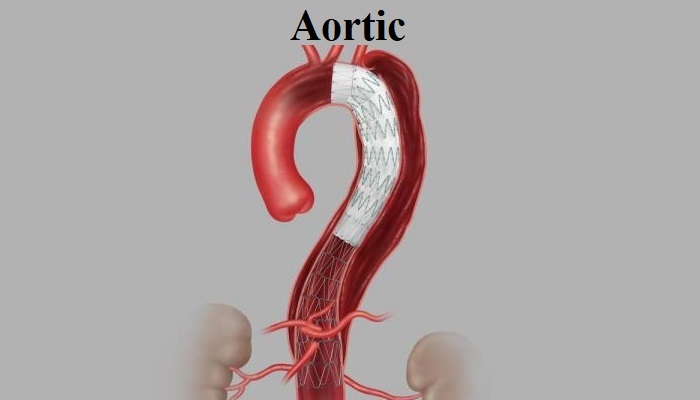
According to a recent study conducted in collaboration by the University of Eastern Finland and Kuopio University Hospital, patients with ascending aortic dilatation are more likely to experience pathological changes in the aortic wall when wall shear stress values derived from magnetic resonance imaging are high. In the future, high-risk patients may be identified using the data. The research is available for free in Frontiers in Physiology.

In ascending aortic dilatation, an aneurysm develops as the aorta gradually enlarges as a result of the weakened aortic wall structure. Serious consequences like aortic dissection or rupture may result from this. The bicuspid aortic valve and a few hereditary disorders are the primary risk factors for ascending aortic dilatation. There is no treatment outside surgery that is successful. Patients are usually asymptomatic, and an aneurysm is only accidentally detected or found after a life-threatening consequence. Following diagnosis, computed tomography or magnetic resonance imaging is used to periodically check the aortic dilatation.

Aorta vascular flow has also been implicated in causing alterations in the aortic wall structure and accelerating the course of disease, in addition to genetics. In patients with ascending aortic dilatation, the new study conducted at the University of Eastern Finland and Kuopio University Hospital demonstrates for the first time the relationship between wall shear stress, aortic wall strength, as well as site-specific cell composition. The findings show that changing wall shear stress in patients controls aortic degeneration, biomechanical features, and cell-driven mechanisms. The work reveals MYH10 as a novel molecular marker for pathogenic alterations in the aortic wall. Future high-risk patient detection efforts may make use of these findings.

Academy Research Fellow of the University of Eastern Finland, Johanna Laakkonen, states that the goal of her study is to find novel molecular pathways for aortic dilatation that might be used to create treatments and diagnostics for the condition. According to Professor Marja Hedman of the University of Eastern Finland and Kuopio University Hospital, they aim to find individuals with a high risk of aortic dilatation or burst and improve the follow-up of these patients, thereby minimising the risk for life-threatening complications.


Smart Lab Europe

Latest stories

Related stories

Advancing Quality 4.0 Through Centralized Drug Knowledge 

Implementation of a unified data framework serves as the catalyst for modernizing pharmaceutical production, bridging the gap between legacy processes and intelligent automation. By consolidating disparate data streams into a cohesive repository, organizations achieve unprecedented visibility into critical quality attributes and process parameters. This transformation facilitates proactive risk mitigation and ensures that Good Manufacturing Practices are maintained through high-fidelity insights rather than retrospective analysis, ultimately fostering a culture of continuous improvement and operational excellence.

Lilly Zepbound-Taltz Combo Gains Ground with Phase 3b Data

Eli Lilly said that its weight-loss medicine Zepbound, when...

J&J to Invest $1 Billion in Pennsylvania Cell Therapy Plant

Johnson & Johnson announced that it plans to invest...

Precision Cellular Analysis Powering the Next Generation

Biopharmaceutical innovation increasingly depends on understanding biology at the...

Subscribe

- Never miss a story with notifications

- Gain full access to our premium content

- Browse free from any location or device.

Media Packs

Expand Your Reach With Our Customized Solutions Empowering Your Campaigns To Maximize Your Reach & Drive Real Results!

– Access theMedia Pack Now

– Book a Conference Call

Leave Message for Us to Get Back

Translate »